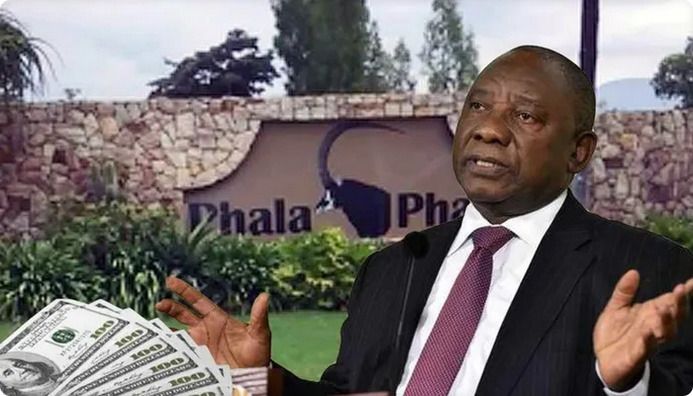
Declassified but not disclosed: Why the Phala Phala report is fuelling fresh transparency concerns
When Acting Police Minister Firoz Cachalia confirmed that the long-awaited IPID report into the Phala Phala saga had been declassified, many South Africans expected one thing: sunlight.
Instead, they got another layer of process.
The report may no longer carry a “Top Secret” stamp, but it is still not on the public table and that has reignited debate about transparency, accountability and who really gets to see what in a constitutional democracy.
Declassified but not for everyone
The Independent Police Investigative Directorate (IPID) completed its investigation into the Phala Phala matter and classified the report in June 2022 under Minimum Information Security Standards, citing the need to protect the integrity of the investigation, witnesses and implicated SAPS members.
Now, according to Cachalia, the report was officially declassified on February 2.
But there’s a catch.
Responding to a written parliamentary question from the African Transformation Movement (ATM), Cachalia said the document would not be made freely available to the public. Instead, it can only be accessed through formal legal channels and even then, any version released would likely be heavily redacted.
That clarification has sparked immediate backlash.
Civil society calls foul
The Organisation Undoing Tax Abuse (Outa) wasted no time in demanding full disclosure.
CEO Wayne Duvenage argued that the report poses no threat to state security and should be released in unredacted form.
“These investigations are done on behalf of South Africans with our money and should be made public,” he said, adding that a president who pledges to fight corruption must be above reproach.
On social media, the reaction has been swift and sceptical. Some users have questioned why a declassified document still requires hoops to access. Others see it as yet another example of political opacity in high-profile cases.
A scandal that refuses to fade
The Phala Phala controversy often dubbed “Farmgate” dates back to 2020, when an estimated $580,000 in cash (initially alleged to be $4 million) was stolen from furniture at President Cyril Ramaphosa’s private game farm in Limpopo.
The incident only became public in June 2022, after former spy chief Arthur Fraser laid criminal complaints. He accused Ramaphosa of money laundering, kidnapping and bribery linked to the recovery of the stolen cash.
Ramaphosa has consistently denied wrongdoing, stating that the money was legitimate proceeds from the sale of 20 buffalo to Sudanese businessman Hazim Mustafa and that he reported the theft to his head of security.
Still, questions linger and for many South Africans, the IPID report represents a missing piece of the puzzle.
Political pressure mounts
Opposition parties are not letting the issue rest.
ActionSA has called for the immediate release of the report. The MK Party has formally written to Cachalia’s office requesting disclosure, arguing that declassification removes the legal grounds for withholding it.
In a letter, the party’s chief whip, Mmabatho Mokoena-Zondi, warned that continued delays raise serious concerns about accountability and the constitutional right of access to information under Section 32 and the Promotion of Access to Information Act (PAIA).
ATM leader Vuyo Zungula, whose question prompted the declassification announcement, confirmed his party will submit a PAIA application and push for IPID to present the report before Parliament’s Portfolio Committee on Police.
Meanwhile, IPID spokesperson Lizzy Suping said anyone seeking access must file a PAIA request with the directorate’s information officer. Cachalia’s spokesperson, Kamo Mogotsi, reiterated that IPID is the custodian of the report and responsible for decisions regarding its release.
Transparency or technicality?
Political analyst Sandile Swana argues that declassification without disclosure amounts to little progress.
He believes the public’s right to know about suspected irregularities involving the president should not be undermined by redactions or administrative barriers.
“This cannot be part of transparency and accountability in South Africa,” he said, insisting reports of this nature should be released in full.
Beyond the political sparring lies a deeper issue: public trust.
South Africa’s Constitution enshrines access to information as a right. Yet the practical path to obtaining that information can feel long and technical, especially in politically sensitive cases.
For many citizens, this moment is less about the mechanics of PAIA requests and more about principle. If a report is declassified, should it not be readily available particularly when it concerns the head of state?
The Phala Phala saga has already tested the country’s political institutions. How this next chapter unfolds may say as much about governance culture as it does about the contents of the report itself.
For now, the document exists in a peculiar limbo: no longer secret, but not quite public either.
And in South Africa’s charged political climate, that middle ground rarely stays quiet for long.