Lifestyle audits face pushback as provinces step up anti-corruption drive
A bold idea meets real-world resistance
On paper, lifestyle audits sound simple: if a public official’s lifestyle doesn’t match their income, something isn’t adding up.
In reality? It’s proving far more complicated.
This week, several provinces, including KwaZulu-Natal, Gauteng, Western Cape, Northern Cape, and North West appeared before Parliament to explain how they’re implementing lifestyle audits. What emerged was a picture of ambition clashing with practical challenges.
From legal pushback by officials to eye-watering costs, the anti-corruption tool is being tested in ways few expected.
What are lifestyle audits, really?
At their core, lifestyle audits are meant to detect corruption early before it spirals into full-blown scandals.
They go beyond standard financial disclosures, digging into whether a person’s assets, spending, and lifestyle align with what they officially earn.
In a country where tender fraud and procurement irregularities have dominated headlines for years, the idea has been widely supported at least in theory.
The Northern Cape’s costly experiment
In the Northern Cape, Premier Zamani Saul didn’t sugar-coat things.
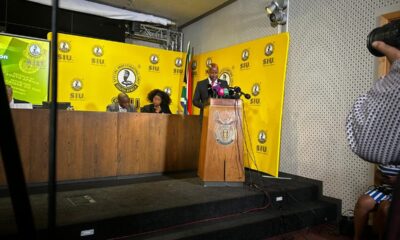
With limited internal capacity, the province brought in the Special Investigating Unit (SIU) to handle the audits a move that initially drew criticism.
But the bigger shock? The cost.
The first phase alone came in at around R13 million, targeting senior officials and those in high-risk roles, particularly in procurement.
Despite the backlash, the province is sticking with the approach, arguing that the long-term benefits of curbing corruption outweigh the upfront expense.
When officials push back
Perhaps the most revealing challenge is resistance from within.
According to provincial officials, some civil servants are refusing to participate in lifestyle audits altogether even sending legal letters to avoid scrutiny.
In one case, less than half of senior managers complied with the process.
It’s a reminder that fighting corruption isn’t just about systems it’s about people, power, and accountability.
Gauteng starts at the top
In Gauteng, Premier Panyaza Lesufi has taken a different approach: lead from the front.
Lifestyle audits were first conducted on the premier himself, along with MECs and senior leadership, before expanding to heads of departments and procurement officials.
The results? Enough concern to dig deeper.
The province has since widened its scope to include anyone involved in contracts and tenders areas widely seen as corruption hotspots.
Western Cape takes a targeted route
Meanwhile, the Western Cape is opting for a more surgical approach.
Premier Alan Winde confirmed that the province uses independent auditors but avoids blanket audits.
Instead, it focuses on “triggers” red flags identified through disclosures and internal monitoring.
It’s also significantly cheaper, with full audits costing around R50,000 per individual, far less than figures reported elsewhere.
KwaZulu-Natal builds capacity
In KwaZulu-Natal, the focus has been on building internal systems.
Officials say they are training ethics officers and investigators, while also strengthening whistleblower channels to encourage reporting of corruption.
Interestingly, despite the rollout, the province reported no major cases flagged for further investigation raising questions about whether the system is still too new, or not yet effective enough.
Social media reaction: “Will this actually change anything?”
Online, South Africans are watching closely but with cautious optimism.
Some see lifestyle audits as long overdue, especially in a country where corruption scandals have repeatedly eroded public trust.
Others are more sceptical:
- Will officials actually be held accountable?
- Or will audits become another box-ticking exercise?
There’s also concern about cost with many asking whether millions spent on audits could be better used elsewhere if results don’t follow.
A country still reckoning with corruption
To understand why lifestyle audits matter, you have to look at South Africa’s recent history.
Years of high-profile corruption from state capture to municipal mismanagement have left a deep mark on public confidence.
Lifestyle audits are part of a broader attempt to rebuild that trust, shifting from reactive investigations to proactive detection.
But as this week’s briefings show, implementation is anything but straightforward.
The bigger question: prevention vs politics
At its best, a lifestyle audit is a powerful tool one that can quietly flag problems before they explode into headlines.
At its worst, it risks becoming politicised, inconsistently applied, or resisted to the point of ineffectiveness.
Right now, South Africa seems to be somewhere in between.
The bottom line
Lifestyle audits aren’t failing but they’re not fully succeeding yet either.
They’re exposing uncomfortable truths:
- That corruption is hard to root out
- That accountability often meets resistance
- And that fixing systems costs money
The real test will come next: whether provinces can move from audits to action.
Because in the end, it’s not about who gets audited
It’s about what happens when something doesn’t add up.