News
South Africa Moves Toward Merit Based Citizenship In Major Policy Shift
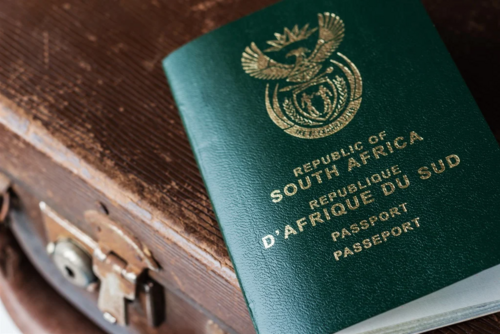
For decades, becoming a South African citizen has largely been about time. Live here long enough, follow the process, and eventually, the door opens. But that door could soon work very differently.
A newly approved government White Paper is proposing a major reset of how citizenship works in South Africa, shifting the focus from time spent in the country to what applicants bring to it.
It is a bold move that could reshape not only immigration policy but also how the country defines belonging in a rapidly changing world.
A System Built On Contribution, Not Just Time
At the heart of the proposal is a points-based system for citizenship. Instead of relying mainly on years of residence, applicants would be assessed using objective criteria.
While the full scoring system is still to be developed, the idea is clear. Skills, economic contribution, and other measurable factors could soon play a decisive role in who qualifies for naturalisation.
According to Home Affairs Minister Leon Schreiber, this marks one of the most significant overhauls of South Africa’s immigration and citizenship framework in a generation.
The policy was shaped through consultations across all nine provinces, with thousands of public submissions feeding into the final document.
What Else Could Change
The proposed reforms go beyond just how citizenship is granted. They also aim to fix long-standing inefficiencies in the system.
Key proposals include:
- A Citizenship Advisory Panel to assess applications
- A fixed annual window for naturalisation submissions
- A structured, points-based route for economic migrants
These changes are designed to reduce backlogs and make the system more transparent. Anyone familiar with the current delays at Home Affairs will know just how significant that could be.
What Stays The Same
Not everything is changing.
Citizenship rules for children remain largely untouched. A child born with at least one South African parent will still automatically qualify for citizenship.
For children born to non-South African parents, the process remains application-based, meaning naturalisation is still required.
In a country where birthright citizenship has long been a cornerstone of identity, this continuity offers some stability amid broader reform.
A Tougher Stance On Refugees And Asylum
Alongside citizenship changes, the White Paper also introduces stricter rules for asylum seekers.
One of the most debated proposals is the “First Safe Country Principle.” In simple terms, it means that individuals who have already found protection in another country, or passed through a safe country before arriving in South Africa, may no longer qualify for asylum locally.
The government would also publish an annual list of “safe third countries,” based on international agreements.
This signals a shift toward tighter border and asylum controls, aligning South Africa more closely with global trends seen in parts of Europe and elsewhere.
Why This Matters Right Now
South Africa has long walked a tightrope when it comes to immigration. On one hand, it is a regional economic hub that attracts talent and opportunity seekers. On the other, it faces high unemployment and growing public pressure to prioritise local citizens.
This White Paper sits right at that intersection.
By introducing a merit-based system, the government appears to be leaning toward a more selective approach, one that rewards contribution while tightening oversight.
But it also raises important questions. Who decides what counts as merit. And how will fairness be ensured in a system that scores human potential.
What Happens Next
For now, these changes are still proposals.
The Department of Home Affairs will draft legislation based on the White Paper, which will then be presented to Parliament for debate and possible adoption.
That process could take time, but the direction is now clear. South Africa is preparing to rethink citizenship for a new era.
And for many, whether local or foreign, the outcome could shape the country’s future identity in ways that go far beyond paperwork.
{Source:The South African}
Follow Joburg ETC on Facebook, Twitter , TikTok and Instagram
For more News in Johannesburg, visit joburgetc.com