A digital image has sparked a global storm, but this time it is not just about politics or technology. It is about faith, identity, and where the line should be drawn.
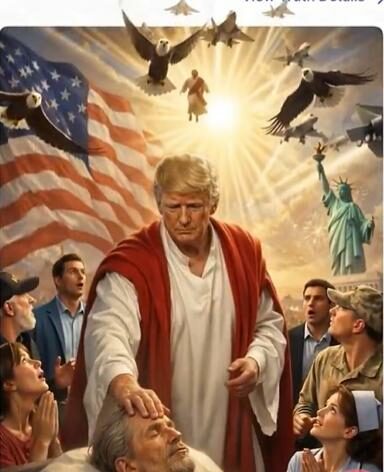
The Southern African Catholic Bishops’ Conference has come out strongly against an AI-generated image shared by Donald Trump, depicting himself as Jesus Christ. For the Church, the issue is not simply poor judgement. It is something far deeper.
Why The Church Is Taking A Firm Stand
According to the bishops, the image crosses a sacred boundary. They argue that portraying a political figure in the likeness of Christ undermines one of the core beliefs of Christianity.
Chairperson Thulani Mbuyisa described the post as blasphemous, saying it trivialises the meaning of Christ’s identity and role. In Christian teaching, Jesus is not just a symbol or figurehead. He is central to the faith.
For the bishops, blending political power with divine imagery risks confusing believers and distorting the message of the Gospel.
A Controversy That Quickly Escalated
The now-deleted image showed Trump in a Christ-like role, appearing to heal a sick patient. While Trump later claimed the image was meant to portray him as a doctor, the explanation has done little to calm the backlash.
The post surfaced shortly after Trump criticised Pope Leo XIV, who has been vocal in opposing military actions involving the United States and Israel in Iran.
For the Church, the timing matters. It connects the image to a broader pattern of political messaging that they believe leans into religious symbolism for influence.
Concerns Over Christian Nationalism
Beyond the image itself, the bishops raised a bigger concern. They warned against what they describe as the growing influence of Christian nationalism.
This is the idea that political leaders present themselves as chosen figures with a divine mandate. The bishops rejected this outright, cautioning against turning leaders into “political messiahs”.
In a world already dealing with conflict and uncertainty, they argue that such narratives can deepen division and distract from real issues affecting vulnerable communities.
A Message In A Time Of Global Tension
The Church’s response did not stop at criticism. It also carried a broader message aimed at global leaders.
With wars ongoing and economic pressures mounting worldwide, the bishops echoed calls for humility and service. They stressed that true leadership is not about power or image, but about protecting life and promoting peace.
In the South African context, where faith still plays a strong role in many communities, the statement resonates beyond international politics. It speaks to a deeper discomfort with the blending of religion and political branding.
A Line That Should Not Be Crossed
At its core, this controversy is about more than a single image. It reflects a growing tension between technology, influence, and belief.
AI has made it easier than ever to create powerful visuals, but the reaction from the Church shows that not everything that can be created should be.
For many believers, faith is not a tool for messaging or image-building. It is sacred. And when that line is crossed, the response is bound to be just as strong.