Living In Johannesburg
Earthquakes in Johannesburg since 2000: The tremors that shook Gauteng
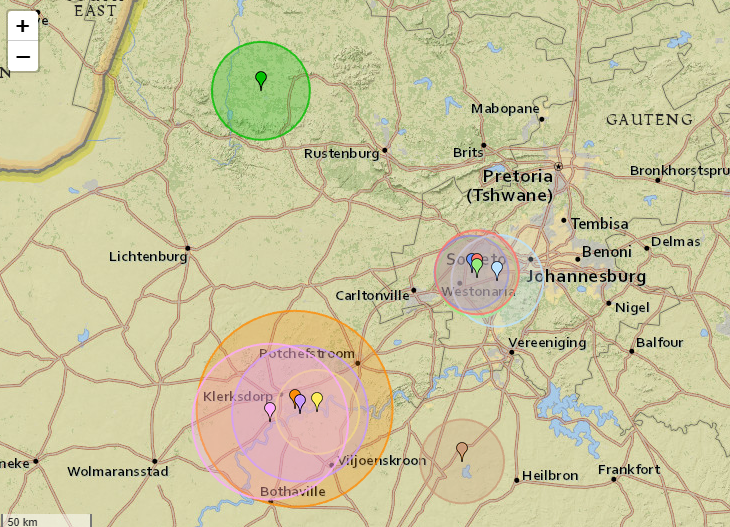
Earthquakes in Johannesburg and Surrounding Areas Since 2000: A Look Back at the Major Tremors
For many residents, Johannesburg is not a city commonly associated with earthquakes. Unlike countries situated along major tectonic plate boundaries, South Africa experiences relatively low levels of seismic activity. Yet over the past 25 years, Johannesburg and its surrounding regions have experienced a surprising number of earthquakes, some strong enough to wake residents, shake buildings, and spark concerns about mining-related seismic activity.
From Carletonville and Westonaria to Soweto, Boksburg, and Alberton, several significant tremors have been recorded since 2000, reminding Gauteng residents that the ground beneath the city is not always still.
Why Does Johannesburg Experience Earthquakes?
Most earthquakes felt in Johannesburg are not caused by major tectonic plate movement. Instead, many are linked to deep-level gold mining operations in Gauteng, North West, and the Free State. As underground mining alters stress within rock formations, seismic events can occur, particularly around former mining towns such as Westonaria, Carletonville, Orkney, Stilfontein, and Fochville.
Major Earthquakes Felt in Johannesburg Since 2000
June 11, 2023: The Strongest Recent Johannesburg Earthquake
In the early hours of 11 June 2023, thousands of Johannesburg residents were jolted awake when a magnitude 5.0 earthquake struck near Alberton, south of Johannesburg.
The earthquake occurred at a depth of approximately 10 km and was widely felt across Johannesburg, Soweto, Boksburg, Randburg, Tembisa, and surrounding areas. Minor structural damage was reported in some buildings, making it one of the most significant earthquakes experienced in Gauteng in recent years.
March 2019: The Soweto Earthquake
A magnitude 4.9 earthquake struck near Soweto in March 2019, shaking large parts of Gauteng. The tremor was widely felt across Johannesburg and became one of the strongest earthquakes in the province during the decade. The event renewed discussions about the relationship between mining activity and seismic events in the region.
August 5, 2014: Orkney Earthquake
One of South Africa’s most significant earthquakes in modern times occurred near Orkney in North West Province.
The magnitude 5.4 earthquake caused one fatality and injuries, damaged buildings, and was felt throughout Gauteng, including Johannesburg and Pretoria. It remains one of the largest earthquakes recorded near Johannesburg in the 21st century.
Significant Earthquakes Recorded Since 2020
2025
- 10 July 2025 – Magnitude 4.8 near Orkney, North West. Felt across parts of Gauteng.
2024
- 15 May 2024 – Magnitude 3.5 near Stilfontein.
- 31 March 2024 – Magnitude 3.4 near Westonaria.
- 6 February 2024 – Magnitude 3.2 near Westonaria.
- 23 January 2024 – Magnitude 4.3 near Orkney.
2023
- 11 June 2023 – Magnitude 5.0 near Johannesburg/Alberton.
- 4 October 2023 – Magnitude 3.7 near Soweto.
- 30 August 2023 – Magnitude 3.5 near Soweto.
- 29 June 2023 – Magnitude 2.9 near Boksburg.
2022
Johannesburg and surrounding areas experienced one of their busiest years for seismic activity.
Notable earthquakes included:
- Magnitude 4.8 near eMbalenhle, Mpumalanga (March).
- Magnitude 4.8 near Orkney (July).
- Magnitude 4.7 near Orkney (August).
- Magnitude 4.4 near Orange Farm (December).
- Magnitude 4.4 near Carletonville (January).
- Magnitude 4.2 near Carletonville (February).
2021
- Magnitude 4.4 near Springs.
- Magnitude 4.2 near Boksburg.
- Magnitude 4.4 near Fochville.
- Magnitude 4.0 near Fochville.
- Magnitude 3.6 near Boksburg.
2020
- Magnitude 4.8 near Stilfontein.
- Magnitude 4.2 near Orkney.
Areas Around Johannesburg That Experience the Most Earthquakes
Several locations repeatedly appear in seismic records:
- Westonaria
- Carletonville
- Orkney
- Stilfontein
- Fochville
- Soweto
- Boksburg
- Springs
- Orange Farm
- Krugersdorp
Many of these areas lie within or near South Africa’s historic gold mining belt, where underground mining has long been associated with seismic activity.
How Common Are Earthquakes Near Johannesburg?
While Johannesburg is not considered a major earthquake hotspot, seismic monitoring shows that earthquakes occur more frequently than many residents realize.
Data indicates that dozens of earthquakes of magnitude 4 or greater have occurred within 300 km of Johannesburg over the past decade, averaging roughly eight measurable events per year. Most are minor and cause little to no damage, but larger tremors remain possible.
The Biggest Earthquake Ever Recorded Near Johannesburg
Although it occurred before 2000, the strongest earthquake historically associated with the Johannesburg region was a magnitude 5.7 earthquake near Westonaria in 1974. More recently, the largest earthquakes affecting the wider Johannesburg area have generally ranged between magnitude 4.8 and 5.4.
Johannesburg may not sit on a major fault line, but the city’s mining history has created conditions where earthquakes remain a recurring reality. Most tremors are small and pass without incident, yet events such as the 2014 Orkney earthquake and the 2023 Alberton earthquake demonstrate that significant seismic activity can and does occur in Gauteng.
As mining areas continue to evolve and seismic monitoring improves, residents can expect occasional reminders that even South Africa’s economic hub is not entirely immune to the forces beneath the Earth’s surface.
Follow Joburg ETC on Facebook, Twitter, TikTok and Instagram
For more News in Johannesburg, visit joburgetc.com