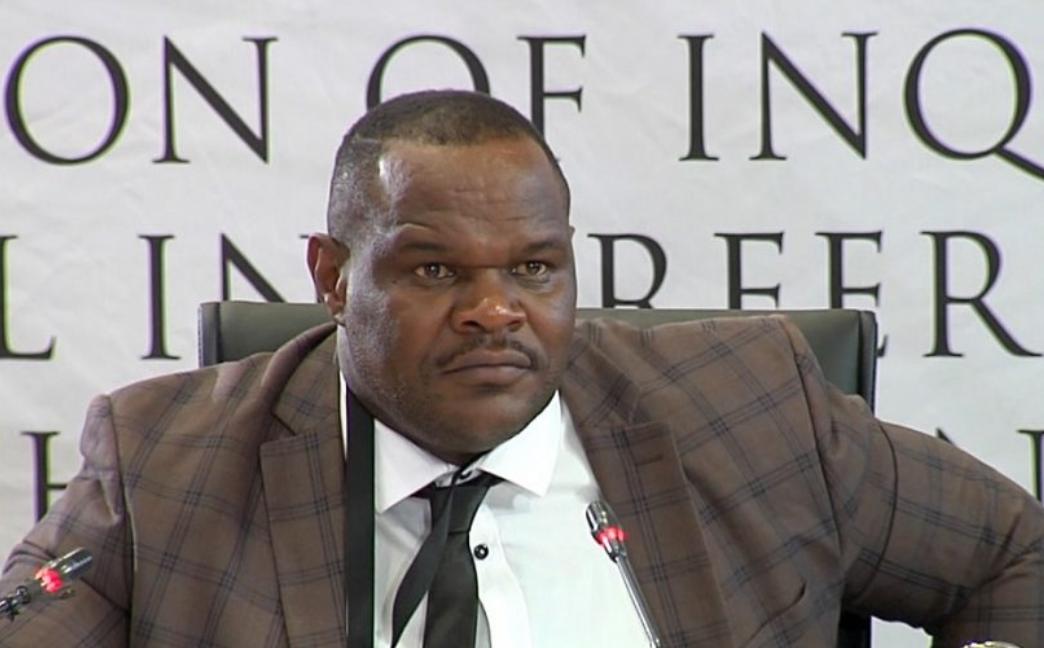
The fate of suspended police sergeant Fannie Nkosi now hangs in the balance, as the state makes a strong case to keep him locked up while his legal battle unfolds.
Appearing at the Pretoria North Magistrate’s Court on Monday, the 42-year-old listened as prosecutors painted a picture of a man deeply entangled in alleged criminal networks. The court has reserved judgment, with a decision on his bail expected on Wednesday.
State Paints A Picture Of A Risk To Justice
Prosecutor Tholoana Sekhonyana did not hold back. She told the court that Nkosi’s alleged conduct goes beyond isolated wrongdoing, arguing that he has effectively learned how to manipulate the system meant to uphold justice.
At the centre of the state’s argument are claims that Nkosi had access to police dockets he was not authorised to handle, and that he maintained links with figures connected to organised crime.
Investigators believe he acted as a bridge between suspected cartel members, government officials and senior police officers. These claims are rooted in findings linked to the Madlanga Commission, where Nkosi first appeared anonymously as Witness F.
His testimony there pointed to a shadowy network known as the “Big Five”, allegedly tied to violent crimes such as cash-in-transit heists, kidnappings and murders.
Arrest And Serious Charges
Nkosi was arrested earlier this month after authorities raided his Pretoria North home. What they allegedly found has become a key part of the case against him.
According to the state, officers recovered:
- A hand grenade and state-owned ammunition
- Six police case dockets
- R50,000 in cash
- Seven licensed firearms that were not properly secured
He now faces multiple charges, including defeating the ends of justice, theft, unlawful possession of explosives and failing to safeguard firearms and ammunition.
The explosives charge alone places the matter under Schedule 5, meaning Nkosi must convince the court that releasing him would not undermine the interests of justice.
Defence Pushes Back Hard
Nkosi’s legal team, led by advocate Siza Dlali, has pushed back against the state’s narrative.
Dlali argued that the charges before the court are separate from the commission’s findings and reminded the court that Nkosi remains innocent until proven guilty.
He also dismissed concerns about witness interference, noting that many of the state’s witnesses are members of the task team that carried out the raid.
On the issue of firearms, the defence maintained that they have already been seized, removing any immediate risk.
The dispute over the six dockets remains one of the most contested aspects of the case. While the state insists they were unlawfully obtained, Nkosi claims he had authority to access them as part of a specialised task team investigating cash-in-transit robberies.
Heated Clash In Court
Before arguments even got fully underway, tensions flared between the prosecution and defence over a previous postponement.
Nkosi’s legal team accused the state of deliberately delaying proceedings, questioning the prosecutor’s explanation for her absence.
Sekhonyana rejected the claim and insisted she had been tied up in another trial, even requesting time to retrieve records to defend her integrity.
Magistrate Thandi Theledi stepped in to calm the situation, allowing proceedings to continue without further delay.
Concerns Over Flight Risk And Safety
The state has also raised concerns that Nkosi could flee if granted bail, pointing to the seriousness of the charges and the potential for a lengthy prison sentence.
Prosecutors highlighted previous incidents where large sums of cash were found at his home, suggesting a pattern of unexplained wealth.
They also questioned discrepancies in ammunition records and statements regarding his passport, arguing these inconsistencies undermine his credibility.
In a striking turn, the state even argued that Nkosi might be safer behind bars. If his life is indeed at risk due to alleged criminal links, remaining in custody could offer him protection.
A Case That Speaks To Bigger Issues
Beyond the courtroom drama, the case taps into a much deeper concern in South Africa: trust in the police service.
Allegations that organised crime may have infiltrated law enforcement structures have surfaced repeatedly over the years, from high-profile commissions to everyday criminal investigations.
Nkosi’s case, with its mix of alleged corruption, missing dockets and links to violent syndicates, reflects the kind of systemic cracks that continue to worry many South Africans.
For now, all eyes are on Wednesday’s ruling. Whether Nkosi walks free or remains in custody could set the tone for what promises to be a closely watched trial.