News
Hundreds of migrants camp outside Durban Home Affairs ahead of June 30 deadline
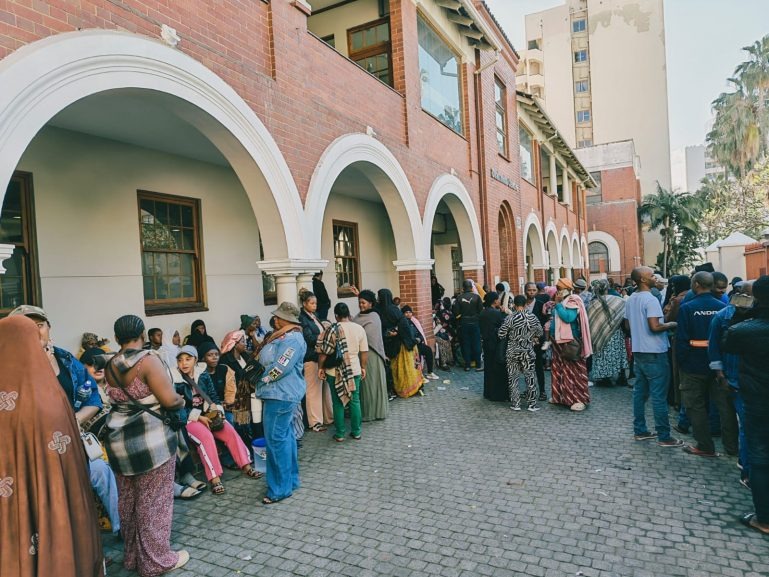
Hundreds of migrants are camped outside the Department of Home Affairs’ Durban Refugee Reception Office in Glenwood, KwaZulu-Natal, enduring prolonged hardship and uncertainty as a June 30 deadline to leave South Africa looms, IOL reported on Wednesday, May 27, 2026.
Living conditions and fears
People at the site include men, women and children who say they face intimidation, denial of services and threats linked to the June 30 deadline. They told IOL they have been left with little official guidance and fear possible violence.
Bishop Raphael Bahebwa, 51, described the situation as both a humanitarian and spiritual crisis for displaced families.
“I’m part of the people who are here as members of the community. But I am also here as an adviser, offering spiritual guidance. We have been outside since we left Durban Central Police Station.”
Bahebwa said the group moved between locations seeking safety and registration with services but that follow-up verification never came. He described deteriorating conditions, saying:
“We do not have any food. People are suffering, and we do not even have enough toilets, especially as there are more than 300 people here. Remember, on Saturday it was raining, and people were outside in the rain because they said it was better to die in public.”
Claims of denial of services and attacks
An anonymous 48-year-old Congolese mother of six told IOL families were living in fear after hearing threats that
“on June 30, we will be killed and that no foreigner will remain in South Africa.”
She said the group had already experienced violence and felt abandoned despite the presence of law enforcement.
She said:
“We have come here to seek protection because we have already been attacked. Even when the police are present, they are not doing anything. They are not helping us, so we are unsafe. We are pleading with the government to protect us or to intervene and stop this movement.”
The mother described severe socio-economic hardship and difficulty accessing healthcare, saying she and family members had been turned away from medical facilities. She said she missed a long-awaited appointment and that her grandson with sickle cell disease was being denied treatment. She added:
“We are not working, so how am I supposed to get money to buy medication or see a private doctor? We are suffering greatly.”
IOL reported that numerous individuals showed scars they said had been inflicted by assailants.
Claims and responses from activist and political actors
The anti-migrant group March and March denied being violent and said in part:
“South Africans are not xenophobic, nor are they violent, they have been patient with the government for far too long and foreign nationals have abused our mercy, kindness and it ends now.”
The group said it was acting in defence of communities and added:
“We are the voice of the voiceless, the unemployed, the drug addict, the women who are raped and trafficked every day by foreign nationals, we say enough is enough.”
The group also warned of escalating tensions and said it was aware the executive was planning further action in June.
Calls for state responsibility and legal protections
A Ugandan man among those camped said he had valid documentation but remained fearful after accusations linked to March and March. He told IOL:
“We came here for our safety because they are accusing us of not having documents to stay in South Africa legally, but we have proven that we have documents from the Department of Home Affairs.”
He argued that legal papers should guarantee access to government services and said:
“Our papers allow us to be in the country legally. We should be able to access government services such as hospitals and education for children.”
Immigration expert Craig Smith said the situation reflects gaps in how migration, rights protection and enforcement are managed and argued the state has duties that cannot be shifted to others. He said:
“In our immigration laws home affairs have a duty to countenance and prevent xenophobia and educate civil society on rights of foreigners and refugees.”
Smith warned that institutional responsibility rests with the department and its minister and that law enforcement must address incitement to violence:
“At the same time SAPS are duty-bound to maintain law and order and anti-immigrant sentiment that escalates or incites violence is a crime and those protagonists must be arrested.”
Smith added that the government has constitutional obligations to provide shelter, protection and dignity and said:
“It’s a flagrant breach of human rights and a commission of enquiry must be launched to stop [alleged] xenophobic sentiments and conduct.”
Diplomatic statement
Chrispin Phiri, spokesperson for the Department of International Relations and Cooperation minister, warned against vigilante responses and said:
“Irregular migration cannot be addressed by vigilantism. Law enforcement must address all matters of criminality, including the abuse of immigration laws.”
He added:
“Migration will happen, but it must happen within the confines of the rule of law.”
Phiri cautioned that dehumanising rhetoric undermines solutions and pointed to broader structural challenges, saying:
“Structural economic issues will not be addressed by targeting foreign nationals.”
He also noted migration is a long-standing feature of the region and said:
“The history of South Africa cannot be told without understanding migration, from the Mfecane/Difaqane up to the dictates of colonial settlers.”
What officials say and next steps
Those camped outside the Glenwood reception office say they are seeking protection, clarity on legal status and access to services. Community members, experts and government spokespeople cited in the report urged formal, law-based responses rather than intimidation or vigilantism.
Follow Joburg ETC on Facebook, Twitter, TikTok and Instagram
For more News in Johannesburg, visit joburgetc.com
Source: iol.co.za