News
Ramaphosa impeachment puts Government of National Unity at stake, says Unisa professor
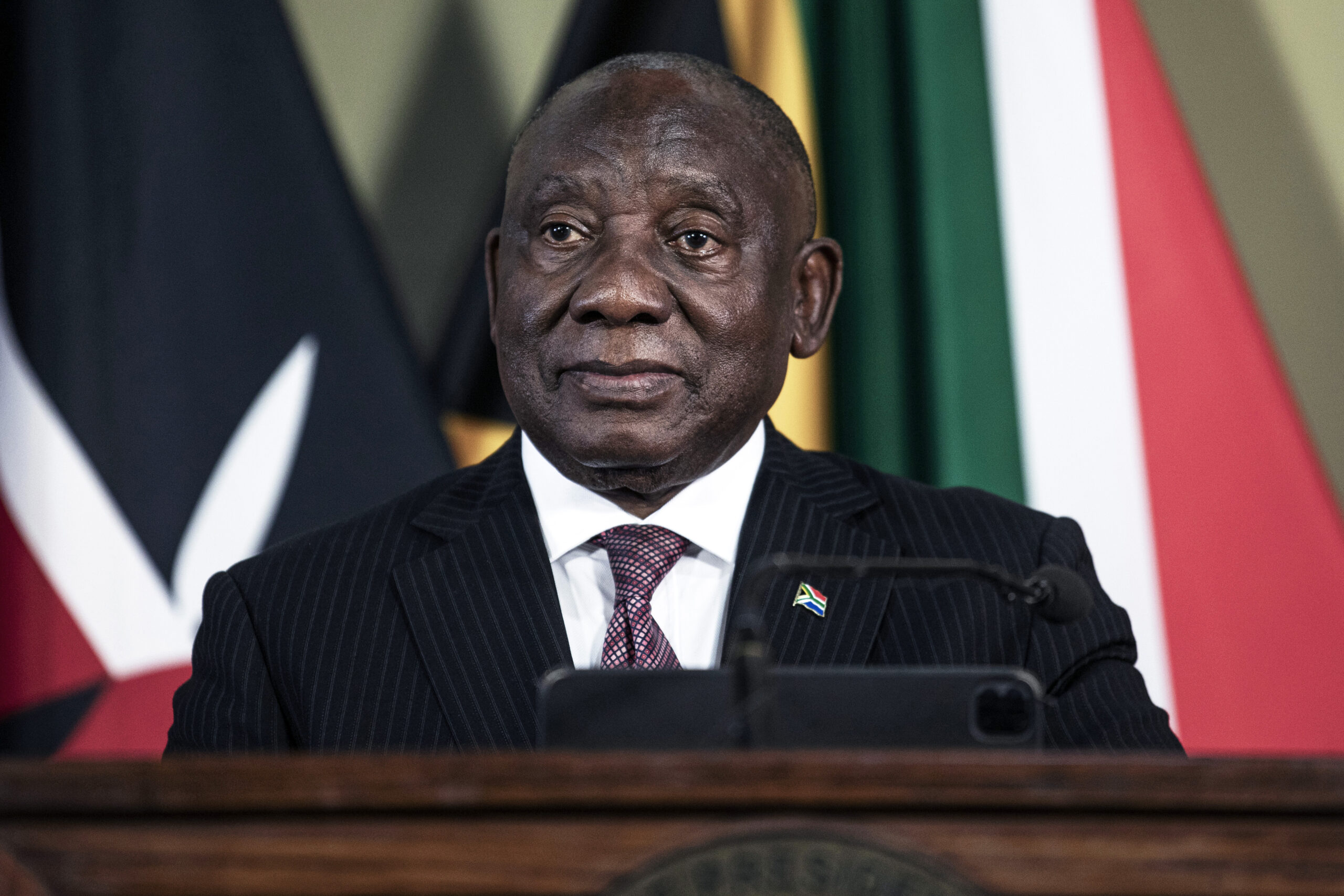
Prof Dirk Kotzé argues that the impeachment process targeting President Cyril Ramaphosa raises complex questions about political motive, party loyalties and the future of the Government of National Unity (GNU).
Who is driving the impeachment and why it matters
The impeachment initiative is being driven by the ATM and the EFF and rests largely on a dossier from Arthur Fraser, a former Director General of the State Security Agency and later of Correctional Services. Fraser was removed by Ramaphosa as part of post-state-capture reforms in intelligence, a fact Kotzé says shapes the dynamics behind the move.
Kotzé notes the current situation differs from past crises because Ramaphosa is both ANC president and national president; the impeachment motion comes from parties outside the ANC rather than from an internal recall.
Implications for the Government of National Unity
The author warns that an impeachment would not only target Ramaphosa personally but could also reconfigure the GNU. The voting pattern around the election of the Section 89 committee chairperson Makashule Gana of Rise Mzansi was elected on June 1 and the supporters of the impeachment motion are aligned along party positions relative to the GNU.
Kotzé points out that a successful impeachment would put the GNU at stake because it would most likely result in Paul Mashatile succeeding Ramaphosa. He says that could lead to a reshuffle of which parties participate in government, with parties such as the DA and FF+ possibly removed and other parties joining.
Numbers, procedure and the role of party politics
For an impeachment to succeed in South Africa’s National Assembly requires the support of 267 members. The ANC has 159 members, which Kotzé says means the party cannot afford more than 20 of its members to break ranks in a final vote.
Kotzé describes parliamentary impeachment as a semi-judicial process: charges are presented, evidence is led by legal practitioners, witnesses are cross-examined, and committee members question witnesses. The committee produces conclusions and recommendations for the National Assembly, which then debates and votes; a two-thirds majority is required for removal.
Politics, grandstanding and the election calendar
The piece argues that political grandstanding during impeachment proceedings is almost inevitable because parliamentarians not judges lead much of the interrogation and because the final decision is political. Kotzé draws parallels with impeachment processes worldwide and notes that outcomes often follow partisan lines.
The proximity of the local government elections in November 2026 adds another layer of complexity, Kotzé writes, because parties may calculate how their stance in the impeachment will affect their electoral standing. He adds that some GNU partners have already signalled critical positions: the UDM and Patriotic Alliance have adopted critical stances, while others such as the DA, IFP, Rise Mzansi and FF+ have said they will let the process run and be guided by the evidence presented.
What the process can and cannot do
Kotzé asks whether impeachment can be an instrument for seeking the truth, noting that the committee’s semi-judicial format lacks a judge to deliver a binding judgment. He emphasises that because the ultimate vote is taken by party-aligned members of the National Assembly, the outcome will be shaped by political calculations as much as by the evidence presented.
Prof Dirk Kotzé is in the Department of Political Sciences at Unisa. The views expressed are his own and not necessarily those of IOL, Independent Media or The African.
Follow Joburg ETC on Facebook, Twitter, TikTok and Instagram
For more News in Johannesburg, visit joburgetc.com
Source: iol.co.za