World
Video: New York Mayor honours Nelson Mandela in viral speech
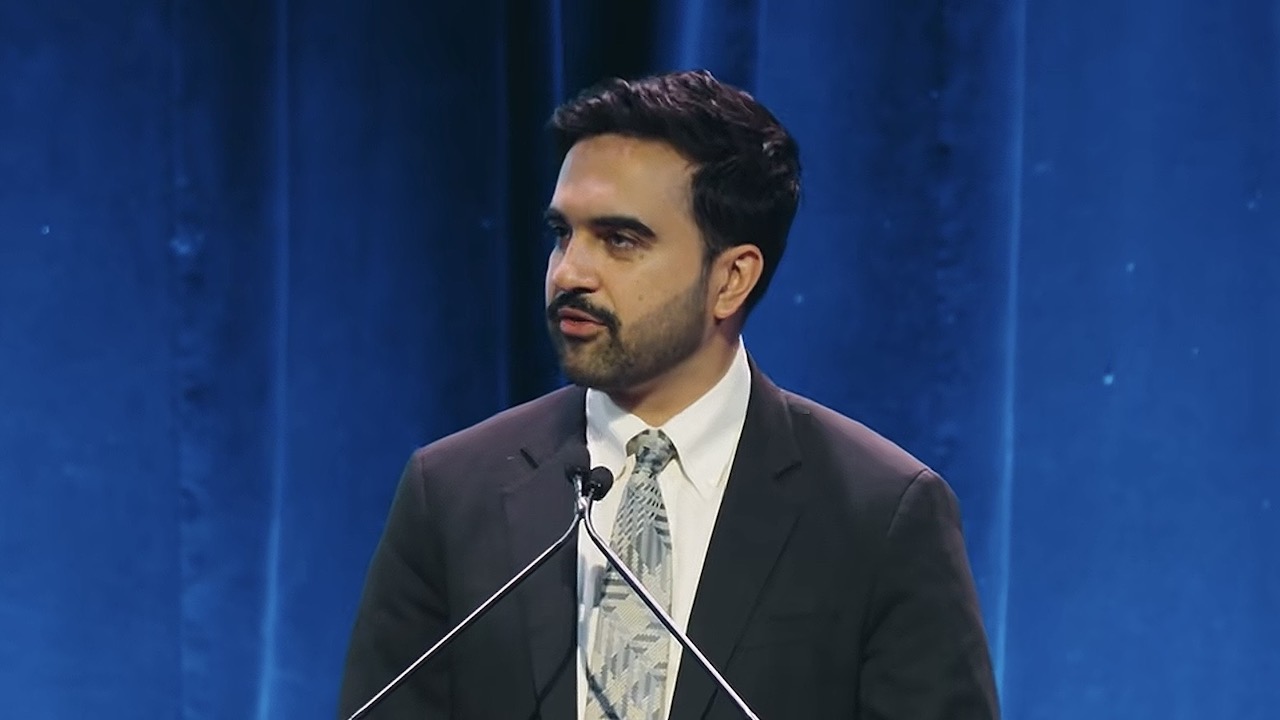
The New York mayor, Zohran Mamdani, honoured Nelson Mandela’s legacy by delivering a powerful speech that has gone viral on social media.
As the world marked Nelson Mandela Day, Mamdani chose to celebrate Madiba as a global icon whose principles, he argued, still challenge people to confront injustice today.
Speaking at the inaugural Nelson Mandela Global Leadership Forum in New York, Mamdani reflected on Mandela’s lifelong commitment to justice and solidarity, urging audiences to see the former South African president as a human being whose example remains relevant in today’s divided world.
His appearance at the event, however, also reportedly renewed international attention on his recent remarks suggesting New York authorities could act on International Criminal Court (ICC) arrest warrants should Israeli Prime Minister Benjamin Netanyahu visit the city during the United Nations General Assembly later this year.
@nycmayorTo the world today, Nelson Mandela is a hero exalted as a legend. But to the people of South Africa, he was Madiba, a leader who fought for justice even when the tides of the present were turned swiftly against it. To honor Madiba’s legacy is to fight injustice before history rewrites itself.♬ original sound – Mayor Zohran Kwame Mamdani
Addressing a packed audience, Mamdani praised the Nelson Mandela Foundation for ensuring Mandela’s legacy continues through activism rather than memory alone. He told attendees that Mandela’s influence could still be found wherever people continue fighting for dignity.
‘Madiba lives in every protest for justice, every call for democracy, every march with a righteous demand.’
Drawing on his own childhood, Mamdani recalled spending part of his early years in Cape Town between 1996 and 1998, describing Mandela as the first president he ever knew.
He shared memories of seeing Mandela’s face displayed across the city shortly after South Africa’s democratic transition, saying those formative experiences shaped his understanding that justice should produce tangible change in people’s daily lives.
Rather than placing Mandela on an untouchable pedestal, Mamdani argued that his humanity is precisely what makes his leadership worth following. Quoting Mandela himself, he reminded the audience: ‘I am not a saint unless you think of a saint as a sinner who keeps on trying.’
According to Mamdani, viewing Mandela as flawless risks turning him into someone to admire from a distance rather than someone whose example can be followed. Much of the speech focused on solidarity, a theme Mamdani repeatedly returned to as he reflected on Mandela’s support for liberation movements around the world.
He also used the address to speak about the ongoing conflict in Gaza, immigration, political prisoners and global inequality, asking audiences to consider who today’s society may one day recognise in the same way it now celebrates Mandela. His closing message echoed one of the speech’s central themes.
‘Solidarity is people choosing one another sometimes even over themselves.’
While the Mandela tribute received widespread attention online, discussion quickly shifted to Mamdani’s separate comments about Israeli Prime Minister Benjamin Netanyahu.
In a recent interview with The New York Times, Mamdani said he believes Netanyahu ‘belongs in The Hague’ because the ICC has issued an arrest warrant accusing him of alleged war crimes linked to the Gaza conflict. Netanyahu rejects the allegations.
Mamdani also said New York would do ‘whatever the law allows’ should Netanyahu visit during September’s UN General Assembly. The comments have prompted sharp criticism from Israeli officials.
Reportedly, Israel’s ambassador to the United Nations, Danny Danon, accused Mamdani of seeking publicity while failing to address antisemitism in New York. Danon insisted Netanyahu would still attend the UN gathering and suggested Mamdani himself should face arrest.
Netanyahu has also previously accused Mamdani of supporting Hamas and harbouring anti-American views, claims the New York mayor has consistently rejected.
Mamdani’s address quickly circulated across social media, particularly among supporters who praised its focus on Mandela’s principles of justice and solidarity. Others criticised the speech’s repeated references to the Israel-Palestine conflict, arguing it shifted attention away from Mandela’s broader legacy.
For many South Africans, however, Mandela’s international standing has long been tied to his belief that freedom should extend beyond national borders.
Whether celebrated or criticised, Mamdani’s speech ensured that Mandela’s name once again became part of an international conversation about the difficult political questions leaders continue to face today.
Follow Joburg ETC on Facebook, Twitter, TikTok and Instagram
For more News in Johannesburg, visit joburgetc.com
Featured Image: Screenshot from Video