News
Crime and migration: unpacking claims about illegal immigration and organised crime in South Africa
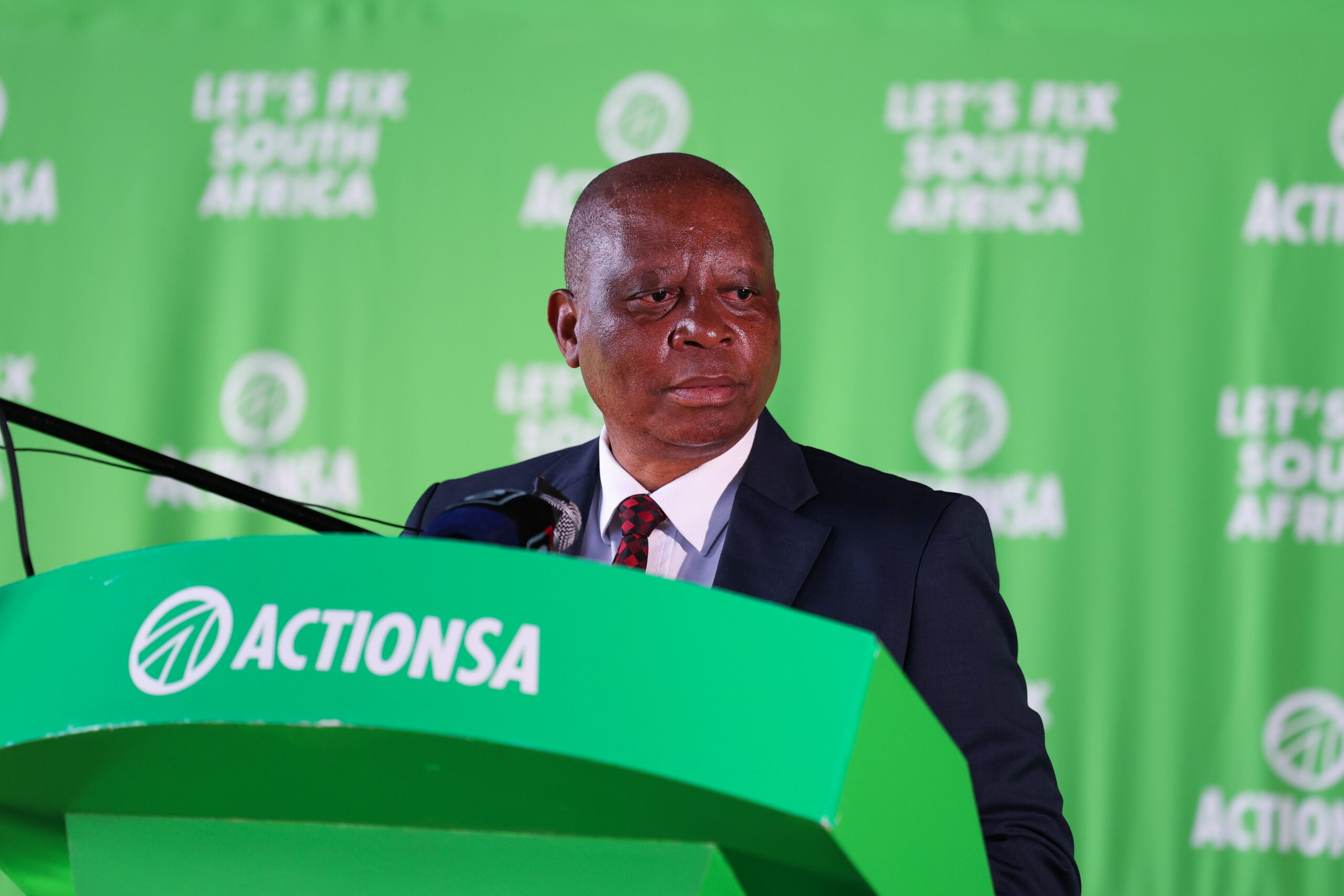
Political leaders, security experts and law-enforcement agencies are debating the links between undocumented migration and organised crime in South Africa. Recent comments from former Johannesburg mayor Herman Mashaba and President Cyril Ramaphosa, along with reporting by security officials, have focused attention on allegations that irregular migration routes overlap with criminal syndicates involved in illegal mining, extortion, drug trafficking and money laundering.
What political leaders are saying
Former Johannesburg mayor and ActionSA leader Herman Mashaba said people entering South Africa illegally are committing a crime and act with unlawful intentions. Mashaba has argued for the immediate deportation of undocumented foreigners and has previously proposed labour-based detention centres.
Mashaba, who served as Johannesburg mayor from August 2016 until his resignation in November 2019, said the government and leadership are at the root of the crime problem and accused the president directly:
“And I am sure everyone is aware that the problem of crime in this country starts with our government and the leadership. Right now, we are sitting with the president who is involved in money laundering,”
President Cyril Ramaphosa, in a recent Presidency Budget Vote speech, linked undocumented migration to organised crime and said undocumented migration routes increasingly overlap with criminal syndicates involved in illegal mining, extortion, drug trafficking and money laundering. He also acknowledged community frustrations over pressure on public infrastructure such as healthcare and education and raised economic concerns about foreign nationals operating spaza shops.
Claims from security specialists and police
Retired Interpol crime ambassador and security strategist Andy Mashaile described border-area bandits known as guma gumas operating around the Limpopo River and Beitbridge. He said these groups prey on undocumented migrants and are partners with drug dealers and cigarette smugglers, using violence, extortion, rape and robbery against vulnerable travellers.
Mashaile described how criminal networks recruit border crossers to transport contraband:
“For example, they would say we would take you up across the border, provided you carry some parcels for us into South Africa and deliver them. That is how illicit cigarettes and trafficking happen. And some are instructed to deliver guns,”
Police spokesperson Athlenda Mathe said the crime registry does not distinguish between foreigners and South Africans when recording arrests. Home Affairs spokesperson Thulani Mavuso did not respond to requests for comment in the reporting.
Reported arrests and raids
Recent reporting includes several arrests and law-enforcement actions cited by sources:
- Two Zimbabwean truck drivers, Joel Mhenyu and Pfidzai Chipuriro, were arrested in Zambia at the Kazungula Border Post on charges related to attempting to smuggle nine undocumented Ethiopians into South Africa.
- A 42-year-old Zimbabwean truck driver, Edgar Maroto, was arrested at the Beitbridge Border Post near Musina in April for allegedly attempting to smuggle explosives valued at nearly R1 million.
- In 2024, the SAPS Special Task Force rescued 90 undocumented Ethiopian nationals who were reportedly being kept in inhumane conditions in Sunnydale Ridge, Johannesburg, after investigators were tracing a kidnapping-for-ransom victim.
Multi-agency raids by the Directorate for Priority Crime Investigation (the Hawks) have targeted large-scale illegal boiler-room call centres in suburbs such as Bryanston and Umhlanga. These operations reportedly employed foreign nationals to defraud international victims through fake investment schemes.
Illegal mining, kidnappings and arms trafficking
Reports cited in the reporting estimate that undocumented foreign nationals make up an estimated 80% of all illegal miners, locally known as zama zamas, operating in South Africa. These miners are said to work in dangerous conditions in decommissioned or active gold and platinum mines under the control of organised networks.
Transnational criminal networks and undocumented foreign nationals have also been linked in reports to rising kidnapping and scam operations, with syndicates reportedly originating from countries including Mozambique, Pakistan, Bangladesh and parts of East Africa operating in provinces such as Gauteng, KwaZulu-Natal and Mpumalanga.
Mashaile said police intercepted a truck and a car exchanging white bags on the R24 road in Magaliesburg and found eight AK-47 rifles. He added that those rifles appeared to have come from Namibia.
A Global Initiative Against Transnational Organised Crime (GI-TOC) report was also cited describing how commercial trucks carrying perishable produce can be used to smuggle firearms and ammunition from Namibia to the Western Cape because shipments receive expedited checks.
Public protests and enforcement responses
Groups including March and March and Operation Dudula have organised mass marches in Johannesburg, Pretoria and Durban demanding mass deportations and a state-enforced 30-day ultimatum, according to the reporting. The government has also carried out large-scale arrests related to immigration enforcement this year, which were noted in related coverage.
Where reporting leaves questions
Sources in the reporting cited overlaps between irregular migration and organised crime, and provided specific examples of arrests, rescues and seizures. At the same time, police officials noted the crime registry does not record nationality, and Home Affairs did not respond to requests for comment. Those limits are reflected in the available facts.
What is clear from the reporting: political leaders and security experts are linking irregular migration to a range of criminal activity, while law-enforcement actions and published reports show examples of smuggling, illegal mining involvement, kidnappings, boiler-room fraud and arms seizures involving foreign nationals.
Follow Joburg ETC on Facebook, Twitter, TikTok and Instagram
For more News in Johannesburg, visit joburgetc.com
Source: iol.co.za