World
China floods kill 38 as Typhoon Maysak devastation grows
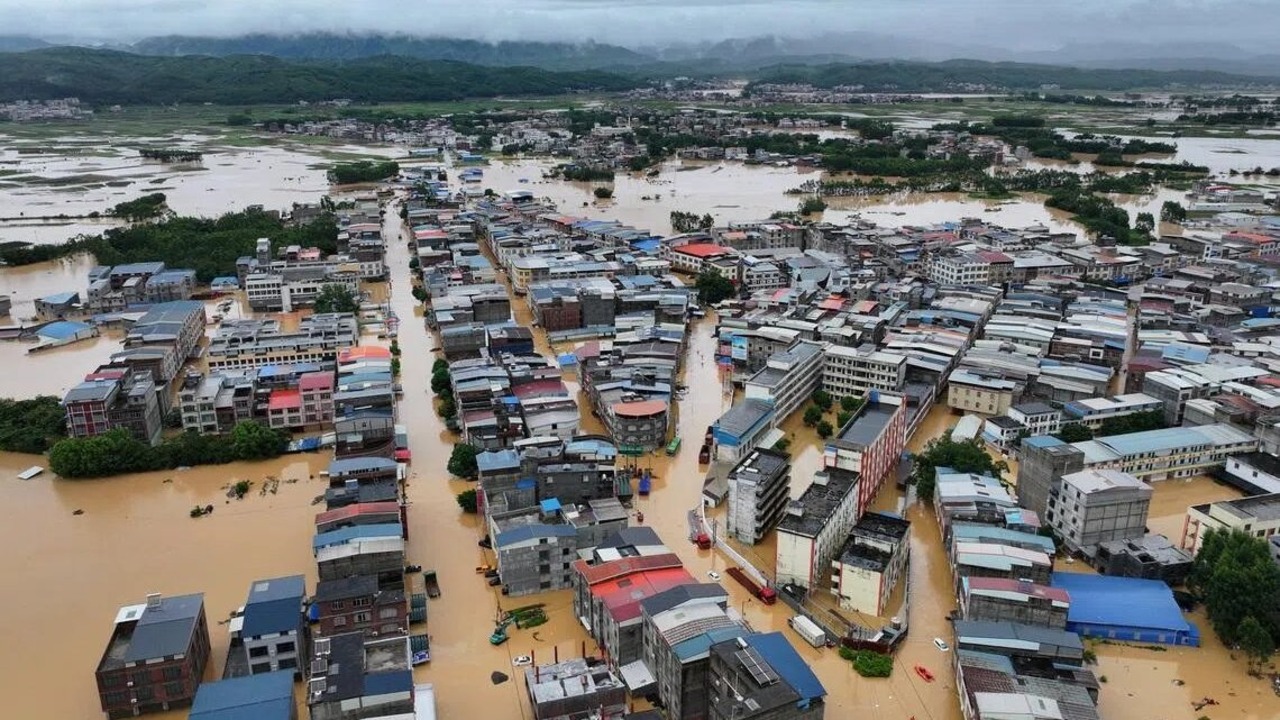
Rescuers searched flooded areas of China on Wednesday, 8 July, after devastating storms that killed 38 people.
After days of relentless rain, overflowing rivers and destructive storms, emergency crews are still searching for survivors as communities count the cost of one of the country’s latest extreme weather disasters. Even as rescue efforts continue, forecasters are warning that another powerful super typhoon is already closing in.
According to IOL, Southern China‘s Guangxi region has borne the brunt of Typhoon Maysak, with swollen rivers spilling over their banks, floodwaters swallowing homes and a reservoir dam collapsing under the pressure. Officials say at least six people have died in Guangxi, while around 130 000 residents have been moved to safer ground.
Fast-moving floodwaters have also damaged thousands of hectares of farmland, raising concerns about the impact on local food production. For many residents, the flooding unfolded with terrifying speed.
‘The floods happened so rapidly, the water just came so fast,’ one villager, Zhou, told the BBC. She said many people escaped with little more than the clothes they were wearing, leaving behind food and essential supplies as water rushed into their homes overnight.
NOW: A devastating situation is unfolding as Liulan Reservoir collapses following heavy rainfall from Typhoon Maysak in Hengzhou, Nanning, Guangxi, China. pic.twitter.com/vyuQn5nuyl
Weather Monitor (@WeatherMonitors) July 6, 2026
In some areas, flood levels rose high enough to cover the first floor of buildings, forcing families onto rooftops while they waited for rescue boats. Authorities have deployed inflatable boats, food supplies, rain gear and emergency relief equipment across the disaster zone, but difficult conditions continue to slow rescue operations.
Residents have described limited access to rescue personnel, damaged communication networks and widespread power outages.
‘We simply couldn’t rescue everyone in time,’ another resident, Huang, said, describing how villages in her area were submerged within minutes.
Standing water remains in many low-lying neighbourhoods, while officials have warned that rivers are expected to continue rising. Water levels at parts of Guangxi’s river system are forecast to exceed official warning thresholds by several metres, placing additional pressure on dams and flood defences.
China has kept its second-highest flood emergency response level in place as authorities monitor the situation.
However, the severe weather has not been confined to southern China. In central Hubei province, violent thunderstorms and unusually powerful tornadoes have claimed another 11 lives and injured more than 330 people. Thousands of homes have been damaged, while dozens have collapsed completely.
Meteorologists say the rare tornadoes formed after cold northern air collided with warm, moisture-rich air carried inland by Typhoon Maysak. Videos shared widely on social media showed powerful winds ripping through streets, tossing outdoor furniture into the air and damaging buildings.
At least 11 people were killed due to strong winds in central China.
At least 11 people have died, one person is missing, and more than 330 were injured after a storm in China’s Hubei Province caused powerful upward‑moving weather phenomena.
Between 19:00 and 23:00 on July 6,… pic.twitter.com/vzDgKAeALg
China Now (@ChinaNow24) July 7, 2026
One student who witnessed the storm said: ‘Things started flying through the air outside.’ Tornadoes are relatively uncommon in this part of China, making the event particularly alarming for residents.
As recovery efforts continue, attention is already shifting east, where Super Typhoon Bavi is expected to approach the Zhejiang and Fujian coastline later this week. Weather officials say the system has maintained super typhoon strength for an extended period and could bring intense rainfall, destructive winds and fresh flooding if it makes landfall.
Several provinces have begun emergency preparations, with some schools suspending in-person classes ahead of the storm’s arrival. Chinese President Xi Jinping has instructed emergency services to ‘go all out’ in rescue and disaster relief operations.
For many families still waiting to hear from loved ones, however, the immediate concern is getting everyone home safely before the next storm arrives.
Follow Joburg ETC on Facebook, Twitter , TikTok and Instagram
For more News in Johannesburg, visit joburgetc.com
Featured Image: @irene_makarenko / X