News
Ramaphosa moves to steady PIC after board resignations put R3.6tn of public assets under scrutiny
Board resignations and governance concerns at the PIC have focused attention on R3.6 trillion in public assets. Ramaphosa says there’s no crisis as a new board is appointed.
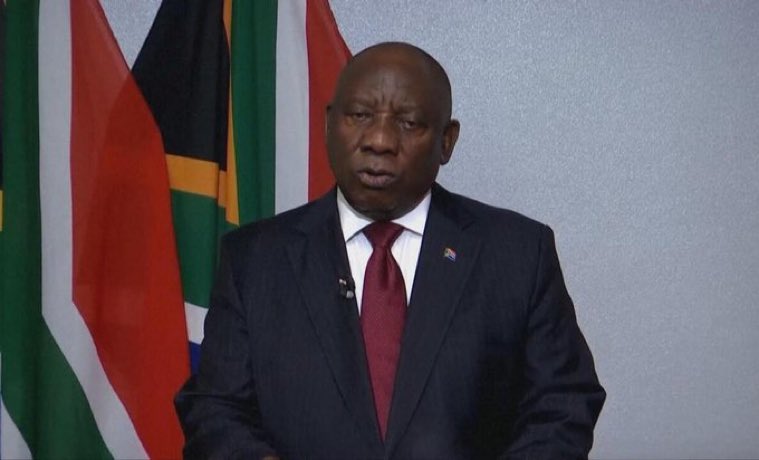
President Cyril Ramaphosa has moved to reassure the public after a wave of resignations and governance concerns at the Public Investment Corporation (PIC), which manages more than R3.6 trillion of public-sector assets. Ramaphosa said the PIC is not in a “crisis” as he defended recent government action to stabilise the institution.
President: action to restore stability, not a crisis
Speaking on the campaign trail in Emalahleni, Mpumalanga, over the weekend ahead of local government elections, Ramaphosa emphasised the PIC’s scale and importance. He described the corporation as “the largest asset manager on the continent” and said it “manages almost half of the worth of our GDP, 3.6 trillion rand.”
Ramaphosa said the government’s interventions aim to “solidify the stability and getting the PIC to move forward in a much stronger way,” adding:
“So there is no crisis at the PIC. Our actions are aimed at just solidifying the stability and getting the PIC to move forward in a much stronger way.”
He told supporters the markets had not reacted negatively and that the changes demonstrate the government’s determination to implement the recommendations of the retired Judge Lex Mpati Commission of Inquiry.
Cabinet appoints new board after mass resignations
Last week, Minister in the Presidency Khumbudzo Ntshavheni said Cabinet approved the appointment of a new PIC board to stabilise the corporation following the resignation of the previous board. The appointments were announced at a post-Cabinet media briefing.
Ntshavheni said the appointments were intended to address governance challenges and that the Minister of Finance, Enoch Godongwana, “will continue to drive the reforms of the PIC as recommended by the Judge Mpati Commission in consultation with Cabinet.”
The new non-executive chair appointed to lead the PIC board is Seiso Mohai, Deputy Minister in the Presidency for Planning, Monitoring and Evaluation. Cabinet also approved seven other non-executive directors:
- Patience Nqeto (DBSA deputy chair)
- Lebogang Mokgabud (fintech expert and GEPF board member)
- Advocate Gatlelane Ouma Rasethaba (former Deputy National Director of Public Prosecutions)
- Vivien McMenamin (Mondi CEO of Corrugated Packaging)
- Bajabulile Swazi Tshabalala (former senior vice-president and CFO of the African Development Bank)
- Itani Mafune (chartered accountant and corporate executive)
- Moipone Ramoipone (National Treasury representative)
The appointments follow the resignation of all non-executive directors a week earlier, leaving acting CEO Batandwa Damoyi and suspended CEO Patrick Dlamini as the corporation’s remaining executive directors.
Calls for deeper reform and concerns for pensioners
Opposition voices and governance experts warned that personnel changes alone will not resolve underlying problems flagged by the 2020 Mpati Commission. The commission investigated alleged impropriety in PIC investment decisions, governance and political interference, and recommended that the PIC chairperson be an independent, non-executive professional with expertise in pension funds, financial markets and governance.
EFF MP Carl Niehaus said the PIC has faced “serious problems and deep structural challenges for a long time” and disagreed with the President’s assessment that the institution is not in crisis.
“Any governance failure or crisis at the PIC directly threatens the retirement security of hundreds of thousands of public servants and their families. These problems must never be treated lightly,” Niehaus said.
Niehaus pointed to a string of high-profile losses and distressed unlisted investments documented in the commission’s work, including a past R4.3 billion investment in Ayo Technology Solutions, and warned that unresolved governance weaknesses risk further value destruction and erosion of depositor confidence.
Governance advisers urge implementation, not rhetoric
Governance advisor Faiez Jacobs said the PIC is not in financial collapse but is experiencing a “serious crisis of governance, leadership and institutional trust.” He said the new board must prove its authority and deliver measurable implementation of outstanding Mpati Commission recommendations.
“The PIC is not in financial collapse, but it has experienced a serious governance and leadership crisis. A new board can stabilise the institution, but only deeper reform, full accountability and measurable implementation of the Mpati Commission’s lessons will secure its long-term legitimacy,” Jacobs said.
Jacobs listed priorities for the incoming board that include restoring clear authority between board and management, resolving leadership instability lawfully, completing worker and depositor representation, reviewing unresolved forensic and whistle-blower matters, and strengthening oversight of distressed investments.
What remains clear
The PIC continues to manage funds on behalf of the Government Employees Pension Fund, the Unemployment Insurance Fund and other public-sector clients, and remains a strategically important financial institution. Debate over whether the institution faces a solvency crisis or a crisis of governance continues among political leaders, opposition MPs and governance experts, while government ministers emphasise implementing the Mpati Commission recommendations and the recent board appointments as steps to restore stability.
Follow Joburg ETC on Facebook, Twitter, TikTok and Instagram
For more News in Johannesburg, visit joburgetc.com
Source: iol.co.za