News
Super El Niño threat: dam levels lag last year as South Africa urged to conserve water
A likely strong El Niño could bring a hot, dry Oct 2026–Mar 2027. Major dams trail 2025 levels and experts urge early conservation to protect supplies.
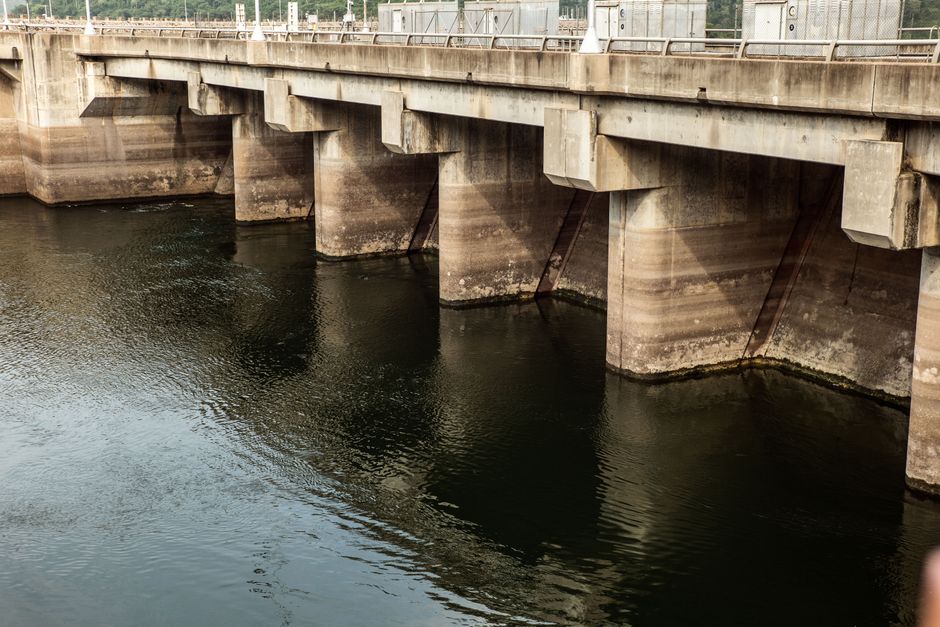
South Africa faces a high probability of a strong or “super” El Niño this summer, raising the risk of a hot, dry season from October 2026 through March 2027 and increasing pressure on water supplies already trailing last year’s levels.
Major systems running below 2025 levels
Weekly figures show the major dams supplying Cape Town and the Western Cape Water Supply System were at 77.7% of capacity for the week of 7 August 2026, compared with 84.8% for the same week in 2025. Individual dams in that system varied: Theewaterskloof was at 77.8% on 7 August; Voëlvlei at 61.5%; and Steenbras Lower at 53.6%, while Steenbras Upper, Berg River and Wemmershoek remained above 90%.
Big dams show a mixed picture
The Gariep Dam, South Africa’s largest by capacity, stood at 99.3% for the week referenced, unchanged from the week before and marginally ahead of its level a year earlier, when it was recorded at 99.1%. In the country’s economic heartland, the Vaal Dam averaged 101.41% for the week of 10 to 16 August 2026, with storage ranging between 100.63% and 101.89%. That is down from 107.2% during the same period in 2025.
Experts and officials urge caution
Independent water expert Carin Bosman warned that a drier summer would reduce availability and “inevitably lead to more restrictions, increased costs (not just municipal, but everything down the value chain), and lower reliability of supply.”
Wisane Mavasa, a Department of Water and Sanitation spokesperson, said the department is monitoring conditions and “stands ready to act if needed.” Mavasa added that if monitoring shows early signs of dry conditions, “water users may be required to proactively implement water conservation measures, and in some systems water use restrictions may be introduced where necessary to ensure water security.”
Why monitoring and early conservation matter
Both Bosman and DWS cautioned that healthy-looking storage figures are not a guarantee against future shortages. Bosman said:
“If consumption patterns are not reduced early enough, people can be caught with their pants down, because there is nothing you can do to fill a dam once it’s empty except wait for rain.”
DWS likewise warned that while “healthy dam storage levels provide an important level of assurance for current water availability” they “should not be interpreted as a guarantee against future water shortages.”
Longer drought cycles and historical impacts
Research published in 2021 found South Africa has experienced repeated droughts over the past 40 years, with major episodes in 1982–1984, 1991–1992, 1994–1995, 2004–2005, 2008–2009, 2015–2016, and 2018–2020. That research documented substantial human and economic impacts: the 1992 drought is estimated to have affected around 250,000 people, costing roughly 50,000 agricultural jobs and a further 20,000 jobs in related industries. The study also noted that during the 2007–2008 drought, government spending on agricultural drought relief exceeded R285 million.
How drought develops and what buffers exist
Bosman described three scientific categories of drought: meteorological (rainfall below normal), agricultural (declining soil moisture) and hydrological (falling surface and groundwater after a prolonged dry spell). She noted soil moisture and groundwater can provide a temporary cushion but require rainfall to be recharged.
DWS confirmed it tracks soil moisture and groundwater alongside surface water as part of its monitoring: “Healthy soil moisture supports agricultural production during short dry periods, while groundwater provides an important supplementary water source during times of reduced surface water availability.”
Regional differences and advice for residents
Storage trends differ by region: the Eastern Cape and KwaZulu‑Natal were already trending below the previous year, while the Free State and Western Cape were holding up more strongly. Bosman advised residents to monitor figures for their own catchments through DWS and local water boards rather than relying on national averages, saying:
“Those who plan early and use water sparingly will be the least at risk.”
DWS urged all South Africans to use water wisely at all times and pointed to simple steps such as fixing leaks and avoiding unnecessary losses to strengthen national water security.
What to watch next
Climatologists and the department will publish seasonal guidance ahead of the critical November-onward rainfall period. DWS said it bases planning on “official seasonal climate information and observed hydrological conditions” and uses a “risk-based approach involving continuous monitoring, preparedness planning, stakeholder coordination and adaptive water resource management to respond proportionately to prevailing conditions.”
Follow Joburg ETC on Facebook, Twitter, TikTok and Instagram
For more News in Johannesburg, visit joburgetc.com
Source: citizen.co.za