News
Former Nkandla architect ordered to repay R147.2 million over security upgrade losses
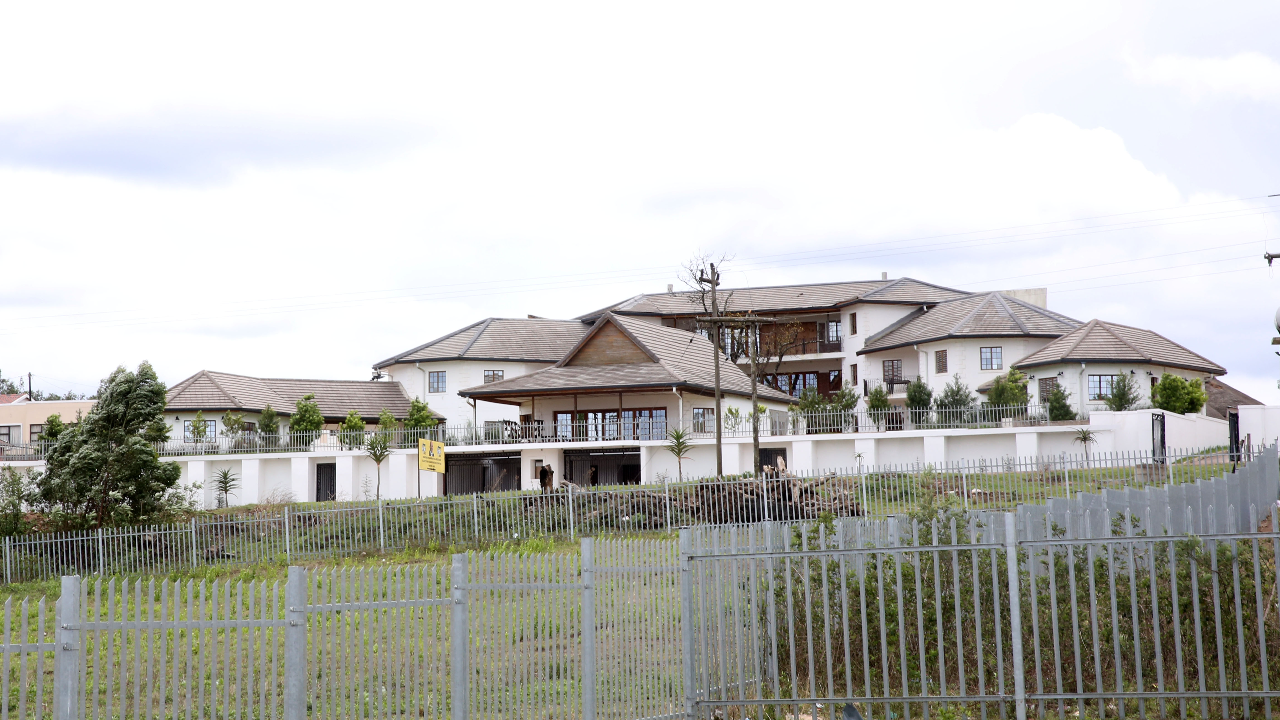
A former architect at the centre of the controversial Nkandla upgrades has been ordered to pay back R147.2 million after the Special Tribunal found that his conduct contributed to a massive loss of public money.
The judgment against Minenhle Makhanya, who served as the architect and principal agent for the project at former president Jacob Zuma’s private residence in Nkandla, KwaZulu-Natal, was delivered on Wednesday, 26 August 2026.
The Special Investigating Unit (SIU) said the amount of R147,269,444.06 represents the financial loss suffered by the National Department of Public Works as a result of unlawful conduct linked to the project.
How a R27.8 million project ballooned
The Nkandla upgrades began with an approved cost of about R27.9 million.
The State-funded work followed security assessments by the South African Police Service and South African National Defence Force after Zuma became president and was entitled to state security and protection for himself, his family and his private residence.
But the project eventually grew to R216 million.
According to the SIU investigation, works were authorised that went beyond the security requirements identified in the assessments.
These included tunnels with an exit and three lifts, additional accommodation for security personnel, a laundry, visitors’ lounge, basement parking, VIP parking, a fire pool, internal roads, air-conditioning and extensive landscaping.
The cost of these additional structures and works amounted to more than R68.5 million.
Tribunal finds procurement rules were bypassed
The Tribunal found that Makhanya’s appointment as principal agent was not preceded by a competitive bidding or open tender process.
There was also no emergency or other lawful reason for bypassing procurement requirements, while Makhanya was not registered as a supplier with the Department of Public Works.
His appointment letter was issued on 27 August 2009.
The Tribunal subsequently declared the contract relating to his appointment invalid and without legal effect.
Concerns over payments and approvals
The SIU’s investigation found that Makhanya authorised and certified payments for work that had not been required by the security assessments.
The Tribunal also found that necessary written approvals for variations and over-designs were not obtained.
It further found that payments were certified at costs above market-related rates and that some payments were approved for work that had either not been completed or had not been properly accounted for.
The judgment also dealt with payments totalling R54.8 million to Moneymine Investments 310 CC and Bonelena Construction and Projects (Pty) Ltd, which the Tribunal found were contrary to relevant contractual requirements.
Judge says responsibility did not end with one person
While the Tribunal held Makhanya liable, Judge K. Pillay noted that the architect was not the only person involved in allowing the Nkandla project costs to escalate.
The judge said it was regrettable that Makhanya was the person against whom the SIU had launched the action, noting that he “clearly did not act alone”.
However, the Tribunal found that his role as architect and principal agent meant he had a responsibility to protect the department from fruitless and wasteful expenditure.
The Tribunal rejected Makhanya’s defences, including his argument that he was simply acting on instructions and decisions from the SAPS and SANDF.
His arguments relating to prescription and time limits were also rejected.
Zuma repayment reduces the amount
The final amount was reduced after the SIU accepted a submission relating to R7.8 million that Zuma had repaid as a contribution towards non-security-related upgrades.
That amount will be deducted from the amount considered just and equitable for Makhanya to repay.
Makhanya has also been ordered to pay the legal costs of the proceedings, including the costs of two counsel.
A long-running reminder about public money
The Nkandla saga has remained one of South Africa’s most closely watched examples of the consequences of blurred lines between public security requirements and expenditure at a private residence.
The latest judgment puts the focus firmly on accountability: when public projects expand far beyond their original scope, those entrusted with managing them can face personal consequences.
For the SIU, the judgment is part of its broader effort to recover money lost through unlawful conduct and corruption while strengthening consequence management across government.
Follow Joburg ETC on Facebook, Twitter, TikTok and Instagram
For more News in Johannesburg, visit joburgetc.com