News
Millions wasted? KwaMhlanga abattoir and Tshwane resort left to rot
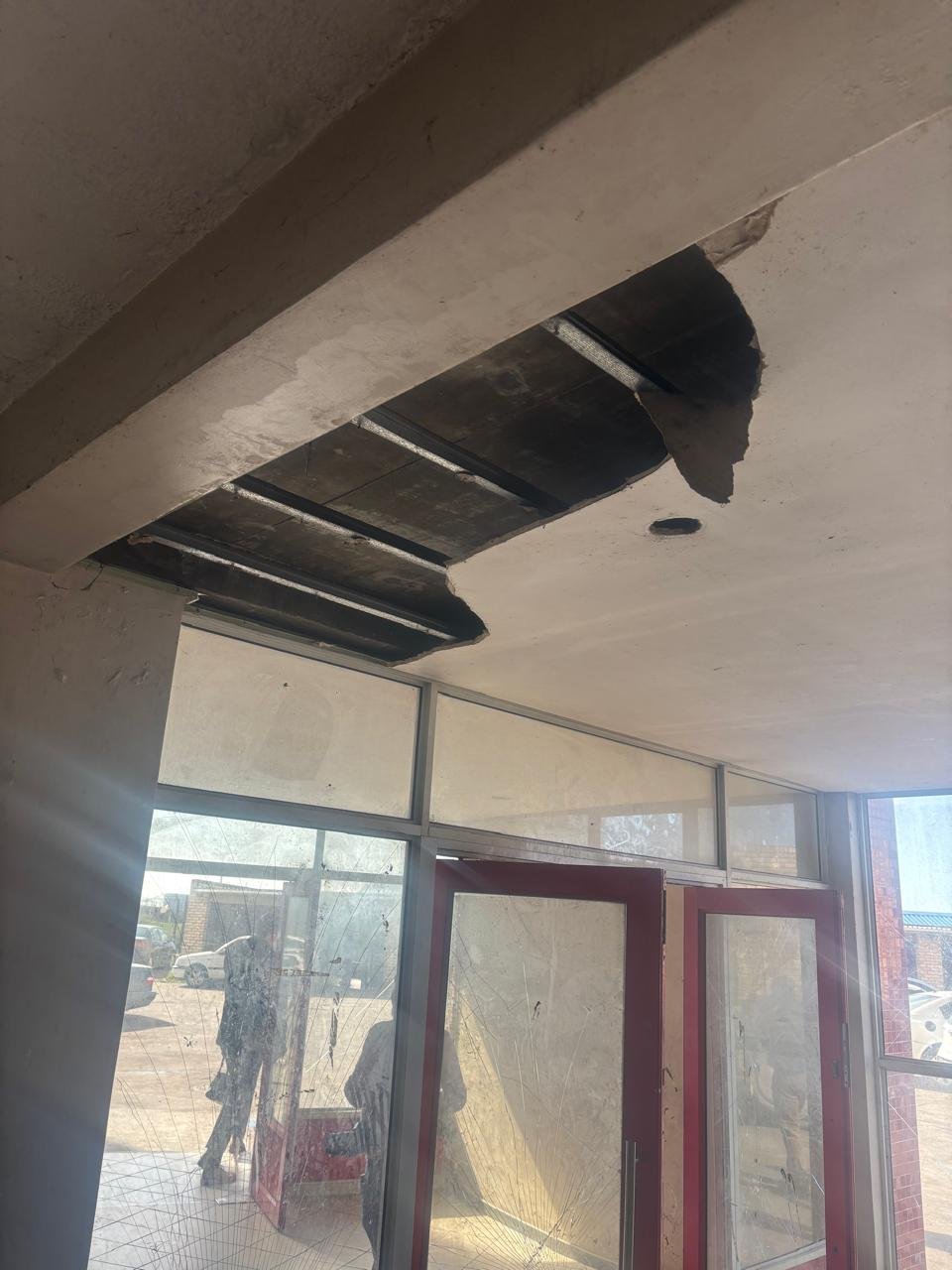
More than 20 years after public money was committed to a community abattoir in KwaMhlanga, Mpumalanga, the facility remains unused. Across the country in Atteridgeville, a Tshwane recreation resort intended to serve the public has suffered theft, vandalism and years of neglect.
The two projects tell a wider story about South Africa’s infrastructure challenges: spending money to build a facility is only the beginning. Without effective planning, maintenance and a workable operating model, even well-intentioned developments can become expensive reminders of promises that were never fulfilled.
The issue echoes concerns raised by Public Service Commission chair Professor Somadoda Fikeni during his testimony before the Madlanga Commission of Inquiry. Fikeni described South Africa as a “cemetery of policies”, arguing that the problem is often not a lack of laws or institutions, but the failure to turn them into meaningful results.
KwaMhlanga abattoir has stood unused for decades
The KwaMhlanga abattoir was conceived as a local economic development project intended to support livestock farmers, create skills and establish a facility where cattle and goats could be slaughtered.
By 2005, Thembisile Hani Local Municipality had already reported public funding for the development. According to a presentation submitted to a parliamentary monitoring group, the project received approximately R1.5 million from the Department of Provincial and Local Government’s local economic development fund, while Nkangala District Municipality contributed more than R1 million.
The proposed facility was designed to process up to 20 cattle a day, with plans to accommodate goats as well.
Its operating model included a skills-transfer component. An operator supplied through the Agricultural and Horticultural Institute was expected to train local people, who would eventually take over the business after three years.
The municipality also planned to investigate whether animal byproducts could be processed, potentially creating further economic opportunities.
Yet more than two decades later, the facility remains unused.
What was meant to help local producers access processing facilities and build a sustainable business has instead become a symbol of a development project that failed to reach its intended purpose.
Residents blame the nearby wastewater treatment plant
One of the concerns raised by local residents is the abattoir’s proximity to a wastewater treatment plant across the road.
Resident Vusi Thubana said a game meat dealer operated from the facility for several months before abandoning it, citing the odour from the wastewater works as a major reason for leaving.
Food-premises hygiene regulations do not automatically prohibit an abattoir from operating near a wastewater treatment plant. However, the facility must be able to demonstrate that conditions such as sewage odours, pests and airborne contamination do not compromise hygiene and food safety.
The reported experience of the former operator raises questions about whether the location’s practical challenges were adequately considered and addressed.
Vusi Borholo, another local resident who worked on the project’s early construction stages, described the facility as a waste of public money.
He warned that the building could eventually be stripped of its remaining equipment because residents see little value in a facility that has never fulfilled its intended role.
More money was spent, but the project remained unused
The original investment was not the end of the public expenditure.
Municipal documents reportedly record more than R2.5 million in subsequent spending on the abattoir, including cold-room facilities and efforts to mobilise farmers.
That raises an important question: why did additional spending fail to turn the development into a functioning economic asset?
The 2005 municipal presentation shows that the project had already been funded and had a defined operating concept long before those later interventions.
On paper, it brought together several elements of local economic development: public investment, private-sector involvement, livestock production, skills transfer and a planned processing capacity.
But infrastructure alone cannot sustain a business. A facility also needs suitable operating conditions, reliable management, sufficient demand and a realistic plan for covering ongoing costs.
Thembisile Hani Municipality had not responded to questions by the time of publication.
Tshwane resort offers another example of neglected infrastructure
The problems extend beyond economic development projects.
In Atteridgeville, west of Pretoria, Ga-Mothakga recreation resort illustrates how public recreational facilities can lose their value when maintenance and security fail.
The City of Tshwane’s 2024/25 oversight report records theft and vandalism affecting the resort’s youth camps. The report also identifies wider problems across the city’s resort network, including inadequate security, maintenance backlogs, blocked drains, overloaded septic tanks, flooding, roof leaks and insufficient lighting.
The resort has reportedly suffered extensive neglect, with chalets stripped bare and roofing stolen.
The damage is particularly significant because the site also houses the SS Mendi memorial, which commemorates the 616 South Africans, mostly Black members of the South African Native Labour Corps, who died when the ship sank in the English Channel on 21 February 1917.
The loss is therefore not only about recreational facilities. It also raises concerns about preserving a site of historical significance.
Functional resorts can generate revenue and serve communities
Tshwane’s own figures illustrate the potential value of maintaining public recreational infrastructure.
The city’s resort network recorded nearly 97,726 visitors during the 2022/23 financial year and generated approximately R14.75 million in revenue.
Those figures do not establish how much Ga-Mothakga itself could earn, but they show that functioning resorts can attract visitors and contribute to municipal revenue.
When facilities are vandalised or left unusable, communities lose access to recreational spaces and municipalities risk losing opportunities to generate income.
Neglect can also create a cycle of further costs. Damaged buildings and stolen equipment may require expensive rehabilitation, while inadequate security can leave restored facilities vulnerable to the same problems.
Tshwane metro spokesperson Lindela Mashigo had not responded to questions by the time of publication.
Why failed infrastructure costs more than its construction price
Tando Rulashe, a senior lecturer and programme leader for public administration at the University of Mpumalanga, said Fikeni’s observations were relevant to the country’s public administration challenges.
Rulashe argued that infrastructure development should not be confused with successful service delivery.
A government may spend millions constructing a facility, he said, but if it never becomes operational, the intended public benefit is not realised. Expenditure can also continue after a project fails, through security, maintenance, repairs and attempts at rehabilitation.
The true financial cost therefore extends beyond the original construction budget.
However, Rulashe cautioned against assuming that every failed project is the result of corruption or deliberate sabotage.
He identified other possible causes, including inadequate feasibility studies, poor site selection, weak project management, fragmented institutional responsibilities and insufficient planning for daily operations.
The concern becomes more serious when the same problems persist for years without meaningful corrective action or accountability.
South Africa already has an extensive legal framework governing public expenditure, Rulashe noted. The challenge is ensuring that compliance and spending translate into measurable developmental outcomes.
He said public investment should be assessed not simply by whether the money was spent or the building completed, but by whether the project remains functional, sustainable and useful to the people it was intended to serve.
Who benefits when public projects fail?
The KwaMhlanga abattoir and Ga-Mothakga resort raise a broader question about how government evaluates the success of its investments.
A completed building may be recorded as a project milestone, but that does not necessarily mean the community has benefited. When facilities remain unused or deteriorate, residents are left without the promised services while public resources may be needed to repair or replace them.
Rulashe said Fikeni’s argument invites closer scrutiny of who benefits from recurring expenditure, who bears the financial consequences of failure and why administrative shortcomings can continue despite existing oversight mechanisms.
The two facilities have different purposes and histories, but they point to the same underlying challenge: public investment must deliver lasting value.
Until government institutions place greater emphasis on whether projects are operational, sustainable and accountable to communities, the cost of failed infrastructure will continue to be measured in more than money.
Follow Joburg ETC on Facebook, Twitter, TikTok and Instagram
For more News in Johannesburg, visit joburgetc.com
Source: The Citizen