News
Joburg’s failing infrastructure is creating opportunities for criminal networks, report warns

Joburg’s failing infrastructure is creating opportunities for criminal networks, report warns
Johannesburg’s failing water and electricity infrastructure may be doing more than disrupting residents’ daily lives. A new report warns that the city’s breakdowns are creating lucrative opportunities for criminal networks, corrupt officials and contractors who allegedly benefit from the very problems they are supposed to fix.
The report by the Centre for Development and Enterprise (CDE), drawing on a study by the Global Initiative Against Transnational Organised Crime (GI-TOC), describes what it calls a “crime-council ecosystem” operating within the City of Johannesburg.
The study, titled Joburglary: Assessing the Crime-Council Ecosystem in the City of Johannesburg, examines how alleged political interference, weaknesses in procurement and direct criminal activity can combine to undermine municipal services.
According to the CDE, the concern is that infrastructure failures and emergency repairs can become sources of income for those involved, creating incentives to keep the city’s problems going.
How infrastructure failures allegedly benefit criminals
The report identifies three interconnected levels of alleged criminal activity.
The first involves political influence over parts of the municipality, particularly municipal entities and their procurement processes. The CDE warns that interference in board appointments and senior management can create opportunities for tenders to be manipulated, inflated or awarded to connected businesses.
The second involves networks allegedly linking municipal officials, contractors and criminals around services such as water, electricity and property.
The third includes more direct criminal activity, such as extortion involving municipal employees or contractors.
The report says violence and intimidation can help protect these interests, putting investigators, whistleblowers, politicians and legitimate businesses at risk.
Together, these activities can turn failing infrastructure into a business opportunity, particularly when the city is forced to spend money urgently to restore essential services.
Water shortages and the alleged ‘water mafia’
Johannesburg’s water challenges are among the clearest examples highlighted in the report.
The CDE says the study describes alleged “water mafia” networks in which contractors, officials and criminals may benefit from shortages and the emergency measures used to address them.
According to the report, damage to pipes, pumps or treatment facilities, or the obstruction of repairs, can leave communities dependent on water tankers. The resulting demand for emergency services can create lucrative procurement opportunities.
The report also points to Johannesburg Water’s three-year water tanker tender, worth at least R263 million, which was set aside by a court in 2026.
The contract had been awarded to two companies run by men in their twenties who had previously shared an address, according to the CDE.
The example raises questions about how emergency contracts are awarded and what safeguards are in place to ensure that public money delivers reliable services.
Copper theft and electricity repairs
The electricity network faces similar risks, the report alleges.
The CDE describes cases involving City Power employees and contractors who were disciplined over theft or alleged collusion. It says the financial incentives can extend beyond stealing copper and selling it on the illegal market.
In the pattern described by the study, those involved in theft could also benefit from contracts to repair the damage caused by the stolen infrastructure.
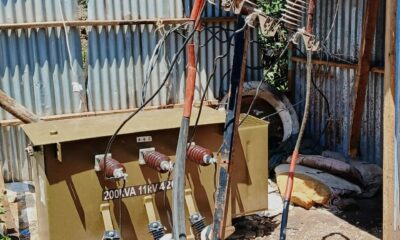
The report recounts one alleged scheme in which police acting on behalf of a politician instructed security guards to stand aside while a transformer was stolen. The people behind the theft allegedly stood to benefit from the replacement tender, while the arrest of the thieves created the appearance that the incident had been resolved.
It also alleges that senior figures have placed relatives in companies that purchase stolen copper.
These accounts form part of the report’s findings and allegations. They should not be interpreted as proof that all municipal employees or contractors are involved in criminal activity.
Questions over the City’s anti-corruption watchdog
The report also raises concerns about the independence of the City’s Group Forensic and Investigation Services (GFIS), which investigates suspected wrongdoing within the municipality.
According to the CDE, GFIS has investigated more than 6,000 cases involving transactions worth R35 billion.
However, the organisation says the unit has faced political pressure. It points to a June 2023 council decision that declared previous GFIS corruption probes and forensic findings unlawful, null and void, and transferred its powers to the city manager.
The report also refers to the 2024 killing of a former forensic investigator believed to have been investigating alleged corruption involving members of the Johannesburg Metropolitan Police Department. Interviewees reportedly said the killing had a chilling effect on internal reporting.
One officer described the environment facing GFIS investigators as one of “fear, intimidation and threat to life”.
The allegations highlight the risks faced by people tasked with investigating suspected corruption and the importance of ensuring that oversight bodies can operate independently.
What the City has said about financial misconduct
The City of Johannesburg has previously acknowledged weaknesses in its financial management and procurement systems, as well as infrastructure deterioration, maintenance backlogs and utility losses.
In June 2026, the municipality committed to strengthening procurement, internal controls and consequence management during an appearance before the Standing Committee on Public Accounts.
In July, council approved the referral of 13 alleged financial misconduct matters, valued at approximately R4.07 billion, to the city’s independent Disciplinary Board for preliminary investigation.
Deputy executive mayor Loyiso Masuku said the referrals demonstrated the municipality’s commitment to accountability and pursuing consequences where the facts and law required it.
The city emphasised that the referrals did not amount to findings of guilt against any officials.
National Treasury also took formal action against Johannesburg over its financial management in July. The city said it would comply with Treasury’s requirements while maintaining that its 2026/27 budget was fully funded.
The city had not issued a specific response to the CDE report’s findings at the time covered by the source material.
What the report recommends
The CDE argues that stronger rules alone will not solve Johannesburg’s problems if the institutions responsible for enforcing them can be undermined.
Its recommendations include greater transparency throughout the procurement process, from the initial tender to contract completion. It also calls for open, merit-based appointments to senior municipal positions and entity boards, alongside stricter controls over emergency procurement.
The report further recommends genuine independence for GFIS, effective consequences for proven wrongdoing and better protection for whistleblowers. It suggests that people who expose corruption could potentially be rewarded for doing so.
“Organised criminal groups are adaptable,” the report warns. “Close one opportunity and they frequently seek another.”
The CDE argues that Johannesburg needs systems capable of functioning even when influential individuals have an incentive to undermine them.
With local government elections scheduled for November 2026, the organisation says the city faces an opportunity to address the governance problems threatening its infrastructure and public services.
For residents dealing with water shortages, electricity failures and deteriorating services, the central question is whether public money intended to repair the city will deliver lasting improvements, or whether weaknesses in the system will continue to create opportunities for those who profit from its decline.
Follow Joburg ETC on Facebook, Twitter, TikTok and Instagram
For more News in Johannesburg, visit joburgetc.com
Source: iol.co.za