Elections
Gauteng election results: The early numbers from Joburg, Ekurhuleni and Tshwane
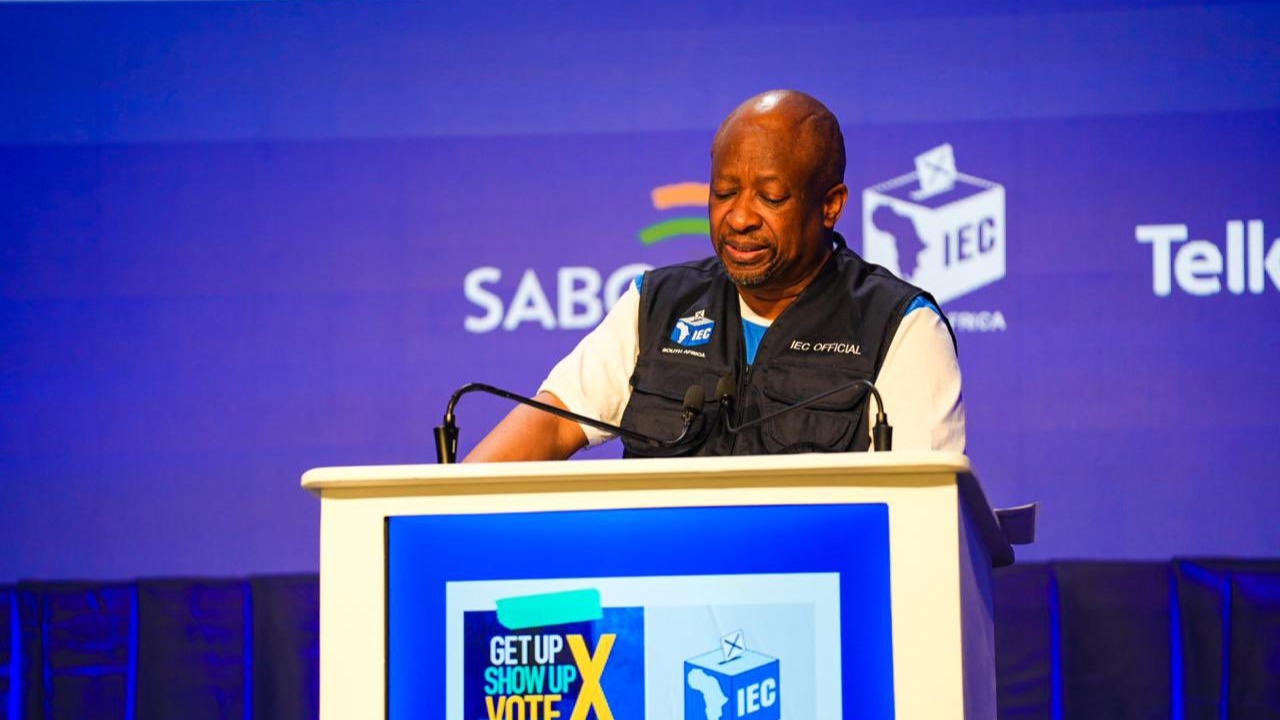
Update: It took just eight more voting districts to change the picture in Johannesburg.
By 09:01 on Thursday, the DA’s share of the proportional representation (PR) vote had dropped from 42.2% to 39.6%. The ANC had moved from third to second on 16.8%, just ahead of ActionSA on 16.6%, according to IEC results published by EskomSePush. Only 186 votes separated the two parties.
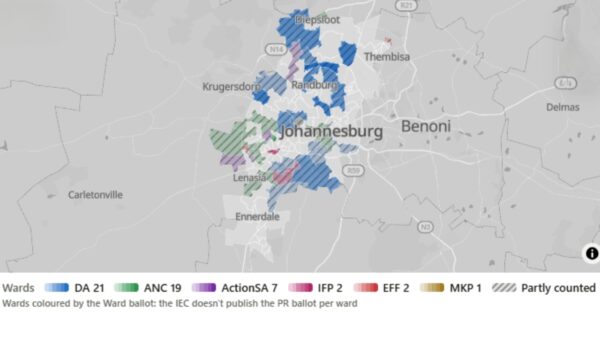
Data Map: IEC
The DA is still comfortably ahead with 28 652 votes, compared with 12 188 for the ANC and 12 002 for ActionSA. But only 72 of the city’s 862 voting districts had been counted, and none of its 135 wards was complete.
What changed in Ekurhuleni and Tshwane
The DA’s share rose slightly in Ekurhuleni, from 40.5% to 40.9%, with 65 of 653 districts counted. ActionSA still led in Tshwane, although its share slipped from 30.9% to 29.7%, with 84 of 796 districts counted.
Nationally, 5 293 of 23 696 voting districts (22%) had been counted.
Why the shift matters
The ANC gained more new votes than any other party in that batch, with about 2 800 of the roughly 9 900 added. The DA added about 2 200 and ActionSA about 2 100.
Eight districts can’t reveal a trend, and the next batch could easily push the numbers back the other way. What the shift does show is how quickly a headline figure can move this early in the count, and that second place in Joburg is far from settled.
That matters for the coalition talks that are likely to follow. In a council where 136 seats are needed for a majority, the order of the parties behind the leader could shape who holds the most bargaining power.
All figures remain provisional, and the IEC has up to seven days to declare final results.
08:25 | 4 November
Joburg woke up to a number on Thursday morning and it was a striking one. At about 08:25, the DA had 42.2% of the PR vote in the city, well clear of everyone else.
Before anyone orders the cake, look at the other number: only 7% of the city’s voting districts had been counted.
These provisional Johannesburg election results came from just 64 of 862 voting districts, and not one of the city’s 135 wards was complete. That is enough to set the group chats alight, but nowhere near enough to name a winner.
What the early count showed
In Johannesburg, the DA had 26 421 PR votes, followed by ActionSA on 15.9% and the ANC on 14.9%, according to IEC results published by EskomSePush.
The DA was also ahead in Ekurhuleni, with 40.5% and 9% of districts counted. Tshwane had a different leader, with ActionSA on 30.9%, also with 9% counted, according to The Outlier.
Across the country, 4 782 of 23 696 voting districts (20%) had been counted. The Electoral Commission of South Africa (IEC) has up to seven days to declare final results.
Why these numbers can still move
Results don’t arrive in an even spread across a city, and Joburg is a place where neighbouring suburbs can live very different lives and vote very differently. A few dozen districts can’t speak for all of them.
There is one tempting comparison. In the 2021 election, the ANC took about 33.6% in Johannesburg, the DA 26.1% and ActionSA 16.1%. The early figures look like a dramatic reversal, but it’s far too soon to treat them as one. The real test will come as more districts report from across the city.
It’s also worth noting that pre-election polls were split. A July Common Sense and Social Research Foundation poll had the DA on 42%, while eNCA and MarkData had it on 35%, reported Daily Maverick. The coming days should show where in that range the DA lands.
The water crisis is on the ballot
This election has rarely felt abstract in Gauteng. Whoever ends up running these metros inherits the water crisis, and many residents have spent months living with its effects.
Before the vote, frustrated residents took to the streets banging plastic water bottles, eNCA reported. Earlier in the year, some residents in the south of the city told EWN they questioned their past choices at the ballot box.
Patience was tested on voting day too. Observers reported long queues and scanner problems, with one Johannesburg queue running to more than three hours. By 17:00 on Wednesday, about 3 million votes had been recorded in Gauteng, with three hours of voting still to go.
The numbers that really count
The result that matters most in Joburg may be 136. That is the number of seats needed for a majority in the 270-seat council, and no major published poll gave any party that many.
Once the council is declared elected, its first meeting must be called within 14 days. That leaves parties a short window to do deals, and there is plenty of history to work through.
ActionSA leader Herman Mashaba resigned as Joburg mayor in 2019 after Helen Zille, now the DA’s mayoral candidate, returned as chair of the party’s federal council. Seven years later, he has set out a blunt condition for any partnership: ‘If DA wants to really work with ActionSA, they must remove Helen Zille.’
Tshwane has its own recent drama. In 2024, ActionSA helped remove the DA’s Cilliers Brink, then took the mayor’s chair with ANC support. Earlier in Thursday’s count, with about 5% of votes in, BusinessTech described a three-way split between the DA, ActionSA and the ANC.
Winning the count may be the easy part
Joburg has seen this before. In 2021, the DA’s Mpho Phalatse became mayor even though the party won only about 26% of the vote. In 2023, Al Jama-ah’s Kabelo Gwamanda got the job despite his party’s small share of support.
That is why the early lead deserves attention without too much excitement. Coming first would give a party a strong hand, but the mayor’s chair will depend on who can hold 136 seats together, and for how long. For residents watching their taps, that second part may matter most.
All figures remain provisional. Joburg Etc will update this story as the count continues.
Be the first to know – Join our WhatsApp Channel for content worth tapping into! Click here to join!