News
South Africa local elections put ANC under pressure as voter frustration grows
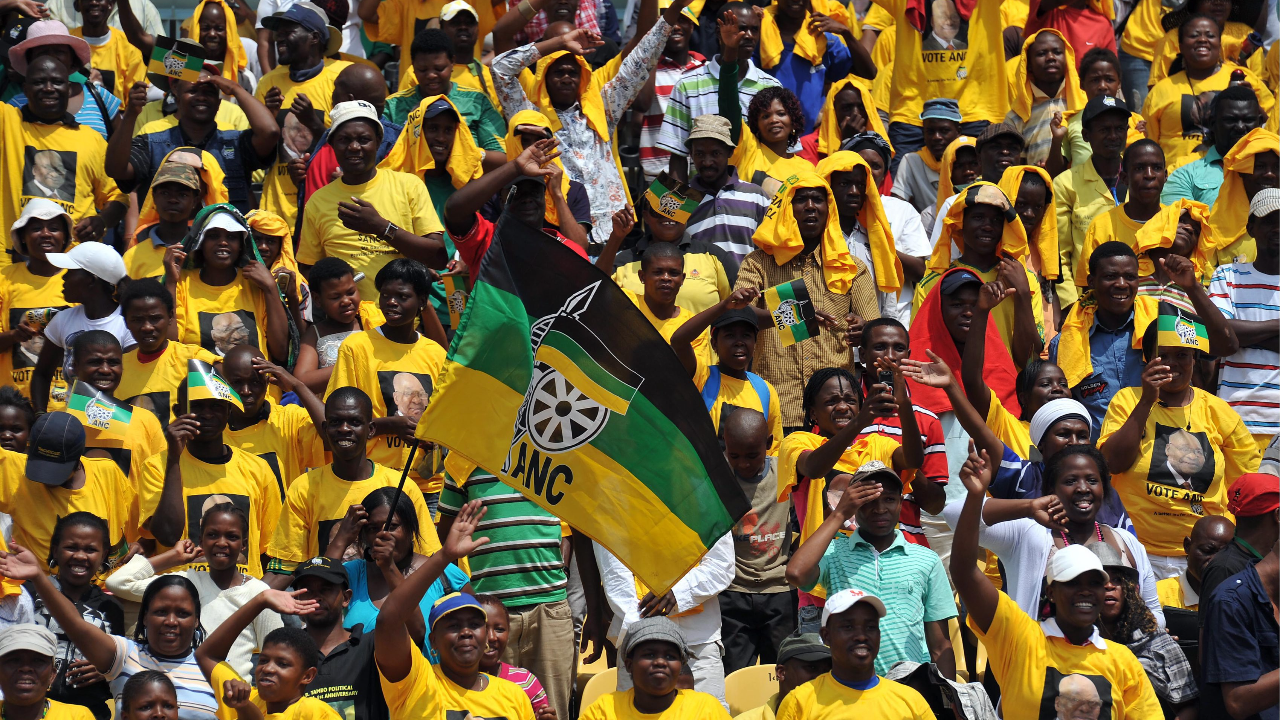
South Africa’s local government elections are bringing years of political frustration into sharp focus, with the African National Congress (ANC) facing another major test of public confidence as voters head to the polls.
After more than three decades of political dominance, the former liberation movement is fighting to convince South Africans that it can still deliver on the promises that once secured its overwhelming support.
From failing municipal services and corruption allegations to unemployment and growing distrust in political leadership, the issues shaping this year’s elections go far beyond campaign promises. For millions of residents, the real question is whether their everyday lives will improve after the ballots are counted.
The campaign trail has certainly offered its share of unusual moments. Politicians have been filmed spinning cars, spending time with grandmothers knitting and even stepping into oversized potholes as parties attempt to demonstrate that they understand the frustrations facing ordinary communities.
But behind the publicity stunts and political exchanges lies a much bigger contest over the future of local government and the country’s increasingly fragmented political landscape.
The ANC faces another defining election
For the ANC, the 2026 local government elections represent an opportunity to demonstrate that it can recover from years of declining electoral support.
The party’s political standing has changed considerably since its historic victory in 1994, when South Africa emerged from apartheid and entered a new democratic era.
At its electoral peak in 2004, the ANC secured approximately 70% of the national vote. However, two decades later, its support had fallen to around 40%.
The biggest political turning point came during the 2024 national elections, when the party lost its parliamentary majority for the first time since democracy.
The result forced the ANC into a Government of National Unity (GNU) with several other political parties, including the Democratic Alliance (DA), fundamentally changing the country’s political arrangements.
President Cyril Ramaphosa has nevertheless rejected suggestions that the ANC is heading towards further decline.
Addressing supporters at the party’s final election rally on Sunday, he insisted that its support was growing rather than shrinking.
His confidence comes as political analysts and opinion surveys suggest that the party could face another difficult electoral performance.
Campaign battles expose South Africa’s political divisions
The relationship between the ANC and DA has become one of the defining features of this election campaign.
Although the two parties are national coalition partners, their local government campaigns have been characterised by fierce criticism of each other’s political records and priorities.
Political analyst and Mapungubwe Institute for Strategic Reflection (MISTRA) Director of Research Susan Booysen has highlighted how the exchanges between the parties reflect deeper disagreements about governance, transformation and political power.
The ANC has acknowledged shortcomings in its own performance, with its campaign launch carrying the admission: “We have failed.”
Its 2026 campaign slogan, ‘Let’s continue building better communities, together’, also repeats the message used during the 2021 local government elections.
The DA, meanwhile, has focused heavily on the ANC’s municipal governance record.
Its campaign has highlighted deteriorating roads, unreliable electricity, failing water and sanitation infrastructure, financial mismanagement and dysfunctional municipal administrations.
The party has also accused the ANC of prioritising internal factional battles and political patronage over the needs of residents.
The ANC has countered by portraying the DA as a party that remains disconnected from the experiences of poorer communities.
It has questioned the DA’s commitment to transformation, black economic empowerment and affirmative action, arguing that clean audits and efficient administration do not automatically address South Africa’s deep economic inequalities.
These competing messages illustrate a broader political struggle: whether voters will prioritise administrative performance, transformation or a combination of both.
Coalition politics could reshape municipalities
One of the biggest questions emerging from the 2026 elections is how municipalities will be governed once the results are announced.
With neither the ANC nor other major parties expected to dominate every metropolitan area, coalition negotiations are likely to become central to determining who controls municipal councils.
South Africa has already become familiar with coalition politics since the 2021 local government elections, particularly in major metropolitan municipalities.
According to Ipsos South Africa’s latest ‘Pulse of the People’ research, approximately 65% of South Africans believe political parties should work together at municipal level.
The research also found that 42% of respondents agreed or strongly agreed that the Government of National Unity was working well and offered a better form of government than ANC majority rule.
Meanwhile, 29% disagreed, while 22% neither agreed nor disagreed.
Ipsos political analyst Mari Harris expects coalition arrangements to play an important role across metropolitan, local and district councils.
She warned that the announcement of the final results could be followed by approximately two weeks of uncertainty as parties negotiate possible governing arrangements.
The relationship between the ANC and DA will also remain important beyond the municipal elections.
Despite their public disagreements, the parties have previously cooperated in local councils, with the DA sometimes helping ANC-led minority administrations pass budgets and other important decisions.
Examples include Sol Plaatje, Mangaung, Ekurhuleni and Nelson Mandela Bay.
Booysen’s analysis also highlights the possibility of political bargaining between parties, where local government arrangements could eventually influence national coalition negotiations after the 2029 elections.
For now, however, the existing GNU has remained intact despite disagreements between its partners.
Voter frustration could be the biggest threat
Beyond the competition between political parties, voter disillusionment could prove particularly damaging to the country’s established political leadership.
Ipsos research conducted between 12 September and 13 October 2026 found that more than half of registered voters, approximately 50%, felt that no political party represented their views.
That figure has increased from 47% in an earlier wave of the same research.
The findings point to a growing disconnect between political organisations and the people they are seeking to represent.
The research also found that 68% of registered voters believed politicians could not be trusted, while only 15% disagreed.
For communities dealing with poor infrastructure, unreliable municipal services and limited economic opportunities, these figures reflect more than political dissatisfaction.
They point to a growing frustration with promises that have repeatedly failed to translate into meaningful improvements.
The consequences could extend beyond the ANC, placing pressure on every party seeking municipal power.
Will South Africans turn up to vote?
Voter turnout could ultimately determine how much political change emerges from the 2026 elections.
According to Ipsos, South Africa has approximately 44.9 million citizens aged 18 and older who are eligible to vote. However, only 29.2 million are registered with the Electoral Commission of South Africa (IEC).
This means around 35% of eligible citizens are not registered.
Although 62% of respondents in the latest Ipsos research said they were looking forward to voting, previous elections suggest that enthusiasm does not always translate into participation.
If turnout mirrors the 2021 local government elections, approximately 12.8 million people could cast their ballots. A turnout similar to the 2024 national and provincial elections could see around 16.3 million participating.
The research also found that 58% of registered voters considered protests, strikes and marches acceptable ways of expressing dissatisfaction with poor service delivery.
That finding is particularly significant for incoming municipal administrations.
Whether residents are dealing with water interruptions, electricity problems, deteriorating roads or unreliable refuse collection, communities are increasingly demanding accountability from those elected to represent them.
Ultimately, the 2026 local government elections are about more than which political party secures the most votes.
For the ANC, they represent another opportunity to demonstrate that it can rebuild public confidence. For opposition parties, they offer a chance to prove that alternative leadership can deliver meaningful change.
Be the first to know – Join our WhatsApp Channel for content worth tapping into! Click here to join!
Follow Joburg ETC on Facebook, Twitter, TikTok and Instagram
For more News in Johannesburg, visit joburgetc.com