Best Suburbs
Johannesburg North, South, East and West Explained
A practical evergreen guide to Johannesburg’s informal North, South, East and West labels: suburbs, transport links, property notes, schools, safety cautions and verification tips.
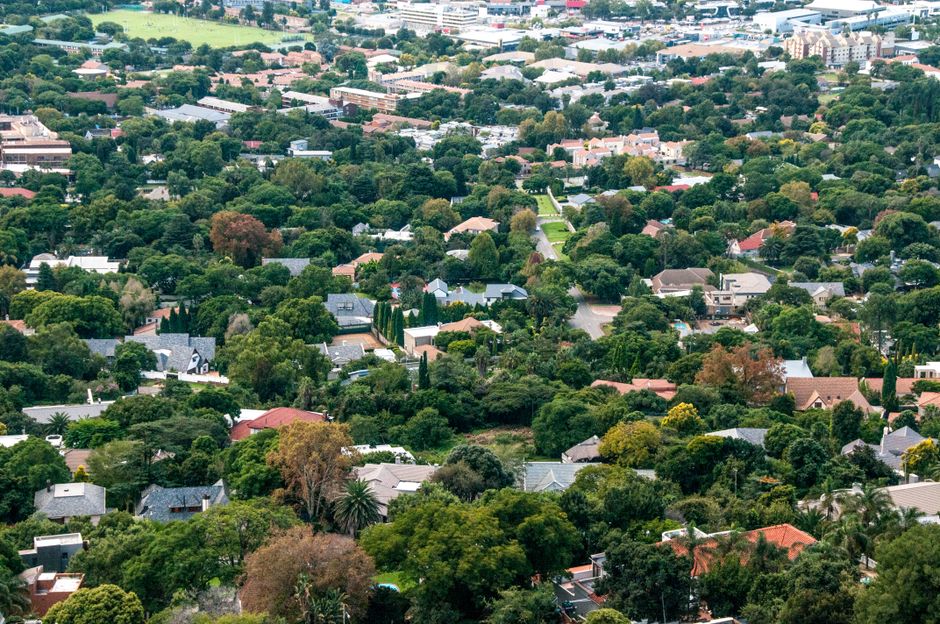
Everyday labels not official borders: People commonly speak of Johannesburg’s North, South, East and West when describing where they live, work or visit. These quadrant labels are informal shorthand and do not match the City of Johannesburg’s official Regions A–G. This guide explains what residents usually mean by each quadrant, key suburbs, transport links, lifestyle patterns, and practical verification steps for property, schools and safety information as of October 2026.
How to use this guide
This article is an explanatory, evergreen overview: treat the quadrant names as indicative rather than definitive. Check local sources for current figures or precise boundaries before making decisions about moving, investing or commuting.
North: business corridors, retail and newer estates
The North commonly refers to areas such as:
- Sandton
- Randburg
- Fourways
- Midrand
Transport links
Major roads: the N1 and M1 are primary arterial routes linking northward suburbs to central Johannesburg and further north. Gautrain: stations at Sandton and Midrand serve parts of the North, offering rapid connections where available.
Amenities and lifestyle
The North includes Sandton’s major corporate and retail district, newer residential estates in places like Fourways and a broad housing mix from apartments to gated estates. Lifestyle options range from high-density urban living in Sandton to suburban estates and family neighbourhoods.
Property market overview
Housing in the North spans a wide price and quality range. Suburbs vary substantially some offer premium apartments and estate living, others more affordable options. Use suburb-level market reports rather than quadrant labels when assessing prices or rents.
Schools and education
There are many schooling options across northern suburbs. Verify catchment, registration status and fees directly with each school local differences are significant.
Safety and crime
Crime and safety vary between suburbs. For credible local crime figures, consult SAPS precinct-level quarterly statistics and cite the period used when comparing areas.
Quick tips for newcomers
- Commute times depend on peak-hour congestion; test your route at rush hour.
- Check Gautrain timetables for station access and connections.
- Inspect properties in person and compare multiple suburbs rather than relying on the label “North” alone.
South: Soweto and southern suburbs
The South commonly covers Soweto and parts of Johannesburg South and the southern suburbs. These areas are diverse in history, housing and amenities.
Notable features
Cultural sites: Soweto houses major heritage and visitor attractions such as the Apartheid Museum. Housing stock and amenities differ widely across southern neighbourhoods.
Transport links and travel times
Road and rail connections serve the wider south, but travel times to northern nodes are often longer. Public-transport availability and quality vary between suburbs; check local routes and timetables.
Property, schools and safety
Housing types in the South range from older single-family homes to higher-density developments. School quality and availability should be confirmed directly with institutions. Use SAPS precinct statistics to compare local crime data with a stated time range.
Quick tips for newcomers
- Factor commute time to work or schools into daily planning.
- Research local amenities shopping and services can be clustered in specific nodes.
- Visit neighbourhoods at different times of day to assess suitability personally.
East: airport corridor and established suburbs
Everyday references to the East typically include Bedfordview, Edenvale and Germiston and parts of the inner-east. The East is noted for its proximity to OR Tambo International Airport and major routes.
Transport links
Major roads: the N3 and N12 serve eastward travel and airport access. For some journeys the Gautrain’s airport and Sandton links may be relevant, but station access is not universal across eastern suburbs.
Amenities and lifestyle
The East combines established residential suburbs with commercial nodes and is commonly chosen for airport convenience and direct road access.
Property, schools and safety
Suburban housing and commercial property sit side-by-side in parts of the East. As elsewhere, verify school details and local crime data at the suburb or precinct level before drawing conclusions.
Quick tips for newcomers
- If airport access is a priority, focus on suburbs closest to the N3/N12 and transport links.
- Confirm the exact distance and travel time to OR Tambo for your commute or travel needs.
West: established suburbs, West Rand and mining-era towns
The West commonly includes Roodepoort and parts of Randburg; in everyday speech the term sometimes overlaps with the wider West Rand, including Krugersdorp. Note that the West Rand is not identical to Johannesburg’s municipal west.
Transport links
Major roads: the N1 and N14 are significant corridors for westbound travel and connections to outlying towns.
Amenities and lifestyle
The western corridor mixes long-established suburbs, retail and leisure destinations and towns shaped by mining-era development.
Law enforcement note
Specific incident: a police operation in West Village, Krugersdorp resulting in the arrest of more than 90 suspected illegal miners was reported in October 2026. This is a discrete West Rand incident and should not be read as proof of an area-wide crime trend.
Property, schools and safety
Property types range across the West; verify local school information and use SAPS precinct stats for up-to-date crime comparisons.
Quick tips for newcomers
- Clarify whether a location is inside Johannesburg municipal boundaries or in the adjacent West Rand.
- Consider access to main roads for commuting to central or northern employment nodes.
Cross-cutting guidance and verification
Important caveats: the quadrant labels are informal. The City of Johannesburg uses Regions A–G for municipal governance and planning, and those boundaries do not map neatly onto “North/South/East/West”.
For reliable demographic figures use Statistics South Africa’s Census 2022 tables and confirm whether any number applies to the City, a region, a suburb or a ward.
Key recent developments to note
- According to Multiple (Moneyweb; SABC News; Gautrain; Statistics South Africa; City of Johannesburg; SAPS), Moneyweb reported a Calgro Bankenveld District City plan in October 2026 that includes infrastructure work and a first phase targeting 5,900 housing opportunities; the report describes work and targets, not completed homes.
- According to Multiple (Moneyweb; SABC News; Gautrain; Statistics South Africa; City of Johannesburg; SAPS), SABC News reported on 19 October 2026 that more than 90 suspected illegal miners were arrested in a Krugersdorp operation; this is presented as a specific incident, not proof of a general crime trend across the west.
- According to Multiple (Moneyweb; SABC News; Gautrain; Statistics South Africa; City of Johannesburg; SAPS), a new consortium took over Gautrain operations on 28 September 2026 and announced financing for a planned 15‑year overhaul covering fleet, signalling, ticketing and station upgrades; these are announced plans, not completed improvements.
- According to Multiple (Moneyweb; SABC News; Gautrain; Statistics South Africa; City of Johannesburg; SAPS), the City of Johannesburg formally uses Regions A–G for municipal boundaries and planning.
- According to Multiple (Moneyweb; SABC News; Gautrain; Statistics South Africa; City of Johannesburg; SAPS), Statistics South Africa’s Census 2022 is the authoritative source for demographic figures and should be used rather than quadrant-level estimates.
- According to Multiple (Moneyweb; SABC News; Gautrain; Statistics South Africa; City of Johannesburg; SAPS), SAPS precinct-level quarterly statistics are the recommended primary source for crime and safety data and should be cited with the relevant period when reporting crime rates.
Property-market sourcing advice
National and regional property reports change frequently. When assessing value or rental yields, cite the report name, publication date, geography and whether figures reflect asking prices, sales or rentals. Avoid using broad quadrant labels as a proxy for market data.
Transport updates to verify
Planned changes to network operators or services should be treated as proposals until implemented. For the Gautrain, consult official operator communications for progress on the announced 15‑year overhaul.
Schools and amenities
Do not assume school rankings, catchments or fees remain unchanged. Confirm details directly with each school or the provincial education department.
Safety and crime
Use SAPS precinct statistics for recent crime trends and always state the period covered. Isolated incidents should not be extrapolated to entire quadrants.
Who each quadrant commonly suits
- Families: look at suburbs with established schools and family amenities verify school availability locally.
- Commuters: North and East suburbs near major roads or Gautrain stations often suit those travelling to Sandton or the airport; test routes during peak hours.
- Investors: use suburb-level sales and rental reports and confirm vacancy or demand data from named recent publications.
- Renters: compare multiple suburbs, visit properties in person and check transport links and services.
How to verify current information
Always check primary sources for up-to-date details:
- City of Johannesburg: https://www.joburg.org.za/
- Statistics South Africa (Census 2022): https://www.statssa.gov.za/
- SAPS crime statistics: https://www.saps.gov.za/services/crimestats.php
- Gautrain operator information: https://www.gautrain.co.za/
Final practical checklist before deciding
- Confirm municipal region or suburb boundaries for legal and planning matters.
- Pull SAPS precinct figures for the most recent quarter and cite the period.
- Obtain suburb-level property reports and note the publication date and coverage.
- Visit neighbourhoods in person at varied times of day.
- Contact schools and service providers directly to confirm availability, fees and catchment.
Last updated: 2026-10-20
Follow Joburg ETC on Facebook, Twitter, TikTok and Instagram
For more News in Johannesburg, visit joburgetc.com