News
August lunar eclipse in South Africa: when and where to see the red moon
South Africans willing to sacrifice a little sleep could be rewarded with an extraordinary sight on the morning of Friday, 28 August, when August’s Full Moon slips deep into Earth’s shadow.
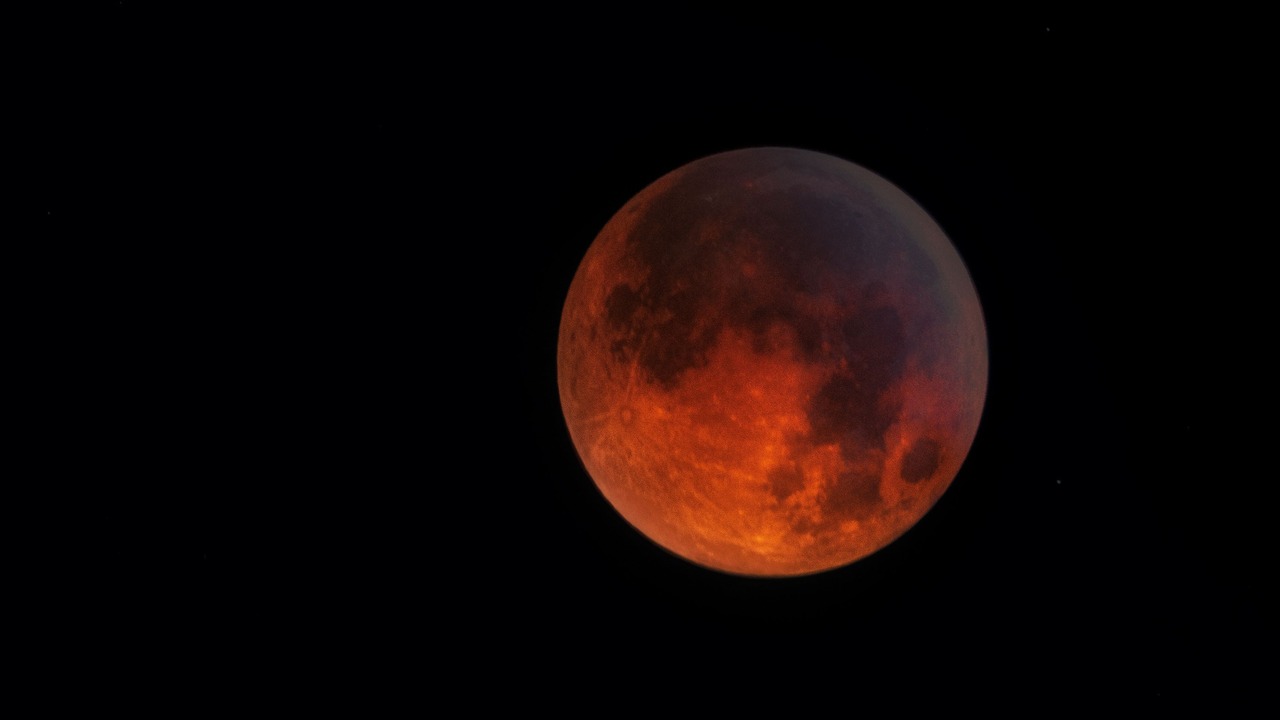
The event will reportedly be a deep partial lunar eclipse, with almost the entire Moon moving into the darkest part of Earth’s shadow. At its peak, roughly 93% of the Moon’s diameter, or about 96% of its surface, will be in the umbra.
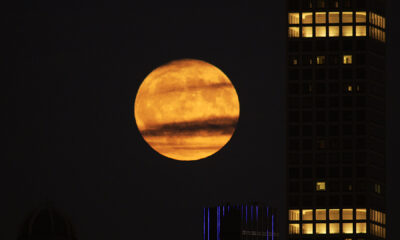
That could give the Full Moon a dramatic appearance, with the eclipsed section potentially taking on the familiar reddish or copper glow often associated with a ‘blood moon’. But there is an important distinction: this will not be a total lunar eclipse. A small portion of the Moon will remain outside the darkest part of Earth’s shadow.
Reportedly, the Moon will first enter Earth’s outer, fainter shadow at about 03:23 am SAST. The partial eclipse becomes much easier to see from approximately 05:10 am, before reaching its maximum at around 06:12 am.
By the time the eclipse reaches its most dramatic stage, the Moon will be sitting low in the western sky, shortly before disappearing below the horizon.
In other words, this is not an event where you can step outside at any point during the night and expect the best view. Anyone hoping to catch the Moon at its most heavily eclipsed should already be in position before sunrise.
A clear, unobstructed western horizon will be your biggest advantage.
A lunar eclipse occurs when Earth moves between the Sun and the Moon, casting its shadow across the Moon’s surface. The reddish colour comes from sunlight passing through Earth’s atmosphere. Blue light is scattered more strongly, while red and orange wavelengths can travel through the atmosphere and reach the Moon.
That can leave the eclipsed portion looking anything from copper to deep orange or reddish-brown, depending on atmospheric conditions. Unlike a solar eclipse, there is no danger in looking directly at a lunar eclipse. You also do not need special equipment to enjoy it.
Binoculars or a telescope can reveal more detail, particularly as the shadow moves across the Moon, but your eyes alone will be enough.
The Full Moon itself is widely known internationally as the Sturgeon Moon, a traditional name associated with August. However, there is also a South African interpretation attached to this month’s Full Moon.
The Centre for Astronomical Heritage has called it the Peace Moon, describing it as a symbol of resilience and a reminder of the importance of peace and unity. This gives the event an interesting local dimension. Millions of people may be looking at the same Moon from different parts of the country, even as the eclipse unfolds above cities, townships, farms and coastal communities.
For photographers and amateur astronomers, it is also an opportunity to capture a distinctly South African early-morning sky with the partially eclipsed Moon hanging low in the west. The eclipse will be visible from across South Africa, including:
- Cape Town
- Johannesburg
- Pretoria
- Durban
- Bloemfontein
- Gqeberha
The Moon’s exact position will differ depending on where you are, but the same basic rule applies everywhere: look west and avoid obstructions. An elevated spot can help, particularly in urban areas where buildings, trees and other structures may block the horizon.
If you’re planning to photograph the eclipse, get to your location early rather than trying to find a viewing spot as the Moon is already setting. As always with an outdoor astronomical event, the weather could ultimately decide whether the show is visible.
Follow Joburg ETC on Facebook, Twitter , TikTok and Instagram
For more News in Johannesburg, visit joburgetc.com
Featured Image: Saúl Sigüenza / Pexels