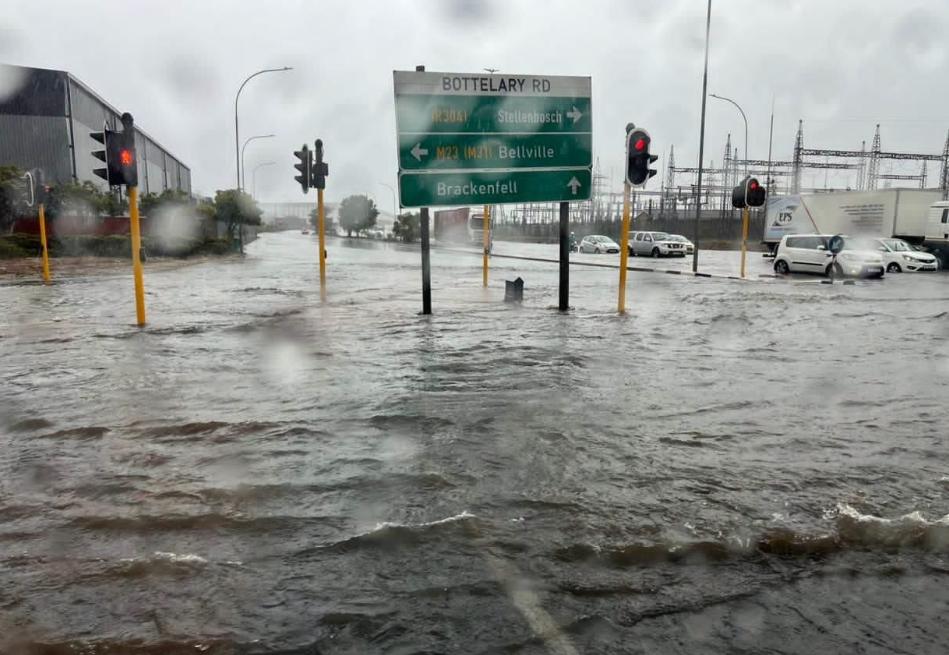
Cape Town residents are no strangers to winter storms, but this past weekend’s relentless rain has pushed the city to its limits.
Since Friday, nearly 480 flooding-related incidents have been recorded across the metro, with emergency teams scrambling to respond as water levels rose in both formal suburbs and informal settlements.
From the Cape Flats to the northern fringes, the impact has been widespread, leaving many communities dealing with waterlogged homes, blocked drains and disrupted daily life.
Hard-Hit Communities Feel The Pressure
Areas like Parkwood, Gugulethu, Khayelitsha, Delft, Nyanga, Philippi and parts of Dunoon have taken the brunt of the flooding.
These are communities that already sit on the frontline of Cape Town’s winter challenges, where low-lying land and limited infrastructure often turn heavy rainfall into a crisis. For many residents, flooding is not a once-off event but a seasonal reality.
City officials say while some of the water has drained as expected, certain areas continue to struggle, particularly where infrastructure is compromised.
Blocked Systems Add To The Problem
One of the biggest challenges facing the City is not just the rain itself, but what lies beneath the surface.
Maintenance teams have uncovered severe blockages in the stormwater system, including unexpected items like mattresses and wheelie bins. These obstructions prevent water from flowing freely, turning already heavy rainfall into a much bigger problem.
There is also the issue of structures built over key drainage and sewer systems. In these cases, officials say teams are physically unable to access critical infrastructure, making it difficult to resolve flooding quickly.
Why Flooding Happens Even When Systems Work
There is often frustration when streets and homes flood, but the City has stressed an important point.
Stormwater systems are designed to move water away gradually, not instantly. During intense downpours, temporary flooding is expected, even when infrastructure is functioning properly.
Flooding only becomes a fault when water remains long after the rain has stopped.
Emergency Response In Full Swing
A coordinated, citywide response has been activated, with teams working across all eight districts around the clock.
The Urban Mobility Directorate, alongside Disaster Risk Management and other departments, has been clearing drains, distributing sand and milling materials, and assisting residents with emergency supplies such as plastic sheeting.
High-risk areas, particularly informal settlements and communities near canals and waterways, are being prioritised as conditions remain unpredictable.
Winter Preparedness Ramps Up
With more rain expected as the season settles in, Cape Town is already looking ahead.
Officials have confirmed that additional funding has been set aside to strengthen stormwater systems, with plans for expanded maintenance and targeted upgrades in flood-prone areas. Monitoring efforts are also being stepped up in partnership with the South African Weather Service.
But the City has made it clear that infrastructure alone is not enough.
A Shared Responsibility
Residents are being urged to play their part in reducing flood risks by disposing of waste responsibly and keeping drains clear.
In a city where rapid urban growth and informal expansion often outpace infrastructure, the fight against flooding is as much about community behaviour as it is about engineering.
As assessments continue, the full extent of the damage is still unfolding. What is already clear, however, is that Cape Town’s winter has arrived with force, and for many, the season is off to a difficult start.