News
The ghost of Kwaaiwater: why Markus Jooste’s death certificate hasn’t quieted the questions
What the official record says
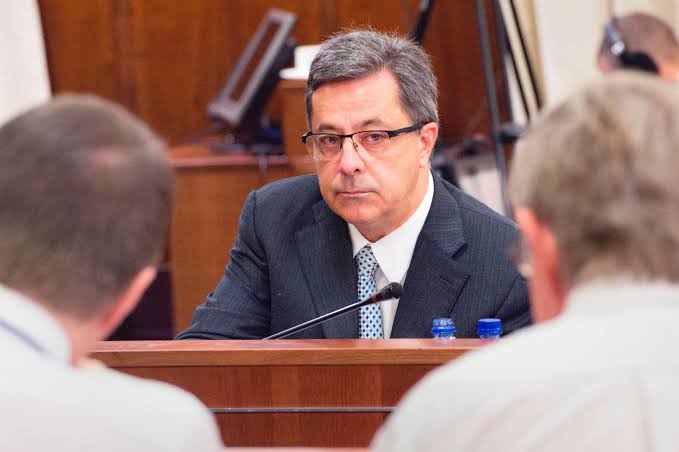
The South African Police Service told IOL that a post-mortem examination was conducted on 22 March 2024, that forensic reports form part of the police docket, and that ballistic testing had been carried out on the firearm involved. Police confirmed emergency personnel found Jooste alive at the scene and that he was transported to a medical facility where he later died. The docket was submitted to the National Prosecuting Authority and has since been referred to court for an inquest hearing.
What remains undisclosed
Despite those confirmations, key documents and public clarity are still missing. The police did not release the post-mortem report itself, did not say whether its findings will be made public before the inquest, and did not give a date for the inquest. There has also been no public funeral announcement, no confirmed burial or cremation site, and no public viewing of the body.
Limited responses from institutions
IOL asked several state institutions detailed questions. The National Prosecuting Authority did not respond to the questions sent. The Department of Home Affairs requested Jooste’s ID number and undertook to respond by an agreed deadline but did not reply. The Financial Sector Conduct Authority acknowledged receipt of questions and committed to respond but failed to do so by the promised time.
Why the gaps matter
The absence of full public disclosure in a case tied to a major corporate scandal has created a vacuum that speculation has filled. Social media claims allege sightings of Jooste in countries including Spain, Portugal, Greece, Malta, Brazil and Panama. One post suggested a man resembling Jooste was seen at a coastal property in Glentana on the Garden Route. None of these sightings has been independently verified in the public domain, and there is no evidence in the public record placing Jooste outside South Africa after his reported death.
Trust and accountability
Political analyst Kenneth Kgwadi told IOL that public scepticism reflects a collapsing trust in state institutions. He was quoted as saying:
“Markus Jooste’s death remains a mystery, details are very sketchy, and to be honest, I am not absolutely convinced that he died. The public’s engagement with these theories signals a deep loss of confidence in the agencies meant to bring closure to such high-profile cases. The police’s silence is concerning.”
Financial and legal threads still unresolved
The South African Reserve Bank confirmed that its investigation into possible exchange control contraventions is broader than Jooste himself and that recovery processes against numerous persons and entities remain ongoing. The SARB said confidentiality provisions prevent it from disclosing further details about ongoing investigations and declined to comment on whether offshore accounts, shell companies or foreign asset structures had been identified.
The central bank also noted a financial shortfall remains and said recovery processes continue. When asked whether any assets had been released following Jooste’s death, the SARB pointed to what has been published in the Government Gazette and declined to provide further specifics. Reported assets under attachment have included Lanzerac Wine Estate, Stellenbosch properties, luxury vehicles and holdings connected to Mayfair Speculators and the Silver Oak Trust.
The practical consequence: no trial, no answers
Jooste’s death occurred the day before he was due to surrender to authorities. It followed an administrative penalty of R475 million imposed by the Financial Sector Conduct Authority, which concluded that Jooste and Steinhoff executives published deceptive financial statements between 2014 and 2017. With Jooste deceased, the central figure linked to the alleged fraud never stood trial.
Nearly ten Steinhoff executives were named in the PricewaterhouseCoopers forensic investigation. Jooste’s absence from court means many of the most consequential questions about the collapse and accountability have not been tested in open proceedings.
Questions still waiting for the inquest
- Has the full post-mortem report been completed and independently verified?
- Will the post-mortem and ballistic findings be made public during the inquest?
- Why has no inquest date been publicly announced?
- Who formally identified Jooste’s body?
- Was his death officially registered with Home Affairs?
- Where was he buried or cremated?
- What became of the funds and assets connected to alleged exchange control violations and recovery proceedings?
Until these questions are answered in open court, the rumours surrounding Markus Jooste are likely to remain. In the absence of transparent disclosure from the institutions entrusted with investigating this case, suspicion has filled the space that facts should occupy.
Follow Joburg ETC on Facebook, Twitter, TikTok and Instagram
For more News in Johannesburg, visit joburgetc.com
Source: iol.co.za