News
Report urges Johannesburg to consider clean air zones after exhaust tests show older vehicles drive pollution
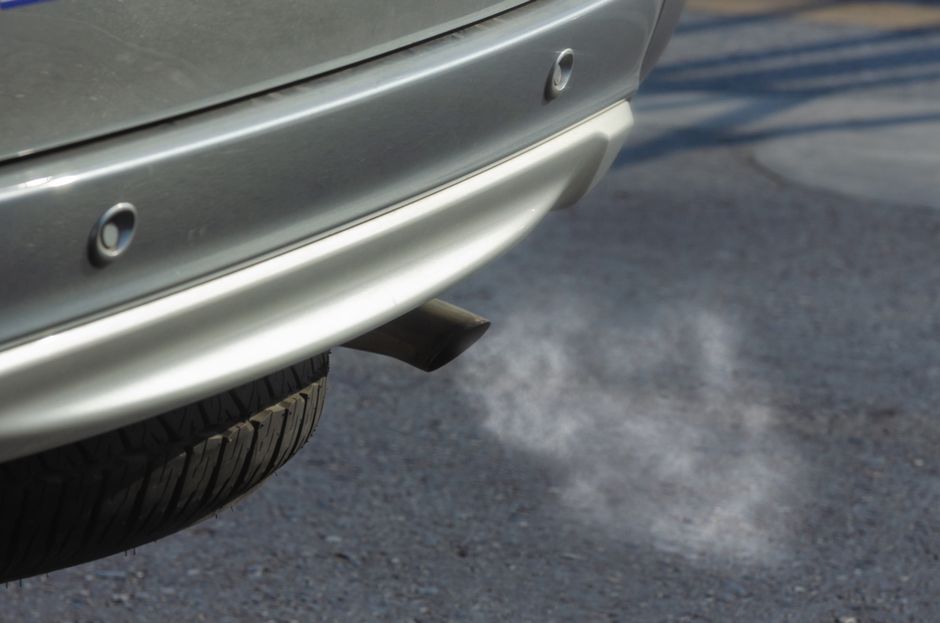
A new scientific review of Johannesburg’s vehicle emissions is calling for stronger regulation, stricter inspections and the possible introduction of clean air zones to tackle pollution from older and highly polluting vehicles.
What the data shows
The report, compiled by the REAL Urban Emissions (TRUE) Initiative and the International Council on Clean Transportation, is based on 250,000 exhaust measurements taken at 11 locations between July and September 2025. It tested nitrogen oxides, hydrocarbons, carbon monoxide and particulate matter.
Key findings included that petrol passenger vehicles older than 20 years produced 24% of measured emissions while making up just 4% of sampled vehicles. The study found pre-2006 petrol minibus taxis emitted four times the amount of newer counterparts, and petrol minibus taxis accounted for 8% of sampled vehicles. The report also found diesel taxis were 18 times more polluting than petrol taxis, and that newer diesel passenger and light commercial vehicles emitted between four and seven times more than European equivalents.
Recommendations from the report
Among the recommendations are the adoption of European diesel-vehicle regulatory standards, higher vehicle inspection and maintenance standards, and measures to fast-track electric vehicle adoption. A major policy option the authors highlight is the introduction of clean air zones (CAZs), which would regulate vehicle access according to emissions.
“The study helps address a critical evidence gap that has historically constrained the development of targeted and effective interventions. The study also provides a strong foundation for advancing initiatives such as CAZs and other measures aimed at supporting a cleaner, more sustainable and equitable transport system for Johannesburg,”
Lebo Molefe, city’s air quality and climate change director.
How CAZs could work in Joburg
TRUE Initiative suggests Johannesburg could update its air pollution control by-law and vehicle inspection standards to form the basis of a CAZ. The report notes vehicles that pass emissions inspection could receive categorised emission labels to determine CAZ access eligibility.
“Under such a system, vehicles that have undergone inspection could receive categorised emission labels, which could be used to determine CAZ access eligibility,”
TRUE Initiative report.
Equity concerns and implementation risks
A separate social equity analysis presented by Real Corp 2026 warns that CAZs, if imposed uniformly, could disproportionately affect poorer households by increasing public transport fares, raising fuel-related costs and driving up food prices through compliance expenses. The report includes a proposed matrix of regional metrics it says should guide a phased, equity-centred rollout.
“Our analysis reveals that CAZ regulations, if uniformly imposed, would function as regressive taxation on the urban poor, extracting compliance costs from populations least able to bear them. [This causes] a cascading vulnerability spiral that transforms environmental policy into socio-economic destabilisation,”
Real Corp 2026 report.
Costs and comparisons
The report compares CAZs to London’s Ultra Low Emission Zone (ULEZ). It notes that Transport for London estimated ULEZ implementation costs at between £120 million and £130 million, covering public transport improvements, staffing and the signs, cameras and back-office systems needed to operate the scheme.
TfL figures cited show that ULEZ’s operating costs in 2025 were about £100 million and that it generated £180 million in total revenue, with £123 million from daily charge payments and £57 million from penalty charge notices after adjustment for bad debt.
Health stakes
The Clean Air Fund is cited for an estimate that Johannesburg recorded an estimated 5,300 premature deaths due to air pollution in 2019, with that number expected to double by 2030.
What next
The report frames CAZs and tightened vehicle standards as policy options that could be operationalised through updates to local by-laws and inspection regimes. It also highlights the trade-offs between environmental gains and potential social costs, and calls for evidence-based, phased approaches to any rollout.
Follow Joburg ETC on Facebook, Twitter, TikTok and Instagram
For more News in Johannesburg, visit joburgetc.com
Source: citizen.co.za