News
North-West University clears major hurdle for new Desmond Tutu School of Medicine
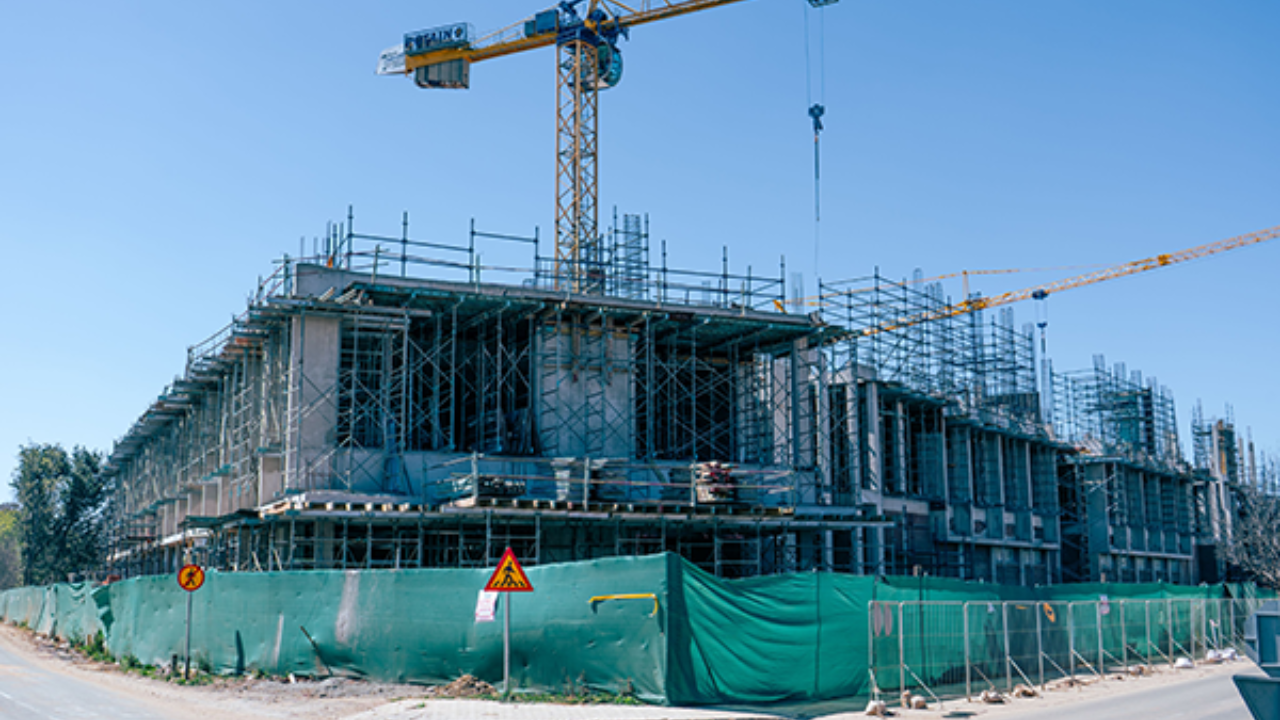
A long-running vision to train doctors at North-West University (NWU) has moved a significant step closer to reality, with the university securing accreditation for its new medical degree.
The university’s planned Desmond Tutu School of Medicine has received accreditation from the Higher Education Quality Committee (HEQC) of the Council on Higher Education (CHE), clearing one of the biggest hurdles in establishing the new school.
The decision, confirmed in correspondence dated 21 August 2026, covers the school’s six-year, 940-credit Bachelor of Medicine and Bachelor of Surgery (MBChB) programme.
The degree will be offered through contact learning at NWU’s Potchefstroom Campus.
For a university that has been working towards establishing a medical school for years, the accreditation marks more than a regulatory box being ticked. It signals that the project has moved from planning into a much more tangible phase.
A vision years in the making
Prof. Binu Luke, the inaugural chief director of the Desmond Tutu School of Medicine, described the CHE decision as a major moment for the university and everyone involved in developing the programme.
While there is excitement, Luke says there is also a sense of relief after the extensive work required to prepare the accreditation application.
The process involved teams across NWU working on everything from curriculum development and governance to staffing, finances, infrastructure and clinical training.
Five major workstreams were involved in bringing the project together, including defining the kind of doctor NWU wants to produce, developing its clinical training platform and mapping out the curriculum.
The university then had to translate years of planning into the detailed documentation and evidence required by the CHE.
The next chapter is already being planned
The CHE has confirmed that the programme has been fully accredited and that the stipulated conditions have been met.
NWU is now working on registering the qualification with the South African Qualifications Authority (SAQA) on the National Qualifications Framework.
But accreditation by the CHE is not the final regulatory hurdle.
The university still needs professional accreditation from the Health Professions Council of South Africa (HPCSA) before its graduates can ultimately enter professional practice.
The HPCSA accreditation visit is planned for February 2027.
NWU hopes to secure approval in time to begin student enrolment in the middle of 2027, with the first students expected to start their studies in 2028.
What the new medical school could mean
The Desmond Tutu School of Medicine is planned to become South Africa’s 11th medical school.
Its development comes at a time when the country continues to grapple with healthcare workforce pressures and unequal access to healthcare, particularly in underserved communities.
NWU says the school is being designed around the realities of South Africa’s healthcare system, with an emphasis on producing doctors who are clinically capable, ethical and responsive to the communities they serve.
The school’s name also sets a clear tone for its values.
The legacy of Archbishop Desmond Tutu is expected to influence the institution’s approach, with compassion, justice, integrity and service forming part of its guiding principles.
Partnerships will play a key role
Building a medical school requires more than lecture halls and laboratories.
NWU is expected to finalise agreements with the University of the Witwatersrand and the National Health Laboratory Service. These partnerships will contribute to the academic, clinical and laboratory components of the programme.
The university is also continuing work on the infrastructure, staffing and clinical training platforms needed before students arrive.
For Prof. Luke, the CHE accreditation is best viewed as a point of viability rather than the finish line.
His comparison of the project to pregnancy captures the scale of what remains: the vision has reached a stage where turning back is no longer an option, but there is still considerable work before the school is ready to welcome its first students.
A new era for NWU’s health sciences faculty
Prof. Awie Kotzé, executive dean of NWU’s Faculty of Health Sciences, said the milestone opens a new chapter for the university and the faculty.
Work towards establishing the medical school dates back to 2017.
Once established, the Desmond Tutu School of Medicine will become the faculty’s sixth school and will allow NWU to broaden its offering of clinically focused qualifications.
The university also expects additional programmes to be introduced in the future.
For prospective medical students, the biggest date on the horizon is now 2028.
For NWU, however, the work starts well before then. With CHE accreditation secured, attention now turns to HPCSA approval, partnerships, infrastructure and the many practical details required to turn the planned medical school into a functioning institution.
The vision that began years ago at Potchefstroom is now one step closer to producing a new generation of South African doctors.
Follow Joburg ETC on Facebook, Twitter, TikTok and Instagram
For more News in Johannesburg, visit joburgetc.com