News
State tells court Malema’s firearm handling was planned and deliberate
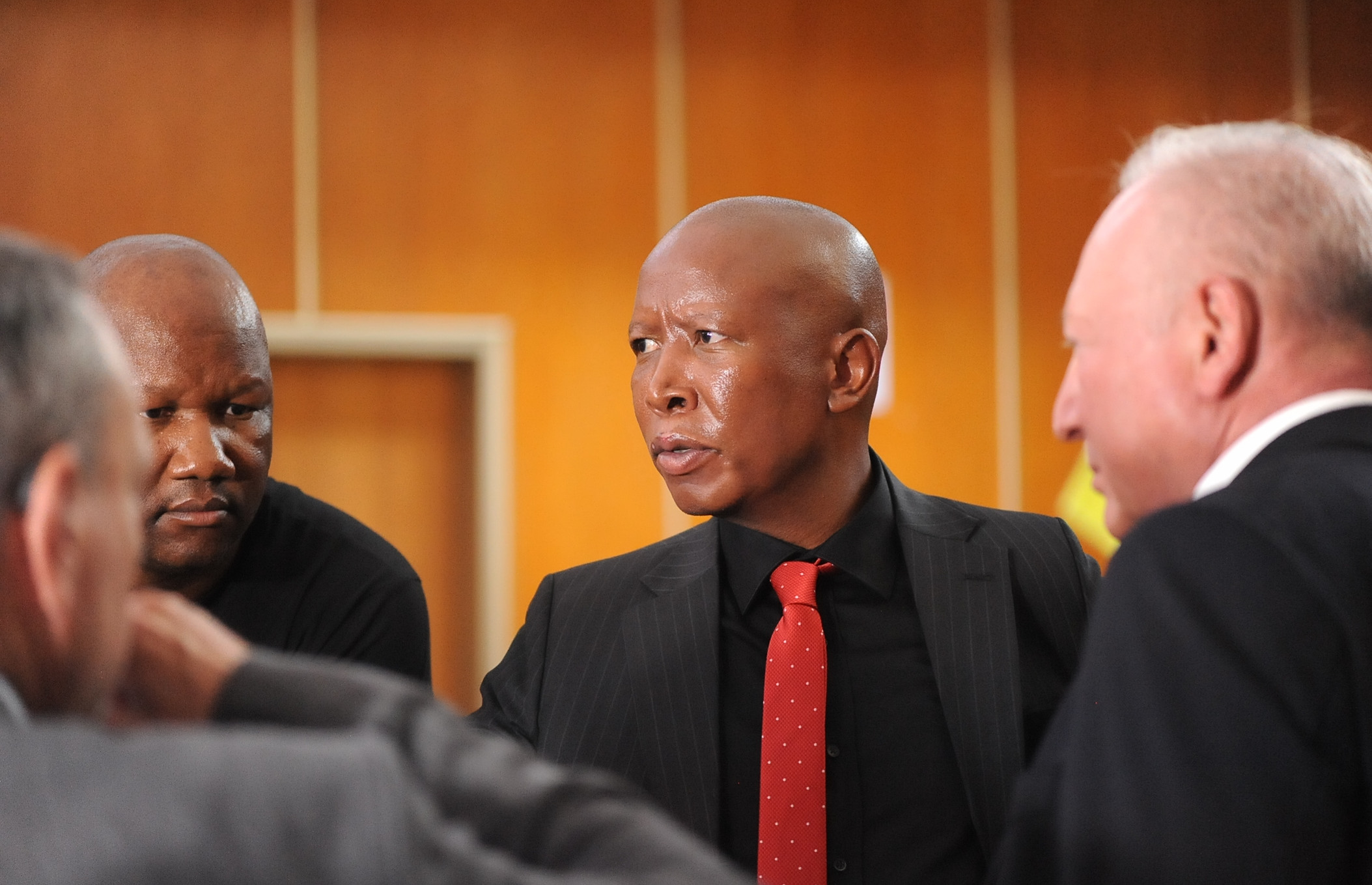
The state says Julius Malema’s handling and discharge of firearms at a political rally in 2018 was planned, intentional and executed with precision, and has opposed his petition for leave to appeal his firearm convictions in the Makhanda High Court.
State affidavit: conduct was deliberate
Deputy director of public prosecutions Adv Joel Sesar deposed to the state’s opposing affidavit filed on 22 May 2026, arguing that Malema’s possession and use of firearms was not spontaneous or accidental.
“Everything was perfect and calculated and designed to be the way it was done,”
Sesar said in the papers seen by IOL.
Convictions and sentences already recorded
Malema was convicted in October on five firearm-related counts arising from 28 July 2018, when he fired shots at the Sisa Dukashe Stadium in Mdantsane during the EFF’s fifth birthday celebrations. He was sentenced by Magistrate Twanet Olivier in the KuGompo City Regional Court in April to an effective term of five years’ imprisonment, with concurrent terms and fines on other counts.
Counts listed by the state
- Unlawful possession of a firearm
- Unlawful possession of ammunition
- Unlawful discharge of a firearm in a built-up area
- Failure to take reasonable precautions to avoid danger to person or property
- Reckless endangerment of a person or property
Evidence the state relies on
Sesar pointed to video footage recorded by a contracted production company and a separate cellphone clip, both of which the state relied on in its case. The Gearhouse footage allegedly showed Malema between 8pm and 9pm walking to the far right end of the stage and discharging 15 shots from a 9mm handgun, then picking up an assault rifle and firing a further seven shots.
A viral cellphone clip recorded by an unknown person on the stage also depicted him firing seven shots with the assault rifle, the state said. Two days after the event a spent cartridge case was found on the grass on the right side of the stadium and was sealed in an evidence bag after being handed to police.
Ballistics expert Colonel Mandisi Mgwadleka conducted microscopic examinations and, the state said, positively linked the spent cartridge case to a .223 Norinco semi-automatic rifle with serial number SPA 249-14. Records from Snyman’s company, Tactical Security, recorded the rifle as booked out to a bodyguard, Larry Mavundla, on the day of the incident.
State rejects defence account
Malema’s defence was that he used a toy gun handed to him by Mavundla and that he fired it as a showmanship exercise. He produced a prop rifle in court which he said resembled what he had used on the night. Sesar rejected that version, pointing to the ballistic evidence and what he described as visible muzzle flash in the footage.
When Malema was asked how the cartridge linked to the Norinco rifle came to be at the stadium, he suggested it was probably the “holy spirit that planted it there.” Sesar responded that if the cartridge had been planted, the person who did so would have had to know in advance that Malema would discharge a firearm resembling SPA 249-14, which Sesar said made that version implausible.
Disputes over number of shots and expert evidence
Malema told the court he had fired 25 shots from the handgun when asked to count, while the video footage and both parties’ ballistics experts agreed that 15 shots were fired. Sesar also criticised the defence’s ballistics expert, Jan de Klerk, noting he had no formal ballistics qualifications, had last done a proficiency test more than 30 years earlier and did not conduct a microscopic comparison of the spent cartridge to the Norinco rifle.
Legal issues raised by Malema and the state’s response
In his petition Malema argued the magistrate erred on several points, including the application of the Blom principle for circumstantial evidence, the legal definition of possession under the Firearms Control Act, the admission of viral video footage, alleged bias by the magistrate, duplication of convictions on some counts, and the state’s failure to call certain witnesses including Mavundla and five SAPS VIP Protection Unit members.
Sesar dismissed those arguments in the state’s opposing affidavit, saying that Malema had brought Mavundla to court but refused to identify or call him as a witness, and concluding that “there is no reasonable prospect of success that another court will come to a different conclusion.”
Next steps
The matter before the Makhanda High Court is limited to whether Malema should be granted leave to appeal his convictions; his appeal against sentence will be heard separately. Judgment on the petition will be delivered in chambers, the papers say.
Follow Joburg ETC on Facebook, Twitter, TikTok and Instagram
For more News in Johannesburg, visit joburgetc.com
Source: iol.co.za