News
Trump’s $5,000 ‘dividend’ could cost $1.384 trillion where would the cash come from?
An AFP analysis estimates President Trump’s $5,000 pledge would cost $1.384 trillion. Potential funding sources and legal and inflation risks are under scrutiny.

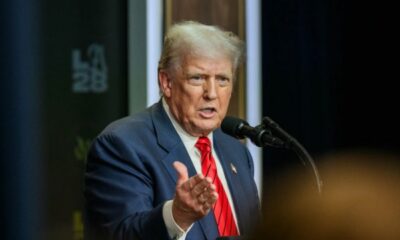
President Donald Trump’s promise to give every American adult $5,000 if Republicans keep control of both chambers of Congress has reignited debate over legality, cost and how such a program could be financed. An AFP analysis based on Congressional Budget Office population data puts the headline price tag at $1.384 trillion.
How the cost is calculated
AFP used CBO data on the adult population to estimate that paying $5,000 to each of the 276.8 million adults aged 18 and over would total $1.384 trillion. The figure falls to about $1.27 trillion if payments were restricted to US citizens, according to the same analysis. The source notes that a more targeted, income‑eligible approachsimilar to pandemic-era stimulus checkswould lower the cost further.
Legal and procedural hurdles
Federal law bars offering payments in exchange for votes and restricts promises of federally funded benefits tied to political support. AFP reports the pledge appears framed as a campaign promise applying to all adults regardless of how they vote, but any such payments would still require congressional authorization because the Constitution forbids the president from spending Treasury funds without an appropriation made by law. The report also cites a recent remark in which Trump told CBS News Texas he did not think Congress would need to approve the payments, without providing details.
Inflation and economic risks
AFP says the payouts would almost certainly worsen inflation. US consumer inflation is cited at 3.4 percent and the analysis warns that injecting roughly $1.27 trillion into consumer hands would boost demand in an economy already experiencing price pressures, in part due to an energy shock from the Iran war. The article also cites research from the Federal Reserve Bank of St. Louis estimating that pandemic-era fiscal stimulus added about 2.6 percentage points to US inflation.
Where might the money come from?
The AFP piece examines possible funding sources and finds limits. It notes that the government collected a record $195 billion in customs duties in fiscal 2025, but that sum would cover only a fraction of the payoutabout seven years’ worth at the scale required. The report also says the Supreme Court struck down many of Trump’s tariffs in February, forcing refunds to importers with interest and contributing to a period when net customs revenue turned negative.
The Tax Foundation is quoted as estimating that spending over $1 trillion on a one-time payment program would expand the deficit to nearly $3 trillion, even counting revenue from the remaining tariffs.
Political reaction
Democrats reacted strongly. AFP reports California Governor Gavin Newsom called the pledge a bid to buy votes and described Trump as “the most corrupt man ever to occupy the Oval Office.” Representative Jamie Raskin said the promise was the latest in a “fantastically reckless and dysfunctional presidency,” and framed it as an attempt to “buy” political support after large increases in the national debt.
What’s next
AFP’s analysis highlights that any $5,000 payment would face legal, fiscal and economic obstacles, and would in practice require congressional action and a clear funding plan. The details of how, or whether, such a program could be implemented remain undetermined in the reporting.
Follow Joburg ETC on Facebook, Twitter, TikTok and Instagram
For more News in Johannesburg, visit joburgetc.com
Source: iol.co.za