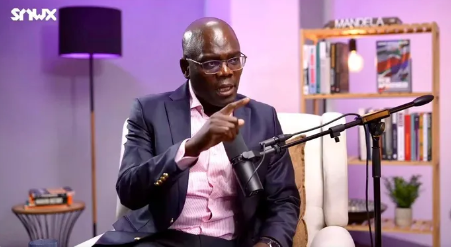
Prominent political analyst Prince Mashele has made explosive claims about the funding behind President Cyril Ramaphosa’s rise to the ANC presidency, alleging that white business interests poured nearly R1 billion into his 2017 CR17 campaignand got nothing in return.
Speaking on the Truth Report podcast, Mashele said this funding was a primary source of Ramaphosa’s power during the 2017 ANC elective conference. He accused white businesspeople of “backing the wrong horse” despite warnings that their investment would not lead to genuine political reform.
“Some of us warned them they were backing the wrong horse. However, they did not listen. Now, their money is gone,” Mashele said, adding that the South African economy and institutions have continued to decline under Ramaphosa’s leadership.
The Leaked Records
The claims echo revelations from August 2019, when Independent Media published leaked bank statements from Ramaphosa’s 2017 campaign. The report revealed the identities of major financial contributors and detailed how campaign funds were channeled.
While Ramaphosa previously stated he was not involved in fundraising, leaked emails suggested he had been consulted by campaign managers about approaching certain donors.
Following the report, Ramaphosa successfully petitioned to seal the financial records. The Pretoria High Court ruled that the bank statements and recordsdetailing nearly R1 billion in fundingshould remain confidential, a decision later upheld by the Constitutional Court.
‘Privatisation of State-Owned Entities’
Political analyst Professor Sipho Seepe said an “entire establishment had everything to do with the CR17 campaign.” This, he argued, means Ramaphosa is not “in a position to serve the interests of the public, but to advance the interests of those who campaigned for his presidency.”
Seepe linked this to recent policy decisions: “This is all about his donors, and what is more dangerous is the privatisation of the state-owned entities. He is essentially selling the country and the capacity of the state to deliver so that the interests of donors are advanced.”
He was speaking after Ramaphosa’s State of the Nation Address announcement that the government is pushing ahead with the full unbundling of Eskom.
The Motsepe Question
Mashele also criticised the idea of a Patrice Motsepe presidency, suggesting that those who support him might be “backing the wrong horse” in the same way white business interests backed Ramaphosa.
He previously claimed that Motsepe’s potential run is a “scheme” concocted by Ramaphosa (as his brother-in-law) to ensure he is protected from future prosecution, particularly regarding the Phala Phala scandal.
Seepe said the same funders are likely to support Motsepe. “It will be like a record playing itself again.”
The Transparency Problem
Another political analyst, Zakhele Ndlovu, said the remarks are unsurprising given South Africa’s lack of transparency in campaign finance.
“This is very dangerous because voters will never know who funds individual candidates and political parties. Who knows, maybe the country was sold to the highest bidder a long time ago.”
Should Motsepe be elected, Ndlovu added, South Africa will have “more of the same president.”
No Response
Ramaphosa’s spokesperson Vincent Magwenya did not respond to a request for comment.
The Unanswered Questions
Mashele’s claims raise fundamental questions about the relationship between money and power in South African politics. If nearly R1 billion in white business funding propelled Ramaphosa to the presidency, what did donors expect in return? And if, as Mashele argues, they got nothing, what does that say about the effectiveness of campaign financing as a tool for influence?
The CR17 records remain sealed. The donors’ identities are known but protected. And the debate over who really owns the politicians South Africans elect continueslargely in the dark.