Sports
Chaos In The Skies As Middle East Conflict Disrupts Travel To F1 Season Opener
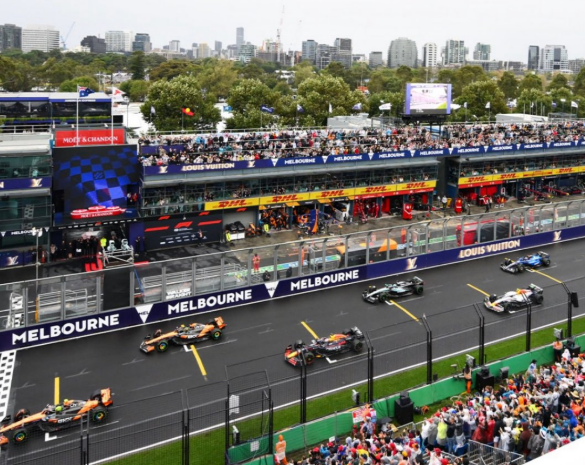
With the first race weekend of the 2026 Formula 1 season just days away, teams, officials and support staff are scrambling to reach Melbourne after the Middle East conflict sent shockwaves through global air travel. While organisers insist that the Australian Grand Prix will go ahead as planned, the road to Albert Park has become its own kind of high-pressure sprint.
Travel Disruptions Hit At The Worst Time
What should have been a straightforward shift from pre-season testing in Bahrain to the season opener in Australia turned into a logistical nightmare. After the United States and Israel launched joint strikes on Iran on 28 February, the region erupted with retaliatory attacks on American and Israeli facilities across Qatar, the UAE, Saudi Arabia, Kuwait and Bahrain.
That triggered emergency airspace closures at major transit hubs like Doha and Dubai. Emirates Airlines confirmed that Dubai International Airport would only consider reopening from 3 March, leaving thousands of travellers scrambling for alternatives. Among them were more than 2 000 Formula 1 personnel still trying to reach Melbourne by any means possible.
Rerouting Through Asia As Teams Race The Clock
With the Middle East temporarily off limits, teams have been rushing to secure last-minute reroutes through Asia. Flights via Singapore and Hong Kong are now in heavy demand, while others have opted to travel directly to Perth before hopping across Australia.
Ferrari reportedly chartered its own jet with a refuelling stop in Singapore to avoid delays. Other teams followed suit with bespoke, emergency travel plans. The situation is even more delicate for Formula 2 outfits, many of whom operate on slimmer budgets and have reported cargo stranded at Gulf airports. Some fear their equipment may not reach Australia in time for the support races.
Organisers Say Melbourne Race Weekend Is Still Safe
Despite the chaos, organisers maintain that the race will go ahead from 6 to 8 March. The FIA said it is monitoring the situation closely and emphasised that the next three rounds of the championship take place in Australia, China and Japan, far from the conflict zone.
However, the ripple effects could still shape the early season. Bahrain and Saudi Arabia, scheduled for April, are both watching the crisis closely as uncertainty grows over the stability of race-critical infrastructure. A Pirelli wet-tyre test planned in Bahrain was cancelled with little notice, adding to concerns.
A Spotlight On F1’s Middle Eastern Footprint
The disruptions arrive shortly after Formula 1 CEO Stefano Domenicali publicly defended the sport’s growing presence in the Middle East, where four races are now hosted annually. He argued that the region’s investment has been vital to F1’s global expansion and that the partnership remains mutually beneficial.
But with flights grounded and freight stuck at airports, the crisis is forcing the paddock to confront the vulnerabilities of relying heavily on Middle Eastern travel routes. As teams push to reach Melbourne in time, the 2026 season is beginning not with a roar of engines, but with a reminder of how tightly motorsport is linked to global events.
{Source: The South African}
Follow Joburg ETC on Facebook, Twitter , TikTok and Instagram
For more News in Johannesburg, visit joburgetc.com