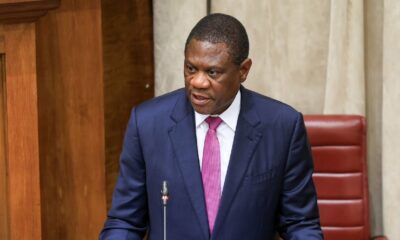
Gayton McKenzie’s meeting with US ambassador sparks debate over South Africa’s foreign policy
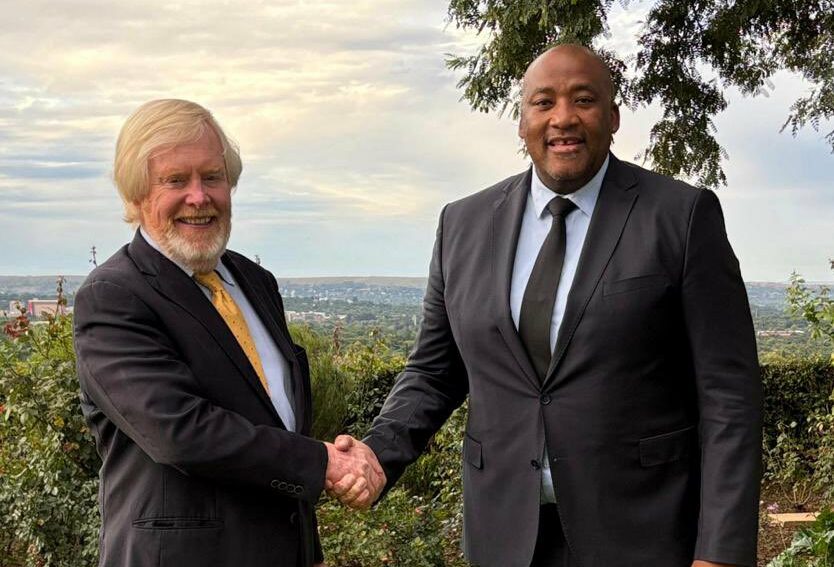
A private meeting between Gayton McKenzie and the Leo Brent Bozell III, the United States ambassador to South Africa, has stirred fresh political debate about diplomacy, protocol and who exactly speaks for the country on the global stage.
The encounter took place on Friday at the ambassador’s residence and was later described by the Patriotic Alliance (PA) as a friendly discussion held in a spirit of “mutual respect” and open dialogue.
But not everyone sees it that way.
Some political analysts argue that the meeting, involving a sitting cabinet minister, risks sending mixed signals about South Africa’s official foreign policy.
A meeting that comes at a sensitive moment
The timing of the meeting is part of what makes it controversial.
Just days earlier, South Africa’s Minister of International Relations, Ronald Lamola, confirmed that the ambassador had been formally summoned to explain remarks he made during a public event in Hermanus in the Western Cape.
At that conference, Bozell criticised the controversial “Kill the Boer” chant, saying he considered it hate speech regardless of what South African courts have ruled.
The comments sparked diplomatic tension and prompted a formal response from the government.
Against that backdrop, McKenzie’s visit to the ambassador’s residence quickly drew attention.
The Patriotic Alliance defends the engagement
For the Patriotic Alliance, the meeting was simply about improving relations between two countries whose relationship has grown strained in recent years.
The party said the discussion left McKenzie feeling optimistic about the possibility of rebuilding ties with the United States.
According to the PA, the ambassador’s close ties to Donald Trump could create an opportunity to reset diplomatic relations.
The party also pointed out that concerns raised by the US about violence in rural South Africa particularly farm attacks, should be discussed openly rather than dismissed outright.
South Africa, the party argued, is not a genocidal country, but violent crime remains a serious issue that fuels global debate and perception.
Analysts warn of mixed signals
Political observers say the situation is more complicated.
Professor Bheki Mngomezulu believes the key question is whether the meeting followed proper diplomatic channels.
If the meeting was arranged without clearance from the president or the Department of International Relations and Cooperation, it could create the impression that members of government are acting independently of official foreign policy.
At face value, he said, the optics suggest that government leaders may be “speaking in different tongues” when it comes to relations with Washington.
That kind of perception can be risky in diplomacy, where consistency often matters as much as the message itself.
The politics inside the Government of National Unity
Another analyst, Professor André Duvenhage, suggested the issue also reflects internal tensions within South Africa’s Government of National Unity (GNU).
He argues that some coalition partners have adopted foreign policy positions that differ from those traditionally held by the African National Congress.
That includes a more pro-Western or pro-Israel diplomatic tone often associated with opposition parties such as the Democratic Alliance.
From the ANC’s perspective, Duvenhage said, foreign policy has historically been a space where the ruling party expects alignment across government.
Balancing party politics and cabinet responsibility
Political lecturer Zakhele Ndlovu believes the debate highlights a broader challenge within coalition politics.
McKenzie, he notes, occupies two roles simultaneously: he is both a cabinet minister and the leader of a political party.
Meeting with a foreign ambassador is not unusual in itself.
The real issue, according to Ndlovu, is whether the meeting aligns with the broader geopolitical strategy of the government.
He also suggests that the ANC sometimes blurs the line between its own political interests and those of the country something that becomes more complicated in a coalition environment.
Social media reaction: diplomacy or political theatre?
Online, reactions have been mixed.
Supporters of McKenzie have praised him for engaging directly with the United States and trying to rebuild diplomatic bridges.
Critics, however, argue that foreign policy should be handled through formal channels rather than individual initiatives by cabinet members.
In a country where politics increasingly unfolds in public, from press briefings to social media debates, even private diplomatic meetings can quickly become national talking points.
What this means for South Africa’s diplomacy
South Africa has long positioned itself as an independent voice in global politics, often taking stances that differ from Western powers.
That approach has sometimes strained relations with Washington.
McKenzie’s meeting with Ambassador Bozell has therefore opened a larger conversation about whether South Africa’s foreign policy is evolving or whether coalition politics is simply making those differences more visible.
Either way, the episode highlights a new reality of South African governance: in a coalition era, diplomacy is no longer just about what the government says, but also about who inside government is doing the talking.