Another day, another march, but this one lands at the heart of one of South Africa’s most sensitive and deeply layered issues.
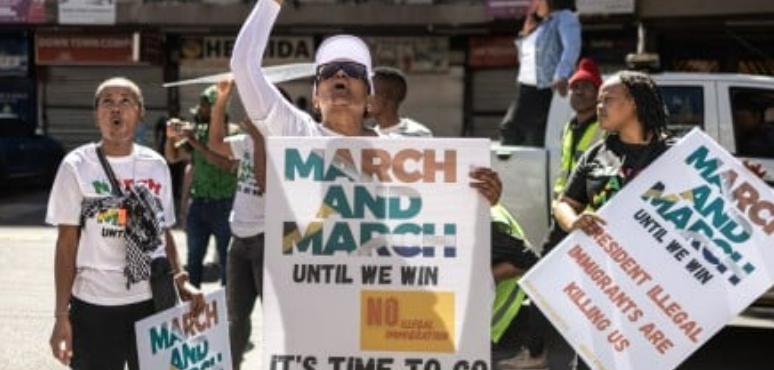
More than 500 members of the group March and March are expected to take to the streets of Johannesburg’s CBD on Wednesday, shifting the spotlight once again onto immigration, crime, and growing public frustration. The demonstration is set to move toward the Gauteng Provincial Legislature, continuing a wave of action that has already spilled into Pretoria earlier this week.
From Pretoria To Joburg Streets
Tuesday’s protest in Pretoria set the tone. Hundreds gathered at Burger’s Park before making their way through Sunnyside to the Union Buildings. The march, supported by members of ActionSA, remained peaceful but sent a clear message.
Now, Johannesburg is next. Protesters are expected to assemble at Mary Fitzgerald Square in Newtown at 9am, before beginning their march an hour later. The route cuts through some of the city’s busiest streets before ending at Beyers Naudé Square around early afternoon.
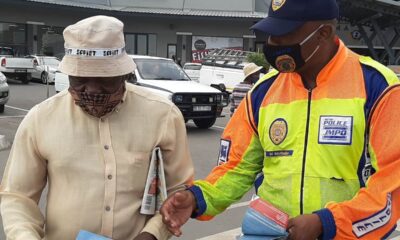
Authorities are preparing for disruption. Johannesburg Metropolitan Police Department officials have warned motorists to avoid the CBD corridor, particularly around landmarks like the Market Theatre and Sci-Bono. Traffic delays are expected as officers manage movement and maintain order.
What The Protesters Want
At the centre of the march is a familiar set of demands. The group is calling for stricter immigration controls, tighter visa regulations, and a review of asylum processes. They are also pushing for action against businesses that employ undocumented foreign nationals.
There is also a growing warning from organisers. If government does not respond, they say their actions will escalate.
A Country Wrestling With A Complex Issue
The protest taps into a broader national conversation that has been building for years. In many communities, concerns around jobs, crime, and access to services are increasingly being linked to immigration.
But South Africa’s history adds weight to the debate. Xenophobia is not new here. The country has seen repeated outbreaks of violence targeting foreign nationals, often with devastating consequences.
This week’s demonstrations come amid renewed tensions in several cities, including Johannesburg, Durban, Cape Town and East London. Some African nations, including Ghana and Nigeria, have already raised diplomatic concerns over attacks on their citizens.
Ramaphosa Calls For Balance And Unity
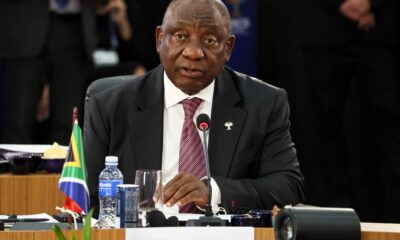
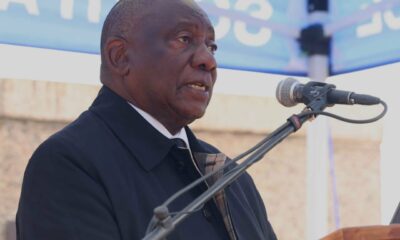
Over the weekend, President Cyril Ramaphosa addressed the issue directly during Freedom Day celebrations in Bloemfontein. His message was clear.
South Africans, he said, must confront illegal migration through the law, not through prejudice. He reminded the country of its own liberation history, shaped by the support of other African nations.
Ramaphosa emphasised that while government is working to clamp down on illegal immigration and corruption within the system, citizens must resist turning frustration into xenophobia.
The principle of ubuntu, he noted, should remain central.
The Bigger Picture
What unfolds on Johannesburg’s streets this week is about more than a single march. It reflects a country trying to balance economic pressure, social tension, and its own identity.
On one side, there are real concerns from communities who feel stretched and unheard. On the other, there is a constitutional commitment to human dignity and African solidarity.
As protesters gather in Newtown, that tension will once again be on full display, not just in the streets, but in the national conversation that continues long after the march ends.