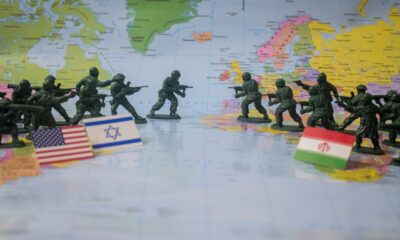
The flames that engulfed parts of Qatar’s Ras Laffan gas hub this week are not contained to the Gulf. Their effects are rippling through global markets, spiking oil prices, and forcing the world to confront a nightmare scenario: major energy infrastructure under direct attack.
Brent crude surged more than 5 percent on Thursday, trading at $106 a barrel by morning. The jump reflects raw fearfear that the Middle East war, now in its third week, has crossed a threshold that energy markets have long dreaded. When gas facilities burn, supply chains tighten. When supply chains tighten, prices rise. And when prices rise, every economy feels the pain.
The Attacks That Shook the Gulf
Two waves of Iranian strikes caused “extensive damage” at Qatar’s main gas hub, the country’s state-run energy firm confirmed on Thursday. The Ras Laffan Industrial City on Qatar’s north coast was hit Wednesday, damaging a gas-to-liquids facility. Early Thursday, “sizeable fires and extensive further damage” struck several liquefied natural gas facilities.
Qatari civil defence teams worked through the night. By Thursday morning, the interior ministry announced that all fires were under control. “Cooling and sites-securing operations are still ongoing,” it said. No injuries were reporteda small mercy in an otherwise alarming escalation.
Iranian state television claimed credit, announcing that a missile had struck the gas plant hours after it was hit in an earlier strike. The message was clear: Iran can reach Qatar’s most critical energy infrastructure, and it is willing to do so.
The South Pars Connection
The strikes on Qatar did not occur in isolation. They were retaliation for an Israeli strike on Iran’s South Pars fieldthe Iranian side of the world’s largest known gas reserve, which Qatar shares with Iran.
US President Donald Trump confirmed the Israeli operation but distanced himself from it. On his Truth Social platform, Trump said the US “knew nothing” of the attack. He then issued a stark warning: if any further attacks took place at Ras Laffan, he would “massively blow up the entirety of the South Pars Gas Field.”
The threat raises the stakes enormously. South Pars is not just another energy facility. It is the foundation of Iran’s gas production, a critical source of revenue and domestic energy. Threatening to destroy it is threatening to cripple Iran’s energy sector entirely.
The Strait of Hormuz Factor
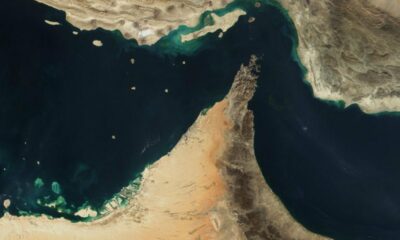
Markets are also reacting to Iran’s effective closure of the Strait of Hormuz, through which a fifth of global oil and gas flows. The strait is a chokepoint of almost unimaginable strategic importance. Closing it, even partially, sends shockwaves through global supply chains.
Iran’s Revolutionary Guards have made clear that energy infrastructure across the Gulf is now in their sights. “Our response will be much more severe than tonight’s attacks,” the Guards said in a statement. They warned neighbouring Gulf nations that their oil and gas industries would be “completely destroyed” if Israel or the United States conduct any further attacks against Iranian energy infrastructure.
For Gulf states, the message is terrifying. They are caught between Iranian retaliation and Western alliances, between their economic dependence on energy exports and their vulnerability to attack.
Saudi Arabia’s Warning
Saudi Arabia, the world’s largest oil exporter, is not staying silent. Foreign Minister Prince Faisal bin Farhan said the kingdom has not ruled out military action in response to repeated missile and drone attacks from Iran.
“The kingdom is not going to succumb to pressure, and on the contrary, this pressure will backfire… and certainly, as we have stated quite clearly, we have reserved the right to take military actions if deemed necessary.”
Riyadh was hit again late Wednesday, with loud explosions reported and four ballistic missiles intercepted. A drone headed toward a gas plant was also destroyed. The Saudis are increasingly in the crosshairs, and their patience is wearing thin.
The Global Response
French President Emmanuel Macron has called for restraint. After speaking with Trump and the Qatari emir, Macron posted on X: “It is in the common interest to implement without delay a moratorium on strikes targeting civilian infrastructure, particularly energy and water infrastructure.”
The call reflects European anxiety about where this is heading. Energy infrastructure is not just a military targetit is the foundation of modern civilisation. When it burns, everyone suffers.
The US Federal Reserve has already raised its inflation outlook, citing an “uncertain” economic outlook due to the war. Central banks can only do so much when the underlying supply shocks are physical and geopolitical.
The Human Toll
Amid the market chaos and strategic calculations, human lives continue to be lost. Three Palestinian women were killed in the occupied West Bank by falling shrapnelthe first reported Palestinian deaths of this conflict. A foreign worker was killed near Tel Aviv by Iranian missile fire, bringing Israel’s death toll to 15.
Iran executed three people convicted of killing police officers during unrest earlier this year. Kuwait arrested 10 alleged Hezbollah militants accused of plotting attacks on infrastructure. The violence spreads and deepens.
What Comes Next
Cathay Pacific has suspended flights to Dubai and Riyadh until the end of April. Qatar has expelled Iranian military attaches. The UAE has shut down a gas facility due to falling debris. Every day brings new disruptions, new escalations, new reasons for markets to panic.
Oil at $106 is not a peak; it could be a floor. If the Strait of Hormuz remains contested, if further attacks hit Gulf energy facilities, if the conflict draws in Saudi Arabia or the UAE more directly, prices could climb much higher.
For ordinary people around the world, the war in the Middle East has suddenly become very personal. Every time you fill your tank, every time you pay an energy bill, every time you see prices rise at the grocery store, you will feel the effects of what happened at Ras Laffan.
The fires are out in Qatar. But the flames they ignited in global markets are still burning.