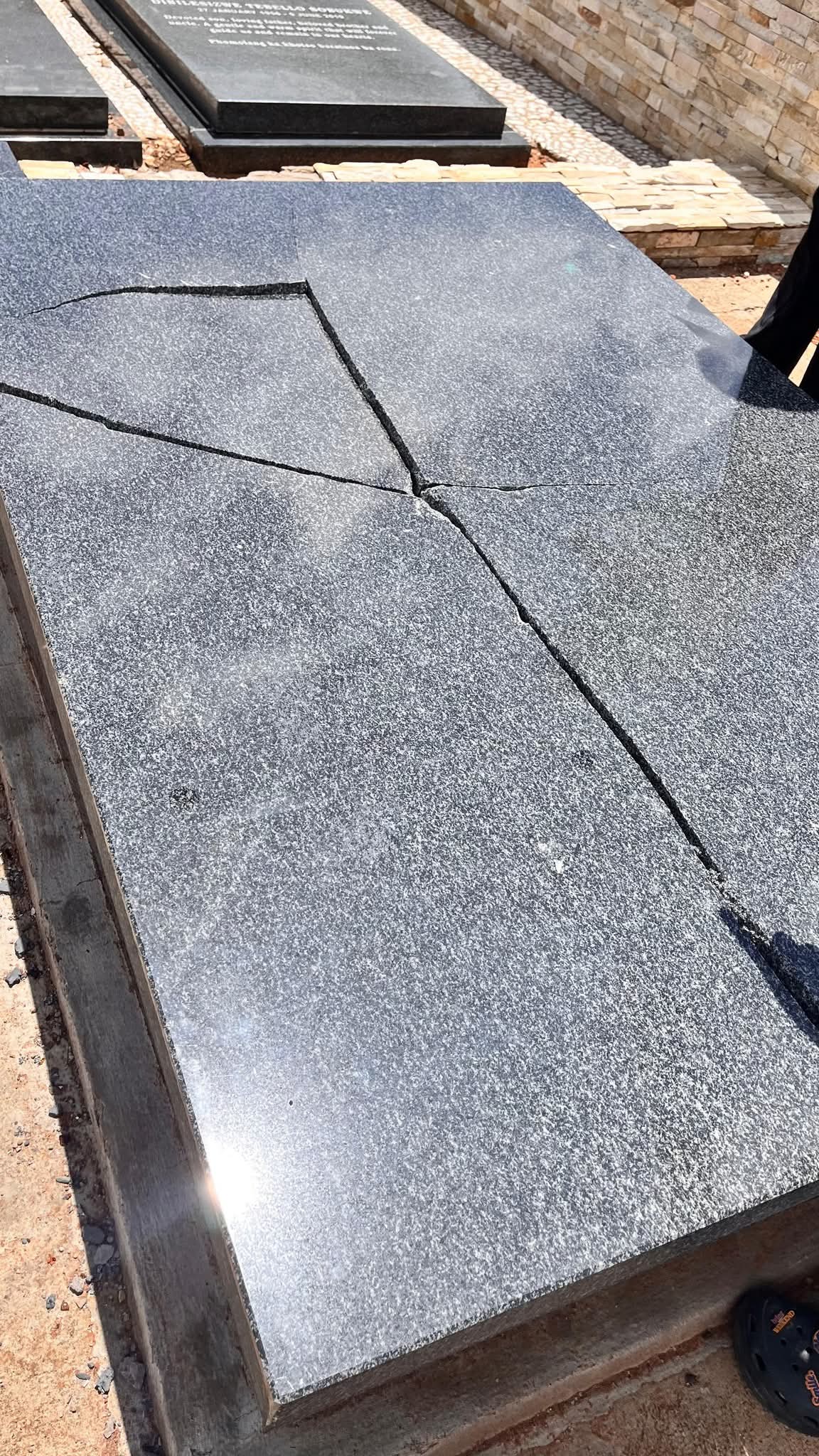
The gravesite of Robert Mangaliso Sobukwe, founding president of the Pan Africanist Congress, has been vandalised. The news, confirmed by the PAC this week, has sparked outrage and raised fears that the liberation icon’s final resting place has become a target in a broader cultural war.
“PAC condemns in the strongest possible terms the shameful and cowardly act of vandalism committed against the gravesite of the founding President of the PAC, Robert Mangaliso Sobukwe,” the party said in a statement.
But the party went further, warning that this was no random act of destruction. “The PAC views this act not merely as vandalism, but as a deliberate and calculated attempt to tarnish the name, legacy, and enduring contribution of Sobukwe.”
The PAC pointed to “insurgence forces” allegedly working to provoke unrest and confusion. A criminal case has been opened, with the party demanding urgent accountability, insisting that the attack on what it considers a sacred symbol of resistance cannot go unpunished.
The Context of Controversy
This incident did not happen in a vacuum. In an exclusive interview with IOL, Sobukwe’s family revealed they were already reeling from fierce backlash after the historic renaming of Graaff-Reinet to Robert Sobukwe Town. The move, meant to honour the liberation icon, ignited a national firestorm.
“I do appreciate that they at least gave my grandfather’s legacy an opportunity to live on and for more people to know about him,” Tsepo Sobukwe said.
The timing has raised alarm bells. The vandalism comes just as marches and public support for the renaming gained momentum, and as debates over identity, heritage, and decolonisation reached a boiling point.
Who Was Robert Sobukwe?
For those unfamiliar with South African history, Robert Mangaliso Sobukwe was one of the most significant figures in the liberation struggle. A founder and first president of the Pan Africanist Congress, he led the anti-pass campaign of 1960, which culminated in the Sharpeville Massacre. His defiance cost him dearly. He was imprisoned, then held under the notorious “Sobukwe Clause”a law that allowed for his indefinite detentionfor six years on Robben Island.
His vision was of a united, free Africa. His commitment to non-racialism and African self-determination made him a towering figure, even as he was deliberately isolated and silenced by the apartheid regime.
To vandalise his grave is not just an attack on a physical site. It is an attack on the memory of a man who symbolised resistance to oppression.
The Family’s Pain
For the Sobukwe family, the vandalism adds pain to an already fraught moment. The renaming of Graaff-Reinet was meant to be a celebrationan acknowledgment of their grandfather’s legacy and a step toward reclaiming public space for liberation heroes. Instead, it has drawn backlash, and now this.
Tsepo Sobukwe’s measured appreciation for the renaming stands in stark contrast to the anger of those who oppose it. His family is caught in a national debate not of their making, while their ancestor’s grave lies desecrated.
The Political Response
The PAC’s statement was unequivocal: “The PAC remains resolute: the name of Sobukwe will not be silenced, his legacy will not be defaced, and his vision will continue to guide the struggle for land, freedom, and self-determination.”
The party has opened a criminal case and is demanding that those responsible be held accountable. But accountability requires identification, and identification requires investigation. Whether the police will devote sufficient resources to this caseand whether they can overcome the challenges of finding those responsible for a nighttime act of vandalismremains to be seen.
The Broader Battle
The vandalism of Sobukwe’s grave cannot be separated from the broader battle over South Africa’s public memory. Statues have fallen. Street names have changed. Towns have been renamed. Each change sparks resistance from those who see it as erasing history, and celebration from those who see it as reclaiming dignity.
Graaff-Reinet’s renaming to Sobukwe Town is one of the most significant such changes. It takes a city with deep colonial roots and renames it for a man who fought against everything that colonialism represented. For some, this is justice. For others, it is provocation.
The vandalism suggests that at least some opponents are willing to move from protest to action. From words to desecration.
What Comes Next
A criminal investigation is underway. The family mourns. The PAC demands justice. And the broader debate over Sobukwe’s legacyand over whose history South Africa chooses to honourcontinues.
For now, the gravesite of a liberation hero lies damaged. The question is whether those responsible will be found, and whether this act of cowardice will harden resolve or deepen division.
The PAC’s closing words capture the determination of those who revere Sobukwe: his name will not be silenced, his legacy will not be defaced. But the vandalism is a reminder that the struggle over memory is as fierce as any political battle. And that graves, even of heroes, are not always safe.