News
“We will not bow”: Ramaphosa responds to G7 snub and rising US tensions
“We will not bow”: Ramaphosa responds to G7 snub and rising US tensions
A diplomatic slight sparks a defiant tone
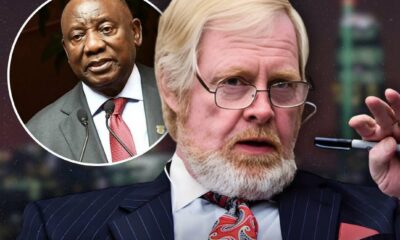
President Cyril Ramaphosa has struck a firm and defiant tone following South Africa’s unexpected exclusion from the upcoming G7 Summit 2026, a move reportedly influenced by pressure from the United States.
Speaking at the ANC’s Limpopo elective conference, Ramaphosa didn’t mince his words. In a speech that quickly made waves beyond party lines, he made it clear: South Africa will not be bullied into submission on the global stage.
“We will not bow,” he said, pushing back against what he described as “vicious global right-wing forces” seeking to dictate terms to countries in the global South.
More than just a missed invitation
At face value, being left out of the G7 might seem like a minor diplomatic shuffle. After all, South Africa is not a permanent member of the forum, which includes powerhouses like France, the US, and the UK.
But this time feels different.
The summit, set to take place in Évian, France, is known for inviting select non-member countries often as a gesture of partnership or influence. South Africa has attended in the past under such invitations. Its absence this year, especially under reported US pressure, has raised eyebrows.
Ramaphosa himself downplayed the significance, noting that South Africa has not attended every G7 gathering. Still, the timing and the politics behind it tell a deeper story.
A widening rift with Washington
Relations between Pretoria and Washington have been on shaky ground for some time. Since Donald Trump returned to office, tensions have escalated sharply.
Trump has accused South Africa of enabling what he calls “white genocide” claims widely dismissed by local civil society groups and international observers. The rhetoric has only deepened mistrust between the two nations.
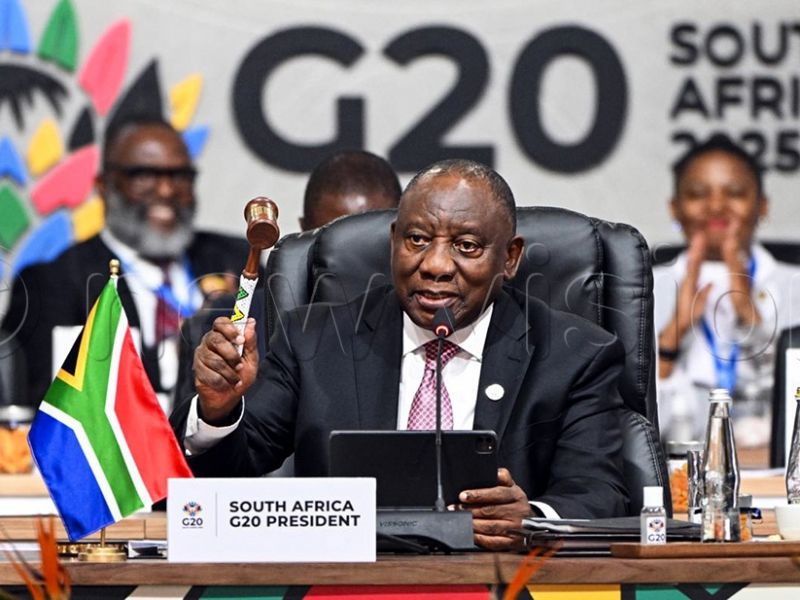
In a symbolic snub of his own, Trump skipped the G20 Leaders’ Summit 2025 hosted by South Africa, where Ramaphosa was expected to formally hand over the presidency.
Now, the G7 disinvitation appears to be the latest chapter in this increasingly strained relationship.
South Africa’s foreign policy stance under the spotlight
Ramaphosa used the moment to reaffirm South Africa’s long-standing foreign policy position one rooted in multilateralism, equity, and solidarity with developing nations.
He criticised what he called an “illegal war” involving the US and Israel, framing it as an example of modern-day imperialism with global consequences.
South Africa, he said, will continue to support nations seeking self-determination including Palestine, Cuba, and Western Sahara even in the face of mounting international pressure.
It’s a stance that resonates strongly with parts of the South African public, particularly given the country’s own history of struggle against oppression.
Public reaction: pride, concern and debate
Back home, reactions have been mixed and loud.
On social media, some South Africans applauded Ramaphosa’s firm stance, seeing it as a necessary assertion of sovereignty in a world still dominated by powerful nations.
Others, however, expressed concern about the economic and diplomatic consequences of alienating major global partners like the US.
For many, the question isn’t just about principle it’s about pragmatism. Can South Africa afford to take such a strong stand at a time when its economy is under pressure?
A balancing act for Pretoria
This moment highlights a broader challenge facing South Africa: how to remain true to its values while navigating an increasingly polarised global order.
The country has long positioned itself as a voice for the global South advocating for fairness, inclusion, and cooperation. But as geopolitical tensions intensify, that role is becoming harder to sustain without consequences.
The G7 snub may not change South Africa’s direction overnight. But it does signal that its independent stance is being noticed and challenged.
In many ways, this isn’t just about one summit or one diplomatic disagreement.
It’s about where South Africa stands in the world today and how it chooses to engage with power, pressure, and principle.
For Ramaphosa, the message is clear: South Africa will not be pushed around.
Whether that stance strengthens the country’s global position or isolates it further is a story that’s still unfolding.
{Source: The Citizen}
Follow Joburg ETC on Facebook, Twitter , TikTok and Instagram
For more News in Johannesburg, visit joburgetc.com