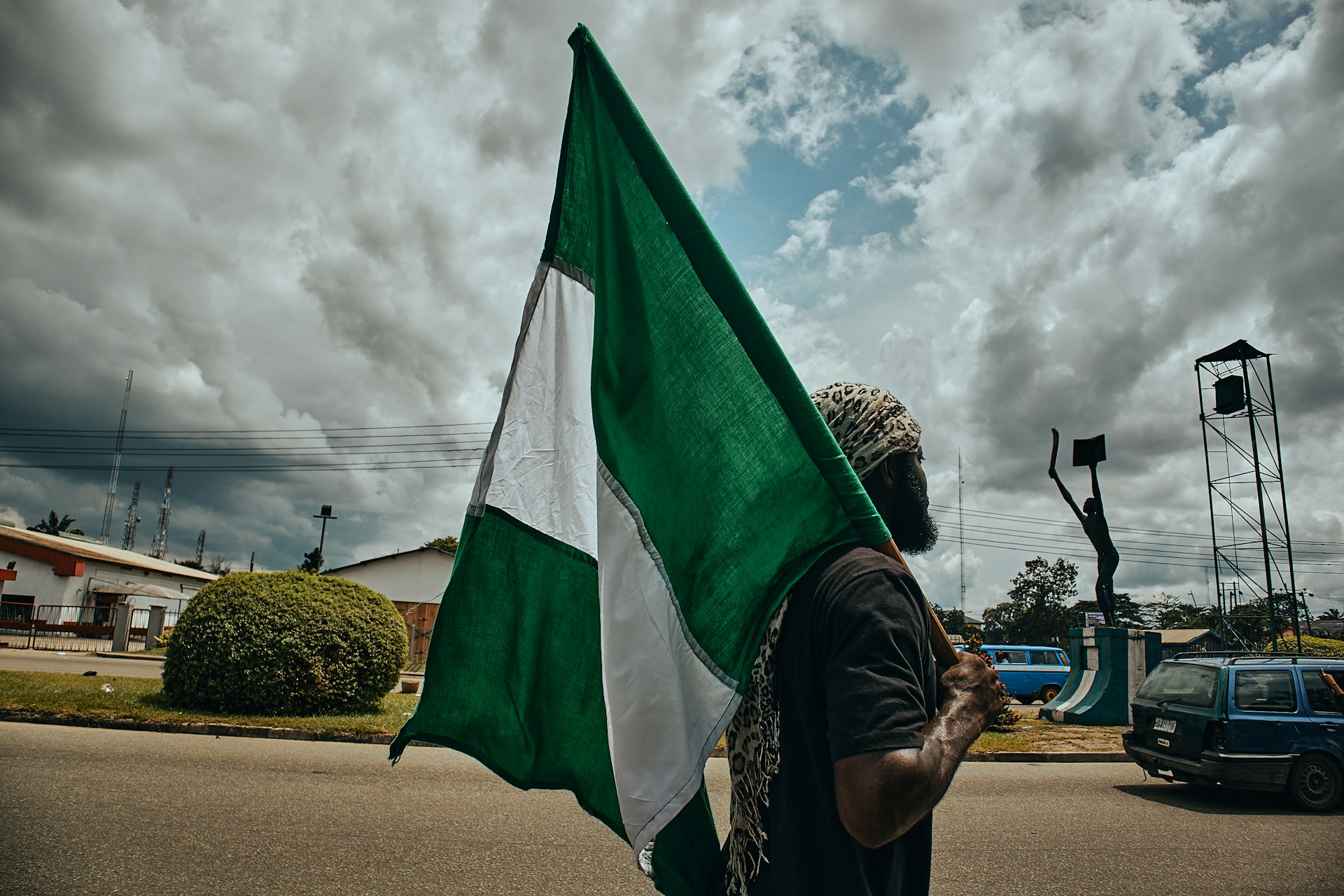
What started as a viral moment quickly turned into a full-blown street protest in the Eastern Cape, as anger spilled onto the roads of KuGompo City, formerly known as East London.
Residents, political parties and traditional leaders gathered in numbers on Monday, united by one issue: the alleged crowning of a Nigerian national as a king on South African soil.
For many, it was not just controversial. It was seen as a direct challenge to the country’s deeply rooted traditional leadership structures.
A Coronation That Sparked Outrage
At the centre of the storm is Chief Solomon Ogbonna Eziko, who was reportedly crowned “Igwe Ndigbo” during a lavish ceremony. Images and videos of the event circulated widely, triggering strong reactions across communities in the province.
Protesters arrived carrying knobkieries, waving South African flags and holding placards, making their stance clear. The message was simple: this kind of coronation does not belong in South Africa.
Political Parties And Traditional Leaders Push Back
Among those leading the charge was Athol Trollip, who described the situation as unacceptable.
He argued that there is no constitutional basis for a foreign national to crown themselves as a king in the Eastern Cape, particularly if it hints at forming parallel structures of authority.
The Patriotic Alliance also rejected the ceremony. Party spokesperson Steve Motale labelled it a “fake coronation” and called on foreign nationals living in South Africa to respect local laws.
Traditional leadership structures echoed these concerns. Kgosi Mathupa Mokoena, president of Contralesa, stressed that kingship cannot exist in isolation. According to him, a king must be recognised within an established traditional system, something he believes cannot be replicated outside one’s country of origin.
Royal House Distances Itself
Adding another layer to the controversy, the Royal House of AbaThembu moved quickly to distance itself from the situation.
Reports had suggested that Buyelekhaya Dalindyebo may have endorsed or recognised the Nigerian national. Those claims were firmly denied.
Royal advisor Matthew Mpahlwa dismissed the circulating posts as false, describing them as fabricated and misleading.
The statement made it clear that the AbaThembu royal family had no involvement in the alleged coronation.
Calls For Investigation Grow
The incident has also caught the attention of political voices beyond the Eastern Cape.
The African Transformation Movement has already called for a formal investigation, warning that such events could undermine both traditional authority and the rule of law.
Their concern reflects a broader anxiety about how cultural leadership structures are recognised and protected in South Africa, a country where traditional leadership still plays a significant role in governance and community identity.
Why This Matters In South Africa
Traditional leadership in South Africa is not symbolic. It is embedded in law, culture and local governance. Kings and chiefs are recognised through specific lineage systems and formal processes, often backed by legislation and historical legitimacy.
This is why the idea of an unofficial coronation, especially involving a foreign national, has struck such a nerve.
For many in the Eastern Cape, this is not just about one ceremony. It is about protecting the integrity of a system that has existed for generations.
As tensions simmer, the question now is whether authorities will step in to investigate the matter further or allow it to fade as just another viral moment. Either way, the reaction on the ground has already made one thing clear: issues of identity, leadership and belonging remain deeply sensitive in South Africa.
{Source:IOL}
Follow Joburg ETC on Facebook, Twitter , TikTok and Instagram
For more News in Johannesburg, visit joburgetc.com