News
South Africa’s R900 billion informal economy exposes a widening tax gap as SARS intensifies crackdown
A massive economy hiding in plain sight
On paper, South Africa’s informal sector is often described as “hidden”, but its impact is anything but small.
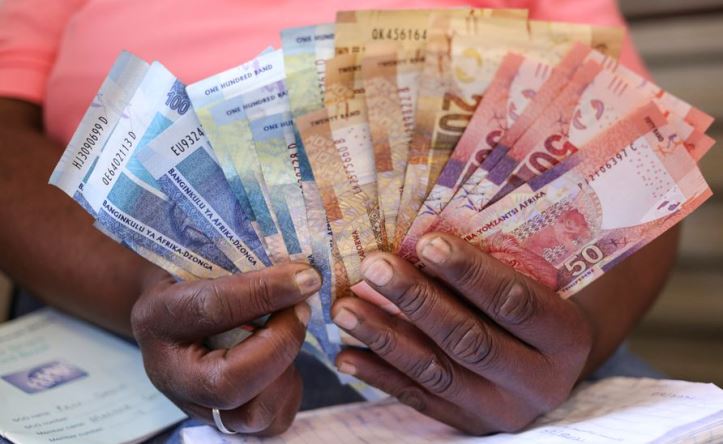
Valued at around R900 billion, this sprawling network of spaza shops, street traders, small service providers and cash-based businesses forms a critical part of daily economic life. Yet, a large portion of these businesses operate outside the tax system entirely.
The reason is not always evasion. Many are simply unregistered, under the radar of SARS, or too small to meet formal requirements. Others avoid registration due to the complexity and cost of compliance.
But beneath that reality lies a growing concern: a significant tax gap that could be costing the country billions in lost revenue every year.
Billions in VAT slipping through the cracks
According to Finance Minister Enoch Godongwana, SARS has identified nearly 12,000 taxpayers in a single financial year who should be registered for VAT but are not.
Over the past five years, that number has climbed to nearly 50,000 non-compliant businesses flagged through audits and enforcement drives.
The scale of the issue is staggering. SARS estimates that about R50 billion in economic activity remains unassessed, meaning potential tax contributions are not reaching the fiscus.
While many informal businesses fall below the VAT threshold of R2.3 million annual turnover, a notable number exceed it without registering.
That gap has become a central focus for SARS as it pushes to strengthen compliance in a sector that is notoriously difficult to track.
Why SARS struggles to track the informal economy
One of the biggest obstacles is surprisingly simple: data scarcity.
Many informal businesses operate in cash, with no digital footprint or formal records. This makes it difficult for tax authorities to measure turnover, verify compliance, or even identify business activity patterns.
Godongwana has acknowledged that SARS’s current VAT systems do not categorise informal businesses in a structured way even segments like spaza shops are not separately tracked.
Without that classification, enforcement becomes reactive rather than predictive.
However, change is underway. SARS is increasingly using third-party data, banking information, and digital transaction systems to map economic activity more accurately.
As digital payments expand across townships and informal markets, authorities expect compliance to improve naturally over time especially where bank accounts and funding access require tax registration.
Still, SARS is not waiting passively. It has already intensified targeted audits and compliance interventions aimed at non-registered businesses.
The real barrier: paperwork, costs and complexity
Beyond enforcement challenges, there is another issue that plays out on the ground: administrative burden.
For many small business owners, registering for tax is not seen as a step toward growth but as a bureaucratic hurdle that offers little immediate benefit.
Research from Standard Bank’s Business and Commercial Banking unit found that as many as 80% of informal businesses remain unregistered.
Even more concerning, the study highlighted that some of these businesses generate more than R100,000 in annual turnover, yet still operate outside formal tax and labour systems.
For many entrepreneurs, the choice is practical rather than ideological. The cost of compliance, paperwork, and regulatory requirements often outweigh perceived benefits.
This leaves many operators stuck in an informal cycle unable to easily access loans, insurance, or formal financial services.
A sector that still supports the broader economy
Despite the tax gap, the informal sector is not without value to the economy.
These businesses absorb a significant portion of South Africa’s unemployed population, providing livelihoods where formal jobs are scarce.
They also feed money back into the formal economy by purchasing stock, paying indirect taxes like VAT and excise duties, and supporting local supply chains.
In many ways, the informal sector acts as both a buffer against unemployment and a hidden driver of consumer activity.
But policymakers argue that its contribution could and should be far greater if more businesses were brought into the formal tax net.
SARS moves toward data-driven enforcement
Government is increasingly betting on technology and data integration to close the gap.
By linking tax systems with banking data, digital payment platforms, and third-party records, SARS hopes to better identify businesses that should be registered.
The shift is also expected to change how compliance is enforced, moving from manual audits to real-time risk detection systems.
At the same time, there is recognition that enforcement alone will not solve the problem.
Simplifying registration processes and reducing administrative pressure on small businesses may be just as important as penalties or audits.
The bigger economic question
At the heart of the debate is a balancing act: how to bring a vast informal economy into the tax system without stifling the very entrepreneurs who keep it alive.
South Africa’s informal sector is not just a tax issue it is a livelihood system, a job creator, and a survival economy.
The challenge now facing SARS and policymakers is whether formalisation can be achieved without pushing vulnerable businesses further to the margins.
For now, one thing is clear: with up to R50 billion potentially uncollected, the country’s informal economy is no longer invisible and neither is the pressure to bring it into the system.
{Source: Daily Investor}
Follow Joburg ETC on Facebook, Twitter , TikTok and Instagram
For more News in Johannesburg, visit joburgetc.com