News
Oil prices fall as Strait of Hormuz tensions ease on peace talk hopes
Oil prices dip as fragile peace hopes ease Strait of Hormuz tensions
Markets swing between fear and optimism as diplomacy keeps hope alive
Global oil markets eased on Tuesday as prices slipped and stocks climbed, driven by renewedbut uncertainhope that diplomatic efforts could help end the Middle East conflict and reopen the strategically vital Strait of Hormuz.
The shift in sentiment followed days of sharp volatility triggered by escalating tensions in the region, particularly around the narrow waterway through which roughly a fifth of the world’s oil and gas supply flows.
From panic to rebound in 24 hours
Earlier in the week, oil prices surged as much as 8% after heightened geopolitical developments and the announcement of a naval blockade plan affecting Iranian ports in the Gulf.
The announcement sent Asian stock markets lower and briefly pushed energy markets into panic mode.
But by Tuesday, the picture had changed.
Crude oil reversed most of its gains, with West Texas Intermediate down about 2% and Brent crude falling roughly 1.5%, trading near $97 a barrel. At the same time, major US stock indexes ended the previous session in positive territory.
A strategic chokepoint at the centre of global anxiety
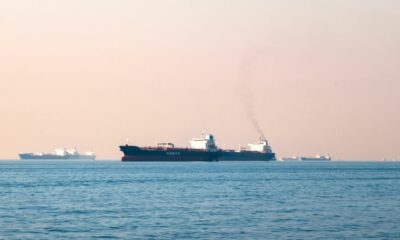
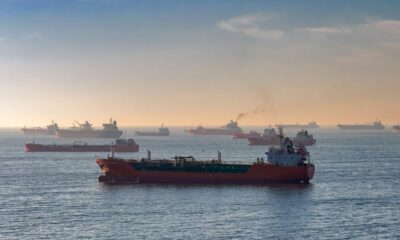
At the heart of the market reaction is the Strait of Hormuz, one of the world’s most important energy corridors. Any disruption there has immediate consequences for global supply chains and pricing.
Initial fears intensified after the US military clarified plans for restrictions involving Iranian ports, while confirming that ships not linked to Iran would still be allowed to pass through the strait.
That clarification helped calm markets, reducing fears of a full closure scenario.
Trump signals possible breakthrough in talks
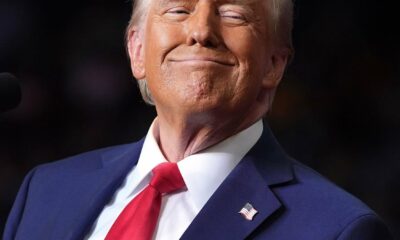
Sentiment shifted further after comments from US President Donald Trump, who said Iranian representatives had contacted officials seeking a possible agreement.
While no details were provided, the suggestion that communication was ongoing was enough to shift investor expectations.
“They’d like to make a deal. Very badly,” Trump told reporters, adding fuel to market speculation that diplomacy may still be possible.
Markets react to “hope, not resolution”
Analysts say the recent rally is not driven by certainty, but by belief that negotiations have not completely collapsed.
SPI Asset Management’s Stephen Innes described the situation as a market driven by “hope rather than resolution,” noting that even the continuation of dialogue is enough to influence pricing.
He added that traders are now pricing in the possibility that the blockade may be a negotiating tactic rather than a step toward deeper escalation.
Asia follows Wall Street lead
The optimistic shift carried into Asian trading, where technology stocks helped drive gains across major markets.
Tokyo and Seoul led the rally, while Taipei climbed 1.7% to reach a record high. Hong Kong, Shanghai, Sydney, Singapore and Wellington also posted gains, reflecting a broader return of investor confidence.
Conflicting signals from leaders
Despite the market rebound, rhetoric on both sides remained tense.
Trump claimed that much of Iran’s naval capacity had already been weakened and warned that any remaining fast-moving vessels approaching the blockade could face immediate consequences.
He also stated that dozens of ships had passed through the Strait of Hormuz recently, though those figures were not independently confirmed.
Iran blames US for stalled talks
On the other side, Iranian Foreign Minister Abbas Araghchi blamed Washington for the breakdown in negotiations, citing what he described as excessive demands during talks with Saudi officials.
Iran maintains that external pressure is undermining diplomatic progress, particularly as tensions escalate around its energy exports and maritime access.
Energy markets warn of tighter conditions ahead
The International Energy Agency cautioned that April could bring more severe disruptions than March.
According to its leadership, earlier shipments reflected cargo loaded before tensions escalated, while recent weeks have seen fewer new loads entering the market.
Officials warned that prolonged disruption could quickly tighten global supply conditions and amplify price volatility.
Why oil is reacting so sharply
The current swings in oil prices reflect more than just supply and demandthey reflect shifting expectations.
When diplomacy appears possible, prices fall. When conflict escalates, they spike. This back-and-forth has turned oil into one of the most sensitive indicators of geopolitical risk.
In this case, even limited signals of communication were enough to reverse earlier market losses.
A fragile balance shaping global energy
At present, the world oil market sits between two competing narratives: escalation and negotiation.
The Strait of Hormuz remains the critical pressure point, and any disruption there would have immediate global consequences.
For now, traders are betting on diplomacybut cautiously.
Because in this market, hope alone can move billions, but certainty remains elusive.
{Source: IOL}
Follow Joburg ETC on Facebook, Twitter , TikTok and Instagram
For more News in Johannesburg, visit joburgetc.com