News
Germany and South Africa push for US-Iran ceasefire talks amid fragile peace
A diplomatic push to keep peace alive amid global tension
With global tensions still simmering, Germany and South Africa have stepped forward with a joint appeal to keep diplomatic channels open between the United States and Iran, following the collapse of recent talks in Pakistan and the fragile continuation of a short-term ceasefire.
The call comes at a sensitive moment in international relations, where even small shifts in dialogue are seen as crucial to preventing a wider escalation.
A ceasefire holding, but under pressure
The US and Iran agreed to a two-week ceasefire on 6 April 2026, in what was described as an urgent attempt to prevent full-scale destruction in the region.
The agreement followed heightened military tension, including threats from US President Donald Trump, who warned of extreme consequences if escalation continued.
Despite the ceasefire, talks held in Pakistan over the weekend collapsed, raising fears that diplomatic momentum may be slipping.
Still, officials say the truce remains in placefor now.
Berlin meeting puts diplomacy back in focus
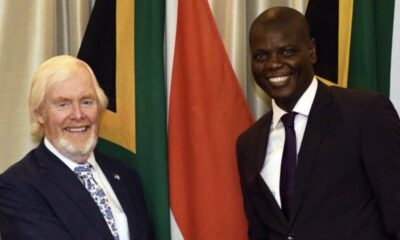
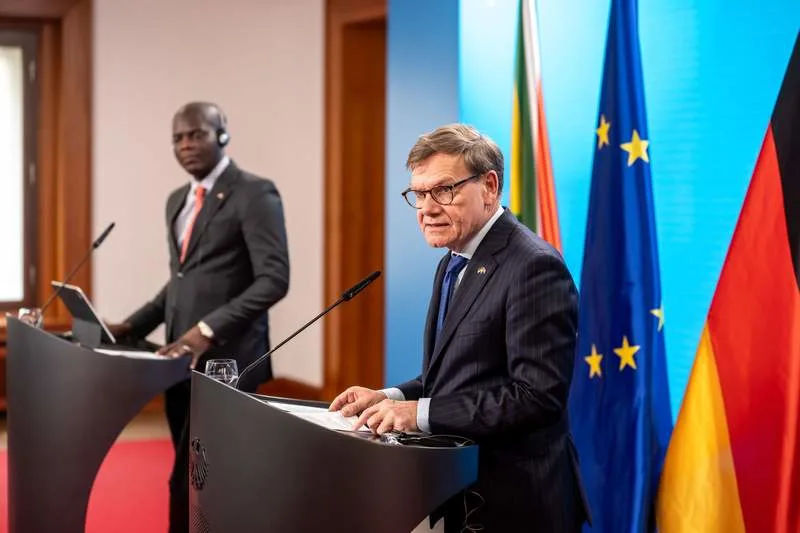
In Berlin, German Foreign Minister Johann Wadephul met South Africa’s Foreign Minister Ronald Lamola during the 12th session of the German-South African Bi-National Commission (BNC).
The meeting marked three decades of structured cooperation between the two nations and served as a platform to reinforce shared concerns about global stability.
Both ministers stressed that the current ceasefire must not be allowed to collapse, warning that renewed conflict would have far-reaching consequences beyond the region.
“Keep the door open” on negotiations
Wadephul expressed cautious optimism, urging both sides to continue engaging in dialogue while the ceasefire remains in effect.
His message was clear: even imperfect negotiations are better than none.
South Africa echoed that sentiment strongly, with Lamola emphasising that diplomacy remains the only viable path forward.
South Africa condemns all sides of the conflict
Lamola reaffirmed Pretoria’s position, stating that South Africa condemned both the US-Israeli strikes on Iran and Iran’s retaliatory attacks on neighbouring countries.
He stressed that all actions violating international law must be rejected, regardless of which side carries them out.
South Africa also expressed disappointment that negotiations were abruptly halted, arguing that progress had already been made before the breakdown.
A call for confidence-building measures
According to Lamola, what is now needed is not escalation but structured confidence-building steps that can rebuild trust between parties.
He and Wadephul agreed that continued dialogue is essential, warning that without it, the fragile ceasefire could quickly unravel.
Lamola also criticised the idea of blockades, referencing restrictions linked to the Strait of Hormuz, describing them as counterproductive to peace efforts.
Strategic partnership between Germany and South Africa deepens
Beyond the Middle East crisis, the Berlin meeting also strengthened bilateral ties between the two countries.
Germany and South Africa agreed to upgrade their relationship into a formal strategic partnership, marked by a 15-point cooperation plan.
As part of this, Germany increased its support for South Africa’s Just Energy Transition Partnership (JETP), including a new €200 million concessional loan aimed at supporting renewable energy and grid development.
Expanding cooperation in future technologies
The partnership also extends into science and innovation, with both countries committing to deeper collaboration in:
- Artificial intelligence
- Quantum research
- Cybersecurity
- Green hydrogen
- Battery value chains
- Critical raw materials
- Vaccine production
These areas are seen as key to future global competitiveness and energy transformation.
A symbolic anniversary moment
The 12th Bi-National Commission meeting also carries historical weight.
The forum was originally established in 1996 by former South African President Nelson Mandela and former German Chancellor Helmut Kohl, with its first official meeting held in Bonn in 1997.
This year’s gathering coincides with three major milestones:
South Africa’s 32 years of democracy, 37 years since the fall of the Berlin Wall, and 30 years of structured Germany–South Africa cooperation.
Public sentiment: hope, fatigue and realism
Reactions on platforms like X and Facebook reflect a mix of hope and fatigue.
Some users welcomed renewed diplomatic engagement, while others expressed scepticism about whether ceasefires and talks can hold in such a volatile environment.
The dominant sentiment, however, is clear: many are weary of escalating global conflicts and want sustained diplomatic solutions rather than temporary pauses in fighting.
A fragile moment in global diplomacy
The situation remains delicate. A ceasefire is holding, but negotiations have faltered. Diplomats are urging dialogue while geopolitical tensions remain high.
What emerges from Berlin is not a resolutionbut a warning: peace requires constant engagement, and even short breaks in conflict must be used wisely.
For now, the message from Germany and South Africa is simple but urgent: keep talking, while there is still time to talk.
{Source: The Citizen}
Follow Joburg ETC on Facebook, Twitter , TikTok and Instagram
For more News in Johannesburg, visit joburgetc.com