News
EFF says Madlanga commission extension undermines transparency, demands interim reports be published
The Economic Freedom Fighters (EFF) welcomed President Cyril Ramaphosa’s decision to extend the Madlanga Commission but warned that repeated deadline extensions without full disclosure of findings undermine public confidence and transparency in the inquiry.
Extension details and rationale
On Thursday, President Ramaphosa extended the commission’s deadline so its final report is now due on 16 November 2026 instead of the original 31 August 2026. Presidency spokesperson Vincent Magwenya said the extension sets an evidence deadline of 2 October 2026 and a reporting deadline of 16 November 2026 to allow the commission “to close off topics it has opened up in the course of hearings to date.”
“The extension allows the Commission to hear evidence on all of the matters listed in its terms of reference. Without an extension, the Commission will have to leave large parts of its work unfinished,” Magwenya said.
EFF: piecemeal announcements fail the public
The EFF said it noted the second extension but criticised the Presidency’s handling of the inquiry as providing “neither certainty nor transparency.”
EFF spokesperson Thembi Msane said the President had not explained how much additional time the commission genuinely required or provided “any comprehensive explanation of the Commission’s outstanding work, the anticipated completion of its investigations, or whether adequate financial and institutional resources have been made available to ensure that no further delays become necessary.”
Interim reports kept from public view
Msane said the commission’s interim reports remain secret despite containing recommendations that led to further action. She said the first interim report was submitted to the President in December 2025 and “contained recommendations that resulted in referrals for criminal investigations, prosecutorial consideration and administrative action against implicated individuals.”
She said the second interim report was submitted in May 2026 and “contains recommendations requiring further prosecutorial and investigative action while the Commission continues its work.”
“Yet despite these significant developments, both interim reports remain hidden from the South African public,” Msane said.
Msane argued the commission “belongs to the people of South Africa and not the president,” and said it was unacceptable that the President alone determined public access to information while implementing recommendations from reports that had not been made public.
Concerns about concentration of intelligence power
Msane criticised the continued placement of the State Security Agency within the Presidency, saying that “the concentration of intelligence authority under the direct political control of the President has repeatedly created opportunities for abuse, manipulation and political interference.”
She also cited findings by an independent panel under Section 89 of the Constitution, saying the panel had found prima facie evidence that after the theft at Phala Phala, Ramaphosa allegedly used members of the South African Police Service and elements associated with state security to investigate a matter concerning his personal business interests. Msane said those findings showed why intelligence and policing institutions “cannot be subordinated to the political interests of the President of the Republic.”
EFF demands and scope concerns
The EFF called for the immediate publication of both interim reports, “subject only to limited redactions necessary to protect ongoing criminal investigations, witnesses and national security concerns.” Msane said the public deserves to understand the basis for repeated extensions, the progress already achieved by the commission, and the recommendations that have informed criminal investigations and executive decisions.
While supporting the commission’s work, the EFF said its terms of reference remain too narrow to address the full extent of criminal infiltration across law enforcement institutions. Msane pointed to the City of Cape Town, which she said had not featured meaningfully in the inquiry despite the arrest of former DA mayoral committee member Malusi Booi on allegations linked to a construction and extortion syndicate. She also questioned why there had been little scrutiny of the eThekwini Metro Police and other metropolitan police departments.
“No municipality, police service, or intelligence structure should be beyond scrutiny,” Msane said.
Developments involving Julius Malema and Feroz Khan
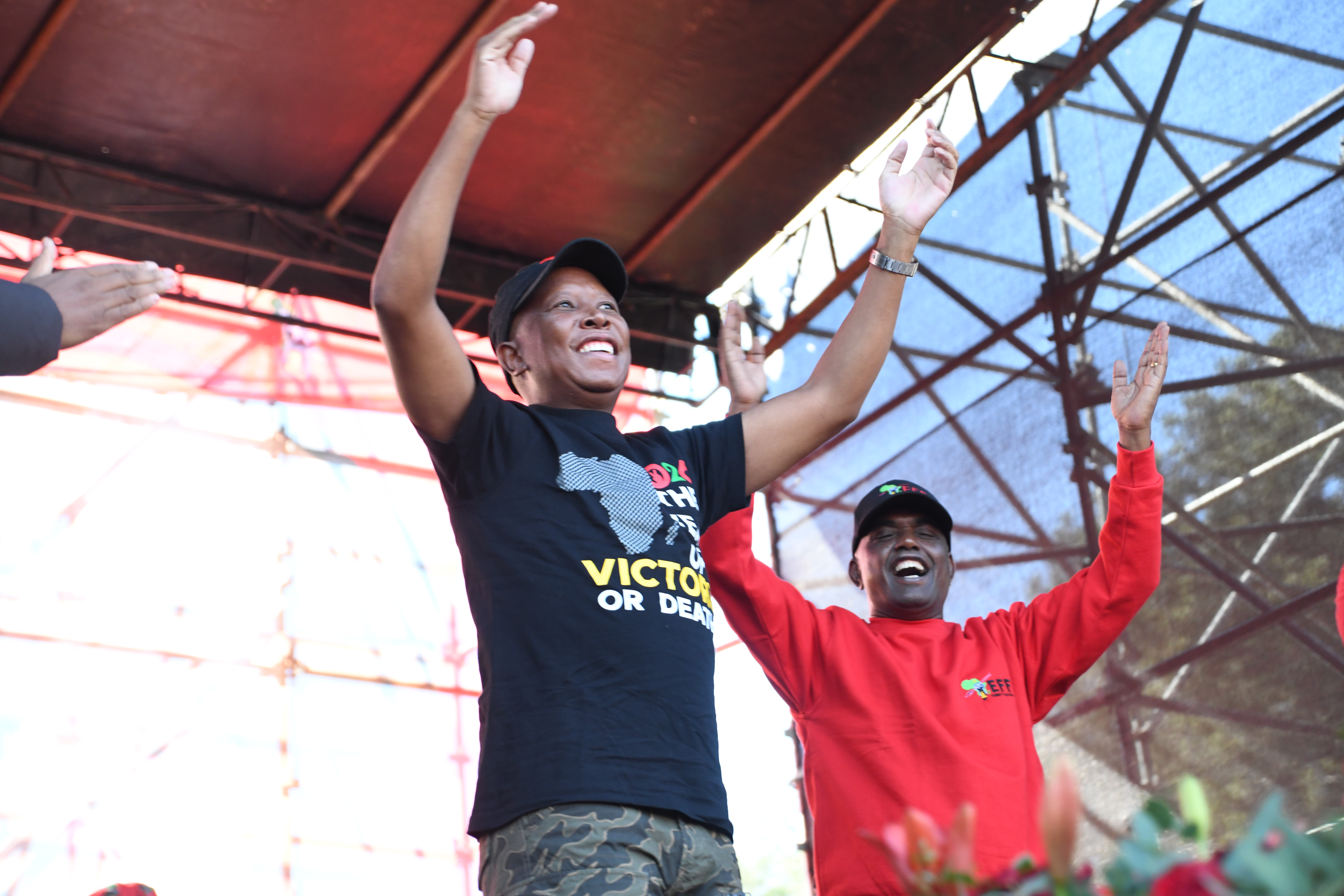
The IOL report said EFF leader Julius Malema has rejected allegations linking him to senior Crime Intelligence official Feroz Khan. The commission remains undecided on whether Malema will be called to testify.
Khan is recovering in hospital after being seriously wounded in what is believed to have been an attempted hit. Central to the hearings are WhatsApp messages exchanged between Khan and a man accused of tobacco smuggling, Mohammed “Mo” Sayed. According to evidence presented to the commission, the messages allegedly point to interactions involving Malema and form part of the commission’s ongoing investigation. The evidence allegedly suggests that Malema, Khan and Sayed were involved in discussions relating to the removal of former Inspector-General of Intelligence Isaac Dintwe.
IOL
Follow Joburg ETC on Facebook, Twitter, TikTok and Instagram
For more News in Johannesburg, visit joburgetc.com
Source: iol.co.za