News
South Africa’s silent skills crisis: the missing school desks
Every year, World Youth Skills Day sparks conversations about preparing young people for careers in a fast-changing world. Discussions often revolve around digital literacy, artificial intelligence, entrepreneurship and the future of work.
But one South African organisation believes the country is overlooking a far more basic challengegiving every child a proper place to learn.
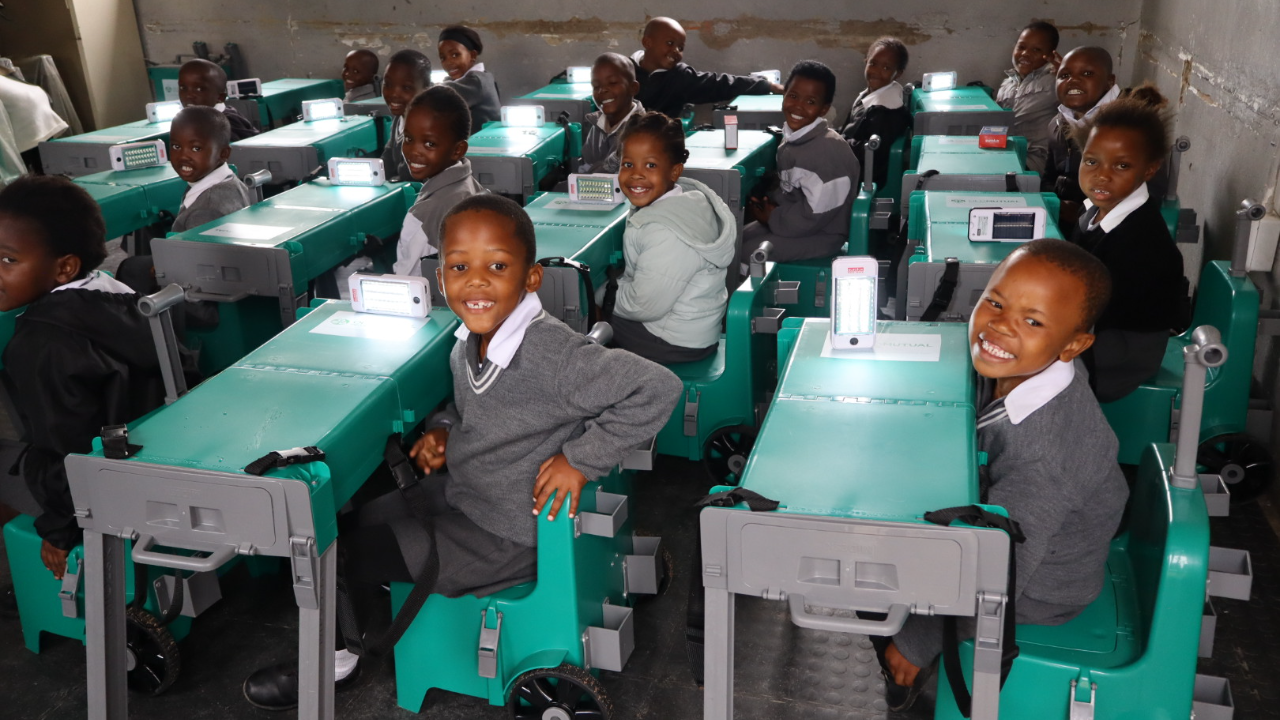
According to social enterprise MiDesk Global, millions of South African learners are still attending class without access to a school desk, making it harder for them to develop the literacy and critical thinking skills needed for future success.
A simple classroom tool with a lasting impact
MiDesk Global estimates that around 2.4 million learners across South Africa still do not have a school desk. The challenge stretches beyond the country’s borders, with more than 95 million children across Africa reportedly learning without suitable desks or chairs.
For many children, this means writing while balancing exercise books on their laps or sitting on cold, uneven or even muddy classroom floors.
The organisation argues that while a desk may seem like a basic classroom item, it plays an important role in helping learners focus, improve their handwriting, stay engaged and build confidence during their early school years.
Co-founder and Chief Impact Officer Talita Boodhram says these everyday learning conditions have a direct influence on how effectively children acquire essential skills.
“No child should have to learn while sitting on the floor,” she says, adding that access to a desk is about both education and dignity.
The real starting point for skills development
As countries invest heavily in preparing young people for technology-driven careers, MiDesk Global believes South Africa cannot afford to ignore the foundations of learning.
UNESCO has encouraged countries to equip young people with a broad mix of technical, digital, environmental and social skills to prepare them for the future economy.
MiDesk Global agrees with that vision but argues that those ambitions can only become reality if learners first master reading, writing and numeracy in classrooms designed for learning.
The organisation says the country’s skills pipeline effectively begins in the foundation phase, where children develop the habits and confidence that shape their future education.
Early literacy remains a major concern
The concern is backed by worrying literacy figures.
Only about 30% of South African learners in Grades 1 to 3 are currently reading at the expected level in their home language. That means seven out of every ten children are already falling behind during the years considered most important for building lifelong learning skills.
Education experts have repeatedly warned that children who struggle to read in the early grades often face greater challenges throughout their schooling, making it more difficult to complete their education and enter the labour market with competitive skills.
More than an education challenge
South Africa’s youth unemployment rate among people aged 15 to 24 stands at 60.9%, a figure that is often discussed in terms of job creation.
MiDesk Global believes the issue also reflects weaknesses much earlier in the education system.
Instead of viewing skills development as something that begins with vocational training or coding programmes, the organisation says policymakers should also prioritise classroom infrastructure that enables children to learn effectively from their very first years at school.
Investing in the basics could strengthen the economy
Boodhram argues that improving access to classroom furniture should not be viewed as a minor intervention.
Research has consistently linked additional years of quality education with stronger economic growth, and MiDesk Global believes that providing learners with proper desks represents one of the most affordable investments in building future human capital.
The organisation says every learner who receives the right environment to develop literacy, concentration and problem-solving skills strengthens South Africa’s long-term workforce.
While conversations around artificial intelligence, coding and digital transformation continue to dominate discussions about the future of work, MiDesk Global is urging South Africa not to lose sight of the fundamentals.
Follow Joburg ETC on Facebook, Twitter, TikTok and Instagram
For more News in Johannesburg, visit joburgetc.com