Business
Ntuli: Foreign-owned spaza shops dominate KZN due to bulk buying and illicit sales
KZN Premier Thami Ntuli says 57.8% of the province’s spaza shops are owned by foreign nationals, citing bulk buying, cooperatives and illicit goods as competitive factors.
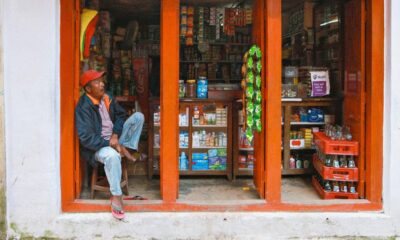
Nearly 60% of spaza shops in KwaZulu-Natal are owned by foreign nationals, KwaZulu-Natal Premier Thami Ntuli said this week as he outlined findings from research by the provincial Department of Economic Development, Tourism and Environmental Affairs (EDTEA).
Key findings from EDTEA research
Ntuli said the research found that 57.8% of spaza shops in the province are owned by foreign nationals, while South Africans own 42.2%. He told attendees at a spaza shop roundtable in Durban that these figures were based on evidence collected by EDTEA: “Foreign nationals own the majority of spaza shops in this province, accounting for 57.8%, while South African-owned shops make up 42.2%. This is not speculation; it is measurement,” he said.
Why foreign-owned shops outperform local businesses, according to Ntuli
At the KwaZulu-Natal Spaza Shop Roundtable, Ntuli identified several factors he said gave foreign-owned spaza shops a competitive edge. He pointed to bulk purchasing and cooperative business models, long-standing relationships with wholesalers, and, in some instances, the sale of illicit goods.
“One is illicit goods. Their products are much cheaper, and some are producing their own brands,” Ntuli said. “They also pool their money to buy stock in bulk, which allows them to secure significant discounts. That means they can charge lower mark-ups, move stock faster and generate more income.”
Geographic patterns and contrasts across districts
Ntuli said ownership patterns varied by district. He gave district-level percentages for foreign ownership cited in the research: eThekwini 84.4%, Amajuba 77.9%, King Cetshwayo 64.3%, Umkhanyakude 59.2%, Ugu 53.7% and iLembe 52.6%. He said nearly seven out of every ten foreign-owned shops in the province are located in eThekwini.
By contrast, Ntuli said South African ownership was dominant in other districts, with the research showing Harry Gwala 86% South African ownership, Umzinyathi 78.7%, uMgungundlovu 69.1%, uThukela 68.6% and Zululand 63.6%.
Roundtable aims and government response
The roundtable, hosted by the provincial government and led by Ntuli and EDTEA MEC the Rev Musa Zondi, aimed to explore why foreign-owned shops were outperforming local traders and to discuss support for South African-owned spaza shops.
Ntuli said the government wanted to encourage South Africans to reclaim the sector “through training, mentorship and compliance”, adding that the initiative was not about expelling existing shop owners: “It is not about chasing away those who own spaza shops,” he said.
He told Newzroom Afrika the roundtable also sought to address gaps left when undocumented migrants vacated some spaza shops and left communities without access to those services: “We’re addressing the gaps that are a result of undocumented migration in our province, which has left some spaza shops unoccupied,” he said.
Compliance, funding and next steps
Ntuli said thousands of spaza shop owners had applied for compliance certificates but that only a small number met the requirements. He said representatives from the Department of Small Business Development, Trade and Investment KwaZulu-Natal (TIKZN) and other funding institutions attended the roundtable to discuss financial support, and that very few applications had been approved, with some districts recording no approvals.
He said the low approval rate suggested many local traders were disadvantaged by compliance requirements and called for collaboration between government, shop owners and the private sector to address gaps.
Sector value and further research
Ntuli described the spaza sector’s importance in the province, saying the sector is worth R178 billion annually in KwaZulu-Natal and that it creates jobs and supports local suppliers. He said further research would examine the sector before and after 30 June 2026 and would involve district and local municipalities as well as communities.
“Before we legislate, we must first understand. Before we act, we must first learn,” Ntuli said, describing the roundtable as part of work that began in 2024 and a continuation of a commitment he had made two weeks earlier.
Follow Joburg ETC on Facebook, Twitter, TikTok and Instagram
For more News in Johannesburg, visit joburgetc.com
Source: iol.co.za