News
SA launches R2 coins honouring Charlotte Maxeke and 1956 Women’s March
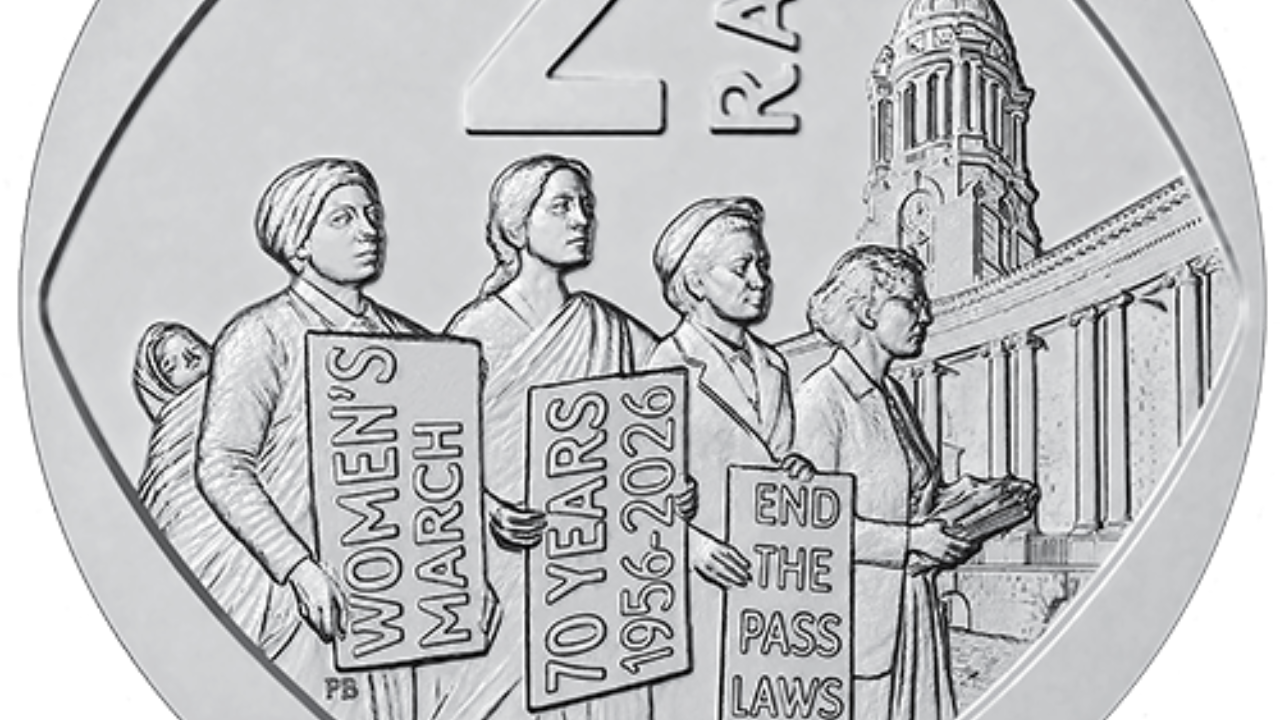
Two new South African R2 circulation coins are putting the stories of some of the country’s most courageous women into everyday life – from tills and taxis to school bags and household change jars.
Launched by the South African Reserve Bank, the commemorative coins honour two defining moments in South Africa’s history: Charlotte Maxeke’s groundbreaking university graduation in 1901 and the historic Women’s March of 1956.
The coins form part of the country’s Milestones of Freedom programme, launched by President Cyril Ramaphosa in June 2026 under the theme ‘Honouring the past, delivering the future’.
And there is a fitting sense of place behind the launch.
Two coins, two powerful chapters
The first R2 coin marks 125 years since Charlotte Maxeke became the first black South African woman to earn a university degree.
Born in Ga-Ramokgopa in Limpopo, Maxeke studied at Wilberforce University in the United States and graduated with a Bachelor of Science degree in 1901.
At a time when racial exclusion, colonial rule and deeply entrenched attitudes towards women severely restricted opportunities, her achievement was extraordinary.
But Maxeke’s story did not stop at graduation.
She used her education to advocate for African women and challenge systems designed to restrict their rights and opportunities.
In 1918, she founded the Bantu Women’s League and became its first president. She later campaigned against pass laws, spoke out about low wages and was involved in the formation of the Industrial and Commercial Workers’ Union.
Her work helped establish a tradition of organised women’s resistance that would echo through generations.
The second R2 coin commemorates the 70th anniversary of the 1956 Women’s March, when more than 20 000 women converged on Pretoria to oppose the extension of apartheid pass laws to black women.
On 9 August 1956, women marched to the Union Buildings carrying petitions and, for some, children on their backs.
Their defiance became one of the defining moments of the anti-apartheid struggle.
A launch with a powerful Pretoria connection
The location of the coin launch added another layer to the occasion.
SARB Governor Lesetja Kganyago pointed out that the march began at the State Theatre, across the road from the Reserve Bank’s head office.
From there, the women moved through the streets surrounding the bank before reaching the Union Buildings.
For Kganyago, the connection was a reminder that the physical landscape of Pretoria still carries traces of the country’s struggle history.
The coins, meanwhile, give those stories a way to travel far beyond the capital.
Why putting women on coins matters
Coins are usually associated with everyday transactions rather than history lessons.
But the Reserve Bank says currency can carry a wider national meaning – reflecting the people, events and values a country chooses to remember.
These are the first South African commemorative circulation coins to feature women.
That makes their release significant beyond their monetary value.
For decades, the stories of women who helped shape South Africa’s political and social history have often received less attention than those of their male counterparts.
Putting Maxeke and the women of 1956 into everyday circulation is therefore a small but visible correction to that imbalance.
The coins could end up anywhere: in a shopkeeper’s till, someone’s pocket, a taxi fare or a child’s school lunch money.
Each time one changes hands, it carries a reminder of a story that deserves to be remembered.
Kganyago also highlighted the continuing relevance of Maxeke’s commitment to education and collective progress.
Her own journey was remarkable because higher education was almost unimaginable for a black woman in 1901.
The figures underline just how difficult access to tertiary education remained for women long after her graduation.
A tribute to the women who opened the way
The new coins also recognise the broader legacy of women’s leadership in South Africa.
Alongside Maxeke and the women of 1956, Kganyago pointed to figures such as Sophie de Bruyn, Lilian Ngoyi, Rahima Moosa, Helen Joseph, Dora Tamana and Albertina Sisulu.
Their stories form part of a much bigger history of women challenging injustice, organising communities and demanding a better future.
The 1956 march itself became immortalised by the words:
“Wathint’ abafazi, wathint’ imbokodo” – “You strike a woman, you strike a rock.”
Seven decades later, that spirit remains woven into South Africa’s national identity.
Follow Joburg ETC on Facebook, Twitter, TikTok and Instagram
For more News in Johannesburg, visit joburgetc.com