News
Cosatu returns to congress as leadership battle threatens to deepen divisions
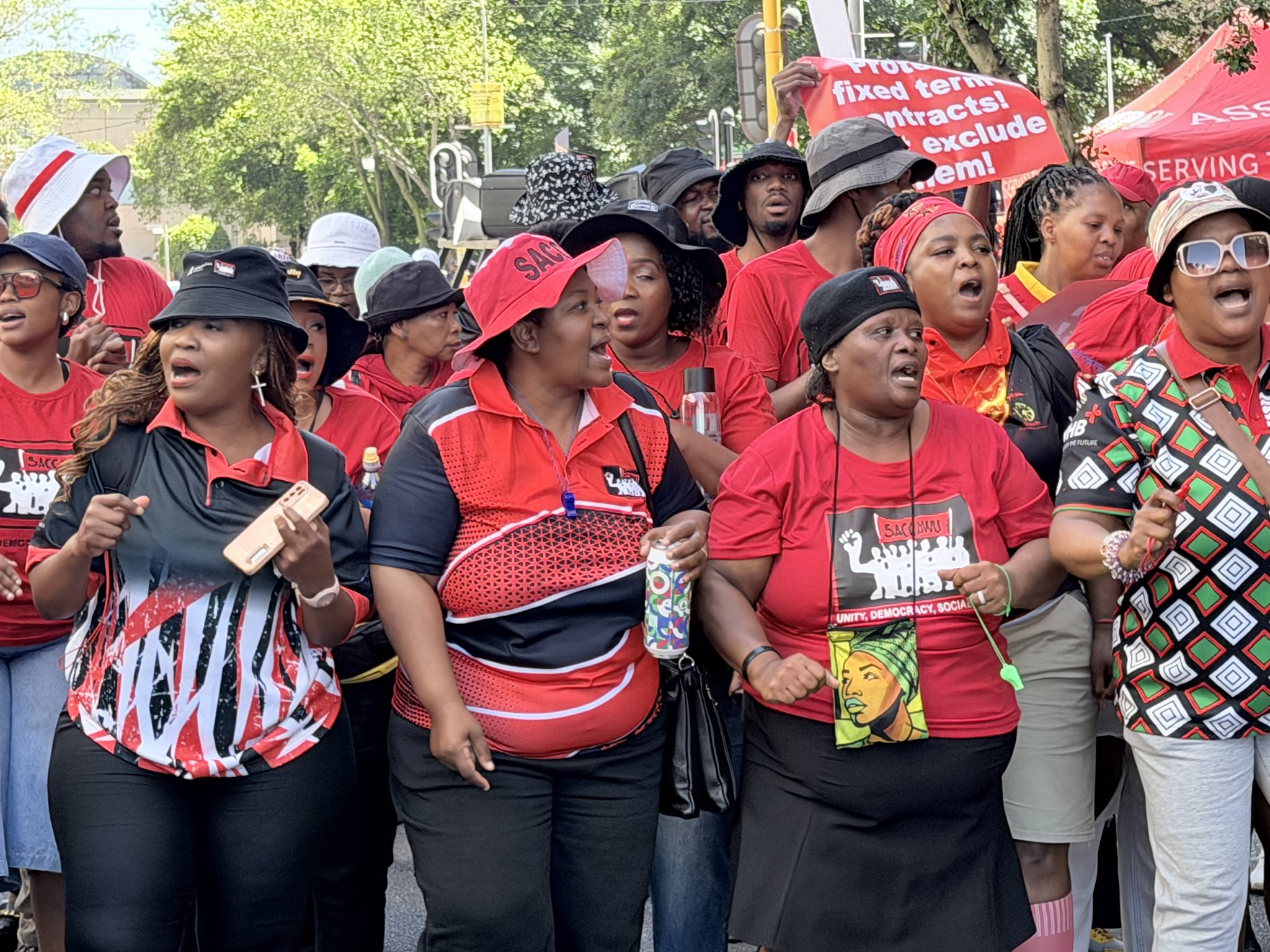
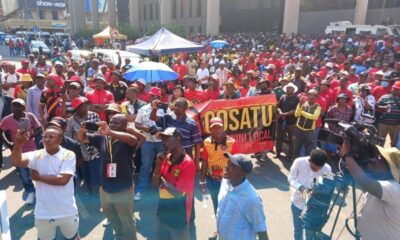
The Congress of South African Trade Unions (Cosatu) is preparing to return to the negotiating table after its elective congress descended into chaos in September, with a bitter leadership contest still threatening to divide the federation.
The gathering, scheduled for 14 to 17 October at Emperors Palace in Kempton Park, will give affiliated unions another opportunity to resolve the dispute that brought proceedings at Gallagher Convention Centre to an abrupt halt.
At the centre of the impasse is Mike Shingange, the National Education, Health and Allied Workers’ Union (Nehawu) leader whose possible elevation to the Cosatu presidency has exposed divisions among the federation’s affiliates.
The outcome could shape the direction of one of South Africa’s largest labour federations and influence its relationship with its longstanding political allies, the African National Congress (ANC) and the South African Communist Party (SACP).
Why Mike Shingange’s leadership bid is controversial
Shingange’s potential election has become a flashpoint following Nehawu’s decision to suspend its former president shortly before the September congress.
The move triggered opposition and raised questions about Shingange’s eligibility to contest the presidency. However, the supplied account states that his position as Cosatu deputy president means he retains the right to stand under the federation’s constitution.
The dispute has placed unions in a difficult position, with some supporting his leadership bid while others oppose it.
The controversy is particularly sensitive because Cosatu is preparing to choose a successor to outgoing president Zingiswa Losi, whose term has ended.
Rather than a straightforward leadership transition, the election has become a test of how the federation handles disagreements between its affiliates and their competing interests.
September congress ended in disarray
Tensions came to a head when delegates gathered at Gallagher Convention Centre for what was intended to be a four-day elective congress.
Disagreements over the leadership contest escalated into heated exchanges, while several affiliates reportedly failed to submit their credentials.
The dispute over credentials and Shingange’s eligibility contributed to the breakdown of proceedings, leaving the federation unable to complete its business.
The collapse raised questions about whether Cosatu could reach agreement on its next leadership team without further damaging relationships between affiliated unions.
For a federation built around collective representation and coordinated labour action, the failure to complete an elective congress was a significant setback.
Unions remain divided over the presidency
Shingange has reportedly attracted support from the National Union of Mineworkers and several other affiliates. However, opposition from within Nehawu and other unions has complicated his path to the presidency.
The split highlights the challenge facing Cosatu as it attempts to balance the preferences of individual unions with the need for unity across the federation.
The leadership contest is not simply about who takes over the top position. It also concerns the balance of influence among affiliates and the direction Cosatu will take under its next leadership.
The renewed congress will need to address the outstanding disputes if delegates are to elect leaders and move beyond the events of September.
Why the outcome matters for the ANC and SACP
Cosatu has played a major role in South Africa’s labour movement since its establishment in 1985. It has also maintained longstanding political ties with the ANC and the SACP.
Its leadership decisions therefore carry implications beyond the federation itself.
A prolonged internal dispute could complicate cooperation among its affiliates and political allies, while the election of a new president could influence how Cosatu approaches labour policy, workers’ interests and its role within the broader alliance.
Both the ANC and SACP will be watching developments closely because changes in Cosatu’s leadership and internal cohesion could affect their relationship with organised labour.
All eyes on Emperors Palace
The move from Gallagher Convention Centre to Emperors Palace provides a new setting for the reconvened congress, but it does not resolve the underlying disagreements.
Delegates must still navigate the dispute surrounding Shingange’s candidacy, divisions between affiliated unions and the need to complete the leadership transition.
The congress is scheduled to run from 14 to 17 October. Whether it can produce a new leadership team and restore unity will be a key test for the federation after September’s breakdown.
For Cosatu, the challenge is to settle its leadership dispute without allowing internal divisions to overshadow its broader role in representing workers.
Follow Joburg ETC on Facebook, Twitter, TikTok and Instagram
For more News in Johannesburg, visit joburgetc.com
Source: The Citizen