News
Government warns against online incitement as migration tensions rise in South Africa
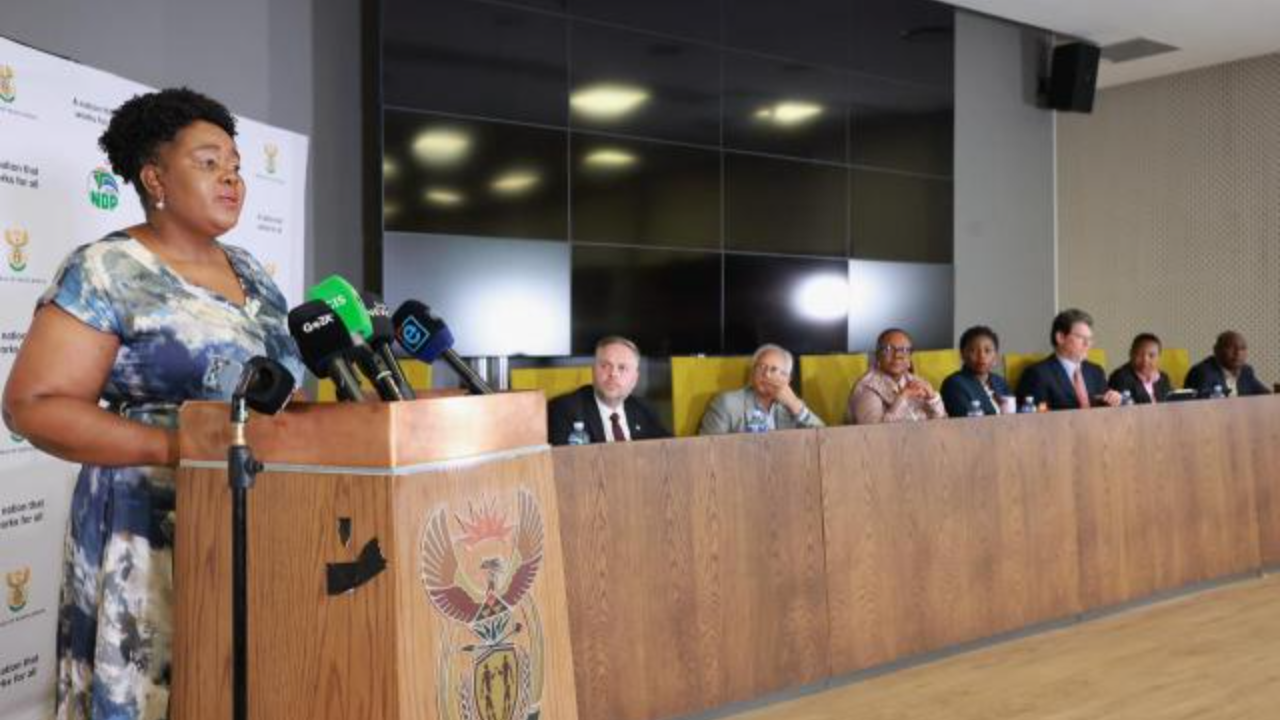
South Africans have been urged to think carefully before sharing inflammatory content about migration, as government warns that social media posts encouraging violence, intimidation and unlawful activities could have serious legal consequences.
The warning comes amid growing debate over immigration and asylum procedures following a Constitutional Court judgment that has raised questions about how certain asylum applications should be handled.
The Inter-Ministerial Committee (IMC) on Migration issued the warning on Sunday, expressing concern about misleading information circulating online and the potential for such content to fuel hostility towards foreign nationals, government officials and state institutions.
For communities already grappling with concerns about migration, the committee says the distinction between expressing frustration and encouraging unlawful behaviour remains important.
Government draws the line on social media
The IMC, chaired by Mmamoloko Kubayi, said law enforcement agencies were monitoring developments and would take action against individuals or groups involved in promoting, organising or carrying out violence and public disorder.
Kubayi emphasised that constitutional protection for freedom of expression did not extend to incitement, intimidation, hate speech or criminal conduct.
The warning applies to activities both online and offline, with government cautioning that using digital platforms to encourage criminal behaviour could itself constitute an offence.
The committee also appealed to political stakeholders, community organisations, civil society groups and members of the public to exercise restraint while the legal questions surrounding asylum procedures are being addressed.
Why the asylum judgment has sparked debate
The tensions come against the backdrop of a Constitutional Court judgment delivered on 7 July 2026 concerning provisions of the Refugees Act.
The court declared unconstitutional sections that allowed immigration officials to deport an asylum seeker for being in South Africa without a transit visa.
Such a visa allows a person arriving at a port of entry to travel to a refugee reception centre to apply for asylum.
The ruling has prompted uncertainty and speculation in some communities, according to the IMC, highlighting the need for clear communication about what the judgment means and how it will be implemented.
Government is seeking further guidance from the courts through a supervisory order to help determine how to give effect to the judgment. It also wants the Department of Home Affairs to strengthen the administrative and operational capacity needed to manage asylum applications.
Peaceful protests remain a constitutional right
The committee acknowledged that South Africans have legitimate constitutional rights to assemble, demonstrate and raise grievances peacefully.
However, it stressed that these rights do not justify intimidation, looting, property damage, public violence or the obstruction of lawful activities.
The issue remains particularly sensitive as migration continues to feature prominently in public discussions about border management, asylum applications and the responsibilities of government.
The IMC confirmed that it had engaged with representatives of several civil society and community organisations, including Operation Dudula, March and March, the United Civic Movement, the South African Council of Churches, South Africa First and the Alexander Fiela Movement.
During these engagements, representatives shared concerns from their communities, expressed frustrations and presented proposals for addressing migration-related challenges.
Government said it welcomed the feedback as it worked through the implications of the court judgment.
Deportations will continue under immigration law
Despite the ongoing legal process, the IMC confirmed that immigration enforcement operations would continue.
Kubayi said deportations would proceed while government sought clarity on implementing the Constitutional Court’s ruling.
The committee explained that asylum protection applied to people who had declared their intention to make a first asylum application.
People who were in South Africa unlawfully and had not applied for asylum, as well as those whose asylum claims had been finally rejected after the relevant review or appeal processes, would continue to face deportation in accordance with the law.
Government’s efforts to obtain further judicial guidance are intended to clarify the implementation process while Home Affairs works to improve its capacity to handle applications.
Government urges the public to verify information
As discussions around migration continue, the IMC has urged South Africans to rely on official government communications rather than unverified claims circulating on social media.
Misinformation can deepen divisions, create unnecessary panic and increase the risk of hostility towards individuals and communities.
The committee said it would continue updating the public as the legal process unfolded.
Be the first to know – Join our WhatsApp Channel for content worth tapping into! Click here to join!
Follow Joburg ETC on Facebook, Twitter, TikTok and Instagram
For more News in Johannesburg, visit joburgetc.com
Source: South African Gov