News
South African Agriculture: Land, Funding and Growth
South African agriculture has shown that it can compete with the best in the world. From citrus orchards and vineyards to maize fields, dairy farms and livestock operations, the sector remains a major contributor to the country’s economy. Yet behind these achievements lies an important question: how can South Africa ensure that more farmers have the opportunity to succeed?
For many aspiring farmers, the challenge is not a lack of ambition or a shortage of productive land. It is gaining access to the finance, practical knowledge, infrastructure and markets needed to turn a farming operation into a sustainable commercial business.
Addressing these barriers could open new opportunities for rural communities, strengthen food security and create jobs across the agricultural value chain.
A dairy farm offers a glimpse of what is possible
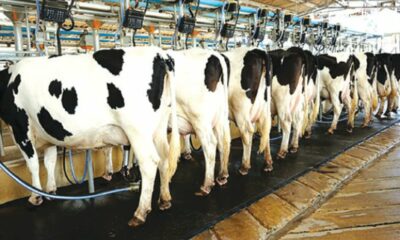
In Stutterheim, in the Eastern Cape, Redlands Farm provides an example of how targeted support can help emerging farmers grow their businesses.
The commercial dairy farm, owned and operated by young black farmers, has expanded its operations with assistance from the Land Bank. Its progress highlights the role that accessible agricultural finance can play in helping farmers move beyond small-scale production.
Redlands Farm benefits from the Land Bank’s Blended Finance Scheme, which combines government grant funding with loan finance. This approach helps address one of the most persistent obstacles facing emerging farmers: the difficulty of securing enough affordable funding to invest in their operations.
Farming requires substantial upfront investment. Farmers need money for equipment, livestock, seed, fertiliser, irrigation, buildings and other essential inputs. Expanding production may also require access to additional land.
Without sufficient capital, even a promising farming business can struggle to grow.
Blended finance offers a way to bridge part of this gap by combining public support with commercial lending. When paired with sound business planning and agricultural expertise, it can help farmers establish operations capable of generating sustainable income.
The lesson from Redlands Farm is straightforward: giving emerging farmers a realistic chance to compete can benefit more than the individual business. It can also support local employment and strengthen the surrounding rural economy.
Agriculture is already a major economic force
South Africa’s agricultural sector has grown significantly since the country became a democracy in 1994. Its production capacity has more than doubled, supported by improvements in technology, farming methods, seed development, animal genetics and agricultural inputs.
The country’s export performance reflects this progress. South Africa ranked as the world’s 32nd-largest agricultural exporter, recording agricultural exports worth R270 billion in 2025.
Its export basket includes citrus, table grapes, maize, beef, wine, sugar and wool, among other products. African countries account for nearly half of these exports, while other important destinations include the European Union, Asia, the Middle East and the Americas.
These figures demonstrate the sector’s ability to generate income beyond South Africa’s borders.
Agriculture also matters because of the jobs it supports. The farming sector employs approximately 944 000 people, with a further 200 000 working across the broader agricultural value chain.
Those opportunities extend beyond the farm itself. Transport operators, food processors, packaging companies, agricultural suppliers and exporters all depend on a productive farming industry.
A stronger agricultural economy can therefore create opportunities in communities that might otherwise have limited sources of employment.
The challenge is making agricultural success more inclusive
Despite the sector’s growth, the benefits of commercial farming have not been shared equally.
South Africa continues to face a divide between established commercial agriculture and farmers who have historically struggled to access land, finance and other resources. Predominantly white-owned commercial farms account for most commercial agricultural output, while black farmers contribute around 10%.
This imbalance is part of the country’s wider history of unequal land ownership and access to economic opportunity. Changing it requires more than providing land or encouraging people to start farming.
New farmers need the means to make that land productive.
A farmer who receives land but cannot afford essential equipment, obtain suitable inputs or reach reliable buyers may find it difficult to build a viable business. Similarly, access to a loan alone cannot guarantee success if the borrower lacks technical knowledge or practical experience.
The challenge, therefore, is to bring these elements together.
South Africa needs an agricultural development model that helps emerging farmers establish themselves, improve productivity and eventually operate competitive commercial enterprises.
Access to land must come with practical support
Land remains a crucial starting point for expanding participation in commercial agriculture.
Through the Proactive Land Acquisition Strategy, the government is releasing approximately 2.5 million hectares of state-owned land in different parts of South Africa to black farmers, with title deeds intended to provide formal ownership.
Secure land ownership can give farmers a stronger foundation from which to build their businesses. It can also improve their ability to plan for the long term and invest in agricultural production.
However, land access is only the beginning.
Successful farming depends on understanding local conditions, selecting suitable crops or livestock, managing soil and water, responding to weather patterns and controlling animal diseases. These skills are often developed through years of experience, training and learning from established producers.
That is why mentorship and agricultural education are essential parts of the process.
New farmers need opportunities to learn from people who understand the practical realities of running a commercial operation. They also need access to modern farming technologies, reliable agricultural advice and business skills that can help them manage costs and plan for growth.
Without this support, the potential value of newly accessible land may remain unrealised.
Partnerships can help close the knowledge gap
Several agricultural organisations are already contributing to efforts to build a more inclusive farming sector.
Industry bodies such as the Citrus Growers’ Association, Grain South Africa, the National Wool Growers’ Association, Potatoes South Africa, Red Meat Industry Services, the Milk Producers’ Organisation and Fruit South Africa are involved in work that supports agricultural development and participation.
Their involvement is important because different farming sectors require different forms of expertise.
Producing citrus for export, managing a dairy herd, growing grain and raising livestock all demand specialised knowledge. Connecting new farmers with established industry networks can help them understand production standards, improve their operations and identify commercial opportunities.
These relationships can also help bridge the distance between small-scale farming and the requirements of larger agricultural markets.
For South Africa, building a new generation of commercial farmers will depend on making these connections stronger and more accessible.
Why patient finance matters for emerging farmers
Agriculture operates on a different financial timetable from many other businesses.
Crops need time to grow. Orchards may take years to reach full production. Livestock operations require investment in animals, facilities, feed and veterinary care before they can generate consistent returns.
Farmers can also face unpredictable weather, changing input costs and fluctuations in market prices.
For someone starting with limited resources, these pressures can make conventional borrowing difficult to manage.
The Land Bank and the Department of Agriculture introduced blended finance to help address this problem. By combining government grants with loans, the scheme can reduce some of the barriers that prevent emerging farmers from securing the capital they need.
Commercial banks have also joined the programme over time.
Expanding participation among banks, agribusinesses and other agricultural partners could help more farmers access suitable funding. Developing additional finance options would also give businesses at different stages of growth a better chance of finding support that matches their needs.
The objective should not simply be to lend more money. It should be to finance productive, sustainable farming businesses that can repay their loans, employ workers and continue investing in their operations.
Export growth offers another opportunity
South Africa’s established agricultural export industry provides an important foundation for future growth.
Demand from international markets creates opportunities for farmers who can produce consistent volumes, maintain quality and meet the requirements of buyers. Expanding export destinations could also help reduce dependence on a limited number of markets.
The government is engaging with farmers and agribusinesses on ways to diversify agricultural exports, while also considering developments in areas such as new breeding techniques and agricultural biotechnology.
These advances could contribute to productivity and efficiency, although their benefits will depend on appropriate application, investment and access to expertise.
For emerging farmers, the challenge is ensuring that opportunities in export agriculture are not limited to businesses that already have substantial resources.
Better access to finance, training, technology and industry networks could help more producers participate in supply chains serving both domestic and international customers.
The future of farming depends on who gets the opportunity
South Africa’s agricultural story is one of considerable achievement, but also unfinished transformation.
The country has the productive capacity, established export markets and agricultural expertise to build on its existing strengths. The next step is to broaden participation so that more people can contribute to the sector’s growth.
That means connecting land reform with practical training, making affordable finance more accessible and strengthening partnerships between government, established farmers, lenders, businesses, traditional leaders and rural communities.
It also means recognising that emerging farmers need opportunities to become commercially successful, rather than remaining permanently dependent on small-scale production.
The stakes extend beyond agriculture itself. A stronger farming sector can support rural employment, contribute to poverty reduction and help meet the food needs of a growing population.
South Africa has already demonstrated that its agricultural products can compete in international markets. The opportunity now is to expand the number of farmers who can take part in that success.
With the right combination of land, skills, capital and market access, a new generation of black commercial farmers can help shape a more productive and inclusive agricultural economy.
The real measure of progress will not only be how much the country exports or how much agricultural output increases. It will also be how many more farmers can build sustainable businesses, create jobs and contribute to feeding the nation.
Be the first to know – Join our WhatsApp Channel for content worth tapping into! Click here to join!
Follow Joburg ETC on Facebook, Twitter, TikTok and Instagram
For more News in Johannesburg, visit joburgetc.com
Picture: Annie Spratt / Unspalsh