z_Uncategorised
Tshwane cuts water tanker budget by 79% amid corruption allegations
Tshwane cuts water tanker budget by 79% amid corruption allegations
The City of Tshwane has reduced its water tanker budget by 79% to R126.7 million for the 2026/27 financial year, as the municipality moves to rely less on outsourced services and expand its own fleet.
The announcement comes amid renewed political tensions over the management of water tankers, with Gauteng Premier Panyaza Lesufi responding to criticism from DA Tshwane mayoral candidate Cilliers Brink.
Brink had announced plans to confront the premier over what he described as a lack of action against Tshwane’s alleged “water tanker mafia”.
Lesufi hit back at the criticism, saying the DA was “crying at the wrong funeral”.
The dispute comes as Tshwane mayor Nasiphi Moya presented an end-of-term report outlining the administration’s progress and financial position over the past two years.
Water tanker costs reduced from R20.56 million a month
Tshwane deputy mayor and finance MMC Eugene Modise said the city had begun transitioning formal areas towards a municipal-led tanker service from 1 April 2026.
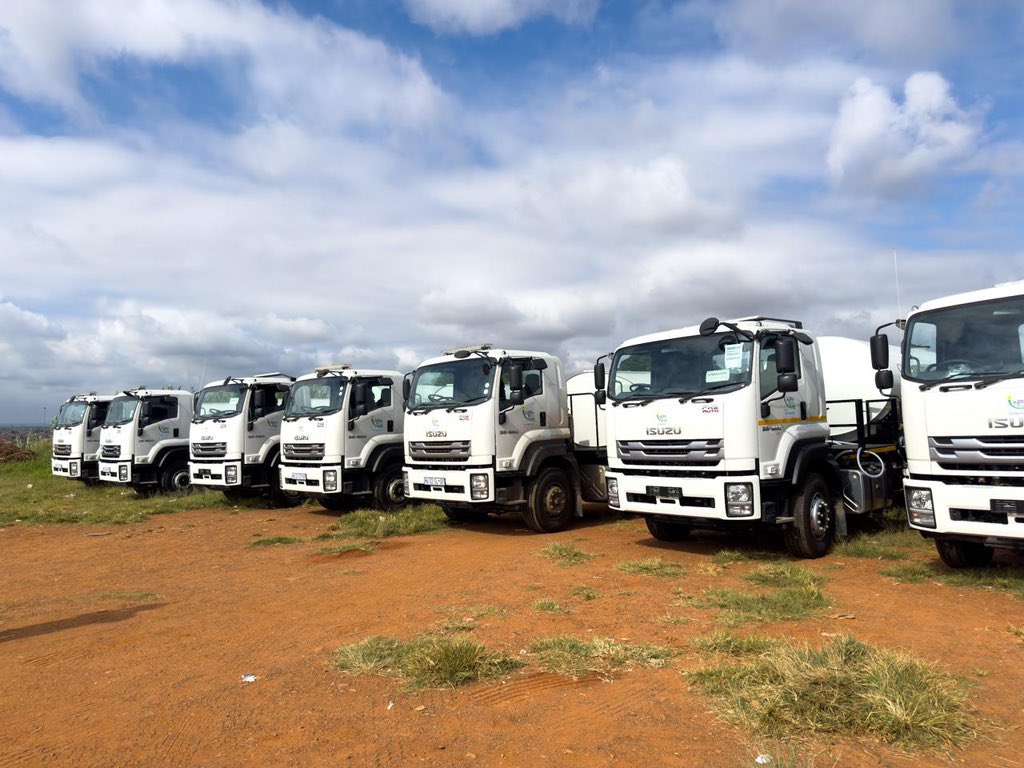
The municipality has expanded its fleet to 41 vehicles as part of the shift away from outsourced operations.
Modise said monthly tanker expenditure had previously reached R20.56 million before tighter management and reduced reliance on external services brought the figure down to R8.34 million.
For the 2026/27 financial year, the tanker budget has been reduced to R126.7 million, representing a 79% cut, according to the city.
Modise said R110 million had also been redirected towards municipal tankers, pipe replacement and infrastructure upgrades.
The changes form part of the city’s efforts to improve how water distribution is managed and reduce costs associated with tanker operations.
Tshwane outlines past spending pressures
The city also provided figures illustrating the financial pressures associated with its previous tanker arrangements.
According to Modise, Tshwane incurred R322.95 million in tanker expenditure during the 2023/24 financial year. This included R179.9 million in unpaid invoices carried forward.
A further R98 million was incurred between July and mid-October 2024, before the current administration took office, he said.
By September 2024, the tanker budget had already been exhausted, prompting a request for an additional R150 million.
The figures were presented as part of the administration’s account of the financial and operational challenges it inherited.
City reports progress on budgets and audit findings
Modise said Tshwane had operated with unfunded budgets for four consecutive years before the 2025/26 budget was fully funded. He said the 2026/27 budget was also fully funded.
He added that the city had previously owed Eskom R6.66 billion, carried a broader debt burden exceeding R13 billion and held R835 million in cash reserves.
Moya said the city had also reduced the number of audit qualification areas from six in 2023/24 to two in 2024/25.
The administration presented these figures as evidence of progress in its financial management, although the broader challenges facing the municipality remain significant.
Streetlights and illegal dumping among reported improvements
The end-of-term report also highlighted service delivery and law enforcement efforts.
According to the city, 21,285 streetlights and high-mast lights were repaired or restored.
MMC for environment and agriculture Obakeng Ramabodu said more than 19,000 tonnes of illegally dumped waste had been removed across Tshwane since October 2025.
These initiatives were included among the administration’s reported efforts to improve municipal services and address problems affecting communities.
TMPD reports thousands of enforcement operations
MMC for community safety Hannes Coetzee said the Tshwane Metro Police Department conducted 817 regional and 909 specialised crime-prevention operations between July 2025 and June 2026.
The department also carried out 140 illegal cable-theft operations, 402 regional bylaw operations, 213 specialised bylaw operations and 236 illegal dumping operations.
During the 2025/26 financial year, officers made 1,748 arrests for driving under the influence.
Coetzee said two mobile alcohol evidence centres had been introduced following the qualification of 10 mobile alcohol evidence operators in November 2024.
Traffic enforcement also identified 35,397 vehicles without displayed licence discs, 8,508 without number plates and 29,345 without licences.
Seven stolen vehicles were recovered through impounding, with another 25 recovered through enforcement operations.
Water tanker dispute remains politically contentious
Despite the reported reduction in tanker spending, the issue remains politically sensitive as residents continue to rely on alternative water supplies in areas affected by interruptions.
The city’s move towards a municipal-led service is intended to reduce dependence on outsourced operations, while the DA has raised concerns about alleged wrongdoing in the sector.
The latest figures provide an account of Tshwane’s spending changes and operational reforms. However, the political dispute over accountability for alleged irregularities in water tanker operations remains unresolved in the information provided.
Follow Joburg ETC on Facebook, Twitter, TikTok and Instagram
For more News in Johannesburg, visit joburgetc.com
Source: The Citizen