News
Seven years and R44-million later – Nigel’s water reservoir remains unfinished
Words: Kimberly Mutandiro / GroundUp
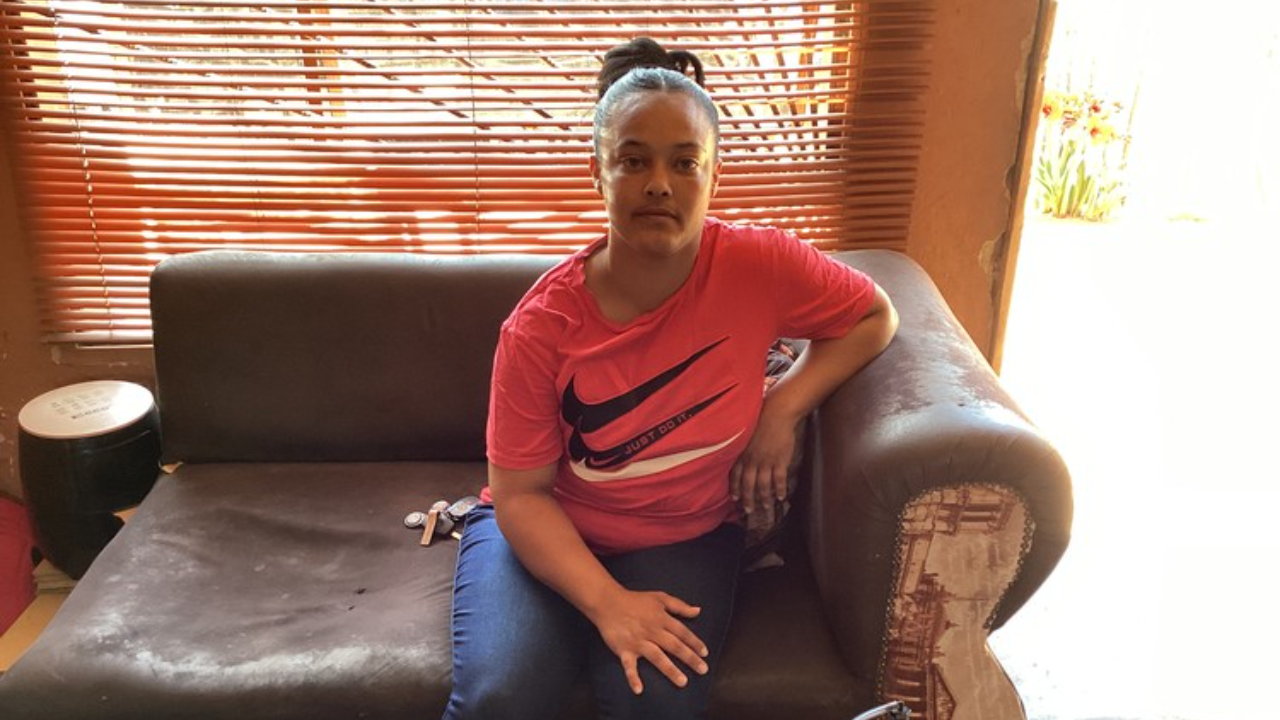
Cherdene Padayachee looks after her four-year-old son who requires around-the-clock care due to cerebral palsy. Every second day, she needs to fill his oxygen machine with clean water. But this has been a challenge due to inconsistent water supply at her home in Alra Park’s extension 3, Nigel.
“Water is life. My son’s life depends on it. The municipality needs to urgently fix our water supply,” she said.

Padayachee said her taps are sometimes completely dry, forcing her to fetch water from sections further away to ensure her son’s oxygen machine keeps running. When they have running water, it’s often at odd hours of the night, she said.
According to Padayachee, municipal tankers deliver water inconsistently, and when they do, the water is discoloured.
Padayachee’s family is among dozens of Nigel households that have struggled with water shortages for years.
In 2019, the City of Ekurhuleni set out to build the Almac bulk water reservoir because the old one could no longer meet the demand. Construction started in 2020 and the Heidelberg Nigel Heraut reported in January that year it was expected to take ten months.
According to community representative Hugh van Greenen, the Almac reservoir is meant to stabilise water supply to Alra Park and MacKenzieville. But years of delays, millions of rand spent, and three contractors later, residents are still without a consistent supply of tap water.
Van Greenen said residents have not been told when the project will be completed.
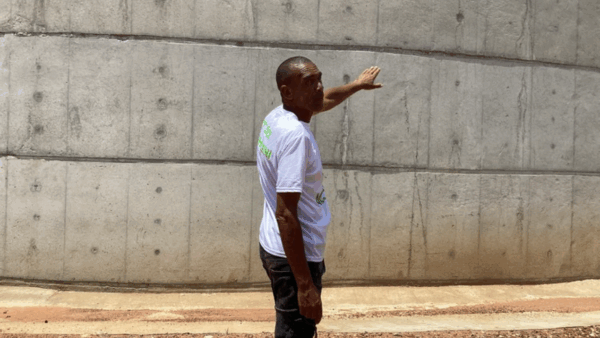
City of Ekurhuleni spokesperson Zweli Dlamini told GroundUp that the current demand for water exceeds the existing reservoir’s storage of 1.5-million litres and that there is not sufficient 24-hour storage capacity.
In the 2019/20 financial year, the City estimated that the construction would cost about R32-million. To date the municipality has spent R44-million, said Dlamini. However, the contractor is no longer on site due to payment disputes with the City.
Dlamini said the reservoir is now set to be completed in February 2027. “We aim to pay the contractor so that he can return to site and finish the works in the 2026/27 financial year still,” said Dlamini.
Missing water tankers
Residents took to the streets in February to protest but to no avail.
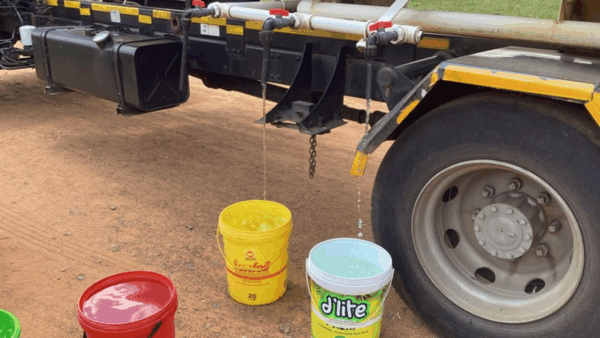
This week, Alra Park resident Nomandlovu Manzeti told GroundUp she still has to carry buckets to fetch water from municipal trucks every other day. She said sometimes the tanker does not come for two days or she misses it because she is out doing piecemeal jobs. She cannot flush the toilet or do the laundry regularly, she said.
“They expect us to vote in the coming elections, yet we do not have water,” said Manzeti.
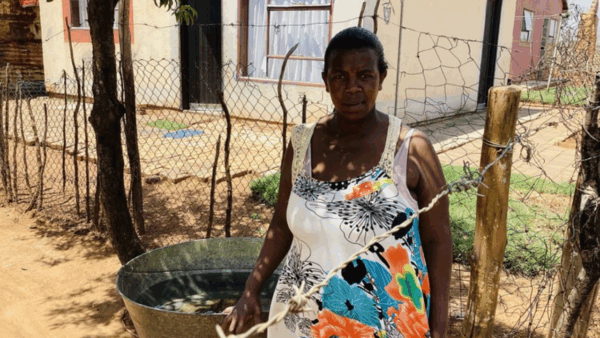
Residents believe that money used to pay for water tanker contractors should be used to complete the reservoir to give them a permanent solution.
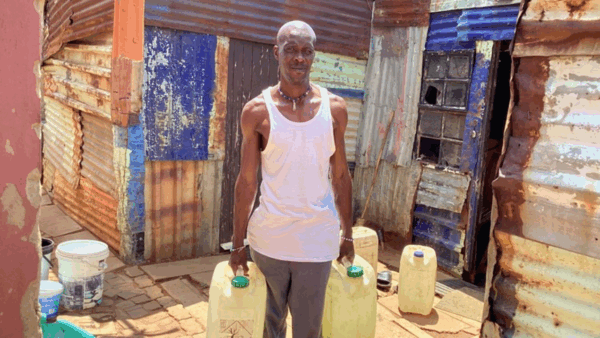
Mandla Nhlapo and his wife, Nomasonto Phithi, live in a section where taps have been completely dry for three years.
Nhlapo said he tries to fill as many bottles of water as he can whenever the water tanker comes and he stores them in his yard. He said he is concerned about the quality of the water. Nhlapo and several other residents we spoke to mentioned they have seen the municipal trucks parked at the Spaarwater Dam in Duduza, and they do not trust its water.
“For how long will the municipality continue to bring water trucks? We want the water to run in our taps again,” said Phithi.
Van Greenen said the municipality had ignored their questions about where the tankers collected the water and whether the water had been tested for human consumption.
He added that water truck contracts had been extended beyond the initial agreed period. “Who is benefiting from water tanker contracts? The money should be invested towards completing the reservoir. Water truck contractors are profiting at the expense of our people,” he said.
Dlamini said two water tanker companies were appointed on a three-year contract, which ended on 30 June. They were paid an average of about R378,000 per month. He said trucks are still deployed to affected Nigel communities.
Dlamini said water is collected from fire hydrants within the City’s water reticulation network in Vorsterkroon and Pretoriusstad.
“Water tankers are tested monthly to make sure they comply. The 5-million litre reservoir is 90% complete,” said Dlamini.
He said delays had been mainly due to annual budget restrictions.
Be the first to know – Join our WhatsApp Channel for content worth tapping into! Click here to join!
Follow Joburg ETC on Facebook, Twitter, TikTok and Instagram
For more News in Johannesburg, visit joburgetc.com
Picture: Kimberly Mutandiro / GroundUp