News
BMA official arrested over alleged passport stamping scheme
A Border Management Authority (BMA) official has been arrested after allegedly being found in possession of 22 stamped passports belonging to Lesotho nationals,Joburg Etc reports.
The 56-year-old official, stationed at the Maseru Port of Entry, was arrested during an intelligence-driven operation involving the BMA Integrity Management Unit, the Department of Home Affairs Counter Corruption Unit, SAPS detectives and the K9 Unit in Ladybrand, as well as Free State Crime Intelligence.
BMA ARRESTS AN OFFICIAL ON CORRUPTION ALLEGATIONS AND POSSESSION OF 22 PASSPORTS
The Commissioner of the Border Management Authority (BMA), Dr Michael Masiapato, confirms the arrest of a 56-year-old BMA official stationed at the Maseru Port of Entry with Lesotho, following an intelligence-driven operation conducted by the BMA Integrity Management Unit, the Department of Home Affairs Counter Corruption Unit, the South African Police Service (SAPS) Ladybrand Detectives and K9 Unit, and Crime Intelligence Free State.
The arrest took place just over 10 days after the fifth instalment of the Anti-Corruption Awareness Campaign, hosted under the Border Management and Immigration Anti-Corruption Forum at OR Tambo International Airport. The operation was initiated after information was received from the State Security Agency regarding several Lesotho nationals’ passports that had been placed under monitoring. Intelligence indicated that the passports had allegedly been transported from Limpopo to Ladybrand for the purpose of unlawfully being stamped and extending their visa validity and stay in the Republic of South Africa without the passport holders being physically present, as required by law.
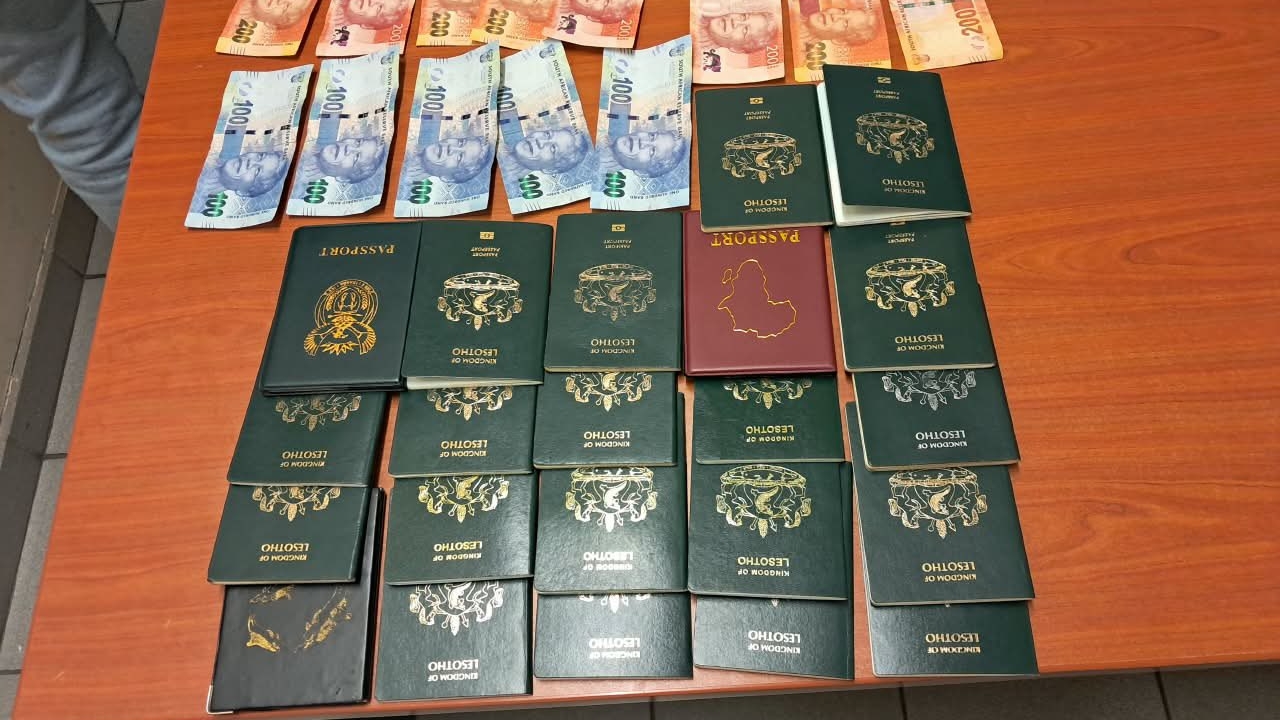
Acting on this information, law enforcement authorities conducted an operation that resulted in the arrest of the BMA official. At the time of the arrest, the official was allegedly found in possession of 22 stamped passports belonging to Lesotho nationals, without the lawful holders being present, as well as R2 100 in cash.
The suspect was arrested on the spot and is expected to appear before the Ladybrand Magistrate’s Court on charges relating to corruption, possession of passports without lawful authority, and immigration-related offences. The investigation remains ongoing, and additional arrests have not been ruled out.
Since the establishment of the BMA three years ago, more arrests of officials have taken place under the leadership and direction of Commissioner Masiapato.
“The BMA was established to address longstanding challenges relating to illegal migration and corruption within the ecosystem. South Africa is beginning to see the tangible benefits of the BMA leadership’s firm and uncompromising stance against corruption. The BMA is currently finalising more than 60 labour relations and disciplinary cases involving internal control breaches, fraud, corruption and other misconduct affecting organisational integrity. In the last three months, 17 officials were dismissed from the BMA and more are expected.’ Dr Masiapato added.
Commissioner Masiapato, who brings extensive intelligence experience to his leadership, has made it unequivocally clear that the Border Management Authority will remain committed to combating corruption and safeguarding the integrity of South Africa’s ports of entry. The Authority will continue to work closely with law enforcement and security agencies to detect, investigate and ensure the prosecution of officials involved in unlawful activities.
Photos supplied by the BMA.
ENQUIRIES
Mmemme Mogotsi
Deputy Assistant Commissioner: Communications and Marketing
Cell: 072 856 4288
Email: [email protected]“If you see something, say something” – Operation HI-TIVISE
Continue to report illegal activities at the borders by calling 076 776 1307 or 0801 229 019. Illegal activities can also be reported online through the BMA website https://t.co/lxIUA9mx25 Please provide detailed information that will assist us to follow-up.MEDIA STATEMENT ISSUED BY THE BORDER MANAGEMENT AUTHORITY
14 October 2026
The Border Management Authority SA (@TheBMA_SA) October 14, 2026
According to the BMA’s media statement issued on 14 October, the investigation followed information from the State Security Agency about passports belonging to Lesotho nationals that had been placed under monitoring.
Authorities suspect the documents were transported from Limpopo to Ladybrand to have their visa validity and the holders’ stay in South Africa unlawfully extended through stamping, without the passport holders being physically present.
The official was allegedly also found with R2 100 in cash. The suspect is expected to appear before the Ladybrand Magistrate’s Court on charges relating to corruption, possession of passports without lawful authority and immigration-related offences. The investigation is ongoing, with further arrests not ruled out.
BMA Commissioner Dr Michael Masiapato said the authority was taking steps to address corruption and misconduct within its ranks.
‘The BMA was established to address longstanding challenges relating to illegal migration and corruption within the ecosystem,’ Masiapato said.
He added that the authority was finalising more than 60 labour relations and disciplinary cases involving alleged internal control breaches, fraud, corruption and other misconduct.
‘In the last three months, 17 officials were dismissed from the BMA and more are expected,’ he said.
The authority says it will continue working with law enforcement and security agencies to investigate suspected wrongdoing at South Africa’s ports of entry.