News
Experts divided over DA plan to let private firms run municipal services
DA manifesto proposes private-sector delivery of municipal services. Experts and unions are split some welcome outsourcing, others warn of tenderpreneurship and re-municipalisation risks.

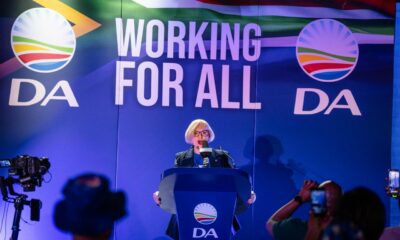
The Democratic Alliance’s manifesto pledge to allow private-sector firms to provide municipal services has drawn sharp divisions among labour and political analysts, with critics warning of renewed tenderpreneurship and supporters saying outsourcing can improve service delivery.
Union alarm: “abandonment of local government”
Trade union federation Cosatu rejected the DA’s proposal, saying it would worsen existing problems in municipalities. Cosatu parliamentary coordinator Matthew Parks described privatisation as a pathway to more tenderpreneurship that has already harmed municipal services.
“It will fuel the already devastating culture of tenderpreneurship that has gutted municipal services and bled municipalities dry and collapsed basic services,” Parks said.
Parks argued municipalities should be recapacitated and that solutions must tackle corruption, capacity and infrastructure maintenance rather than transferring responsibilities to private firms. He warned the proposal would amount to an abandonment of local government and would have “devastating consequences for workers, communities and businesses.”
Some analysts say outsourcing can work
Not all commentators rejected the plan. Political analyst André Duvenhage said private-sector involvement is already in use and can deliver good service where it is competitive.
“To show that it can work, we are already outsourcing; for example, in my town we are using water, power and other things from the private sector and the service is good,” Duvenhage said.
Duvenhage suggested a competitive environment could benefit service delivery, while declining to comment on corruption concerns.
Experience abroad and infrastructure risks
Another analyst, Sandile Swana, warned the approach was not without precedent and pointed to experiences in the UK and France where privatisation was followed by re-municipalisation. Swana drew a distinction between full privatisation and selective contracting, noting that private companies typically take on profitable functions.
Swana said the massive infrastructure backlog in South African municipalities is a particular problem, arguing the private sector may not invest in the long-term refurbishment needed. He said that, by his estimate, about 60% of municipal water pipes would need replacement, a cost that could be passed to users if private providers set prices to recover investments.
“So, the prices will go up before any possible expansion of the services,” Swana said.
Swana cautioned that where private firms do not reinvest sufficiently, states in other countries have eventually taken services back into public ownership a process he called re-municipalisation.
Debate reflects deep divisions over solutions
The reaction to the DA manifesto shows a split between those who view private-sector contracts as a practical fix for failing services and those who see privatisation as risking corruption, higher costs and the erosion of municipal responsibility. Analysts cited examples and international experience to argue both potential benefits and long-term pitfalls.
As the debate continues, the competing views highlight the difficult trade-offs policymakers face when attempting to restore reliable municipal services.
Follow Joburg ETC on Facebook, Twitter, TikTok and Instagram
For more News in Johannesburg, visit joburgetc.com
Source: citizen.co.za