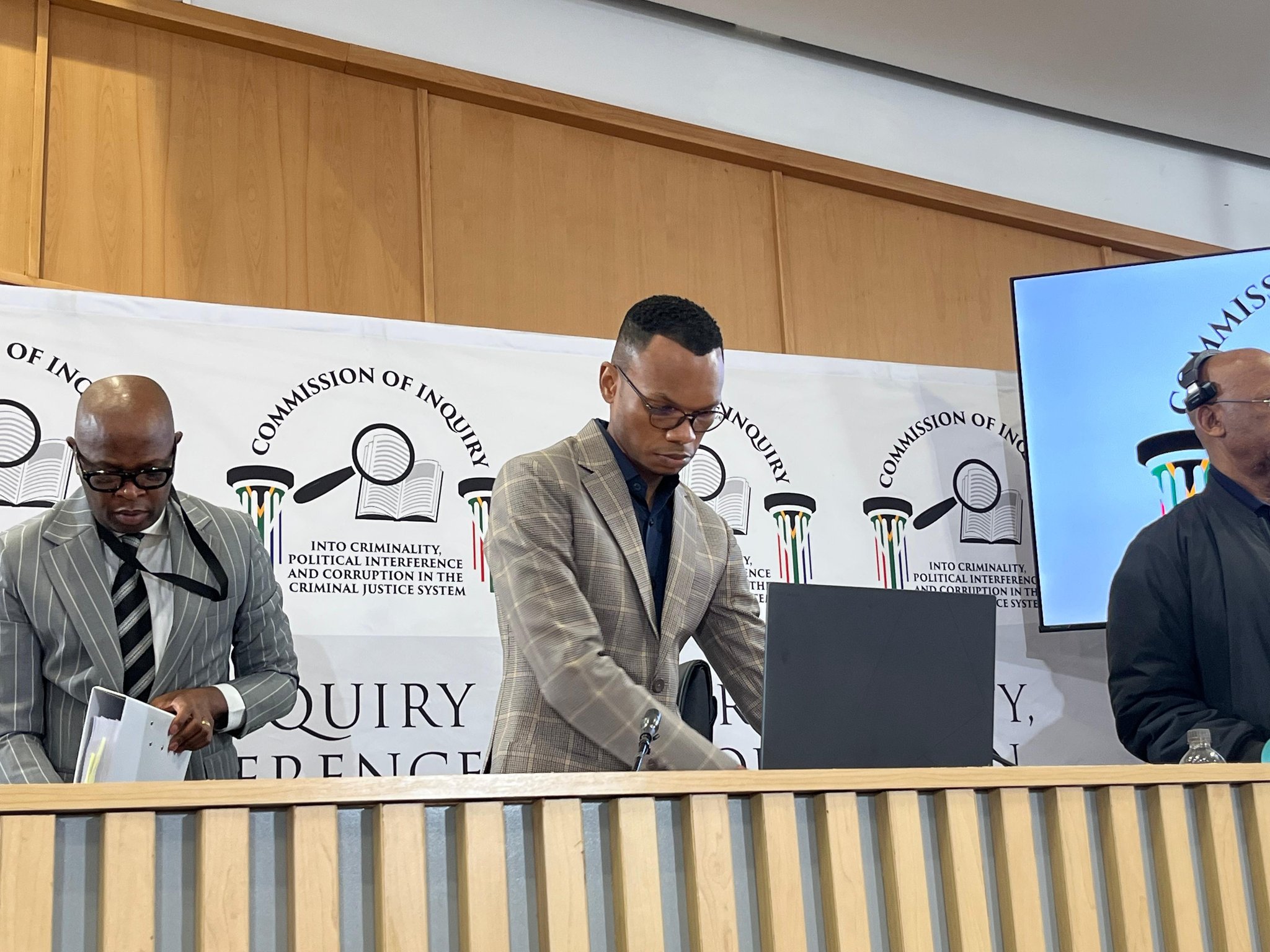
WhatsApp chats place Tshwane CFO under pressure at Madlanga Commission hearing
The Madlanga Commission has turned its spotlight onto the City of Tshwane once again, this time through a string of WhatsApp messages that raised uncomfortable questions about who really had access to municipal decisions.
At the centre of the latest hearing is suspended City of Tshwane CFO Gareth Mnisi, whose testimony painted a picture of blurred lines between city administration, policing circles and a multibillion-rand tender process.
What should have been routine governance instead sounded like a warning about how easily informal influence can creep into formal systems.
Why the chats matter
Commission members examined messages between Mnisi and suspended Gauteng Organised Crime Unit officer Sergeant Fannie Nkosi.
According to evidence presented, Nkosi was drawn into operational matters inside the municipality despite not being a city official.
That alone sparked concern. But the issue deepened when Mnisi testified that he suspected Nkosi wanted him to manipulate a R2.9 billion tender in favour of Nkosi’s brother’s company, Ngaphesheya Construction and Projects.
For many South Africans who have watched years of state capture inquiries and procurement scandals, the details sounded painfully familiar: private interests allegedly circling public money.
Middleman role under scrutiny
Much of the questioning focused on why Nkosi was repeatedly used as a go-between between Mnisi and suspended Tshwane Metro Police Department deputy chief Umashi Dhlamini.
Commissioners pressed Mnisi on why he relied on an outsider instead of speaking directly to relevant city officials.
Mnisi conceded that, looking back, he should have requested direct contact details and handled matters himself.
That admission may seem simple, but in governance terms it is significant. Public institutions are expected to follow traceable, accountable communication channels not side conversations through third parties.
The Gubis payments controversy
The hearing also explored a dispute involving unpaid invoices linked to Gubis 85 Solutions.
Mnisi told the commission that Nkosi inserted himself into the matter after overhearing a discussion with Gubis director Calvin Mahlangu regarding outstanding payments and possible legal action against the city.
Later, a termination letter concerning ad hoc security services provided by Gubis was shared with Nkosi, who was asked to pass it on.
Commissioners questioned why information involving one company would be shared with someone linked to a potential competitor.
That concern goes beyond one letter. In tender environments, even small pieces of inside knowledge can offer a commercial advantage.
Why commissioners pushed back
Advocate Sandile Khumalo sharply challenged Mnisi’s decisions, pointing out that repeated involvement by Nkosi created the appearance of someone trying to influence a live procurement process.
He also questioned why details related to Gubis would be shown to a person whose brother’s business had an interest in similar tenders.
That line of questioning touches a broader truth in South African politics: perception matters almost as much as proof. Even where direct wrongdoing is disputed, poor judgment can erode public trust.
Mnisi’s defence
Mnisi maintained that he did not share highly sensitive material such as invoices, payment dates or requisitions.
He argued that the termination letter had already been issued to the service provider and had little strategic value.
Still, critics online were quick to react, with many social media users saying ordinary residents are tired of hearing officials explain why informal conduct should be viewed as harmless.
Across Gauteng, frustrations over potholes, billing disputes and service failures often make procurement controversies feel personal to ratepayers.
Bigger picture for Tshwane
The City of Tshwane has faced repeated governance turbulence in recent years, from coalition instability to financial strain and service delivery battles.
Against that backdrop, allegations involving a R2.9 billion tender are not just another headline. They feed deeper anxieties about whether municipal resources are being protected.
Residents want working traffic lights, safer streets and reliable refuse collection. Every corruption allegation is measured against those daily realities.
What happens next
The commission is expected to resume hearings with a new witness.
Whether the latest testimony leads to firmer findings or further questions, one issue is already clear: South Africans are no longer shocked by WhatsApp chats in corruption cases.
They are asking a harder question now, why lessons from the past still seem so easy to ignore.