News
Mkhwanazi rejects kidnapping claims as Madlanga Commission hears conflicting accounts
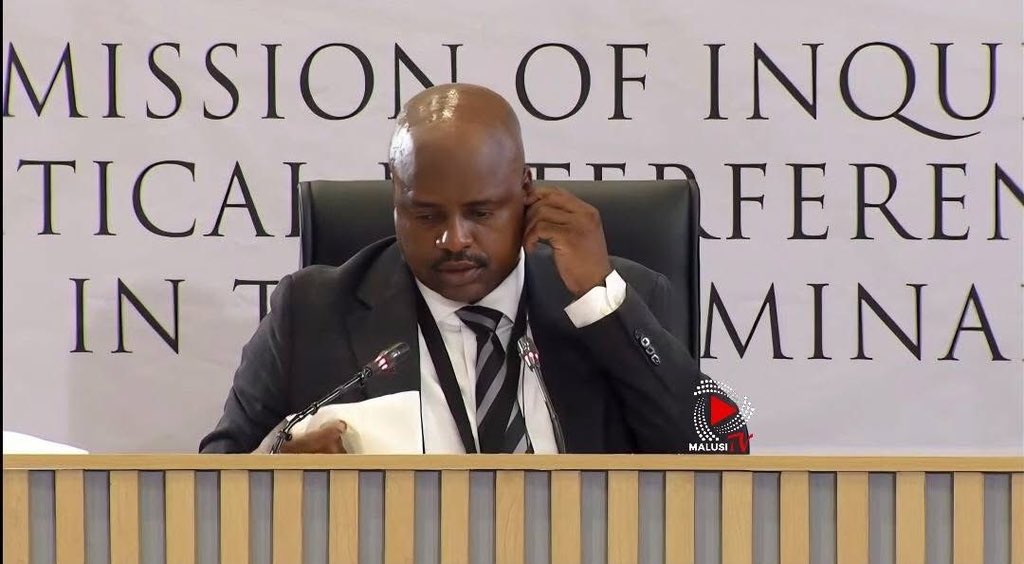
Tension filled the hearing room this week as Julius Mkhwanazi pushed back strongly against serious allegations linking him to a violent incident involving a colleague.
Appearing before the Madlanga Commission, the suspended Ekurhuleni Metro Police acting chief denied any role in the alleged 2023 kidnapping of spokesperson Kelebogile Thepa calling the claims false, personal and deeply damaging.
“I do not kidnap anyone”
Taking the stand, Mkhwanazi did not mince his words.
He told the commission he would never be involved in such acts, particularly against women, emphasising his stated support for gender equality within the police service.
According to him, the accusations form part of a broader attempt to tarnish his reputation.
He went further, questioning the credibility of Thepa’s earlier testimony including her emotional account suggesting it was not genuine.
A case that has spilled into the public eye
This is not just a legal matter unfolding quietly behind closed doors. It has become a public spectacle, with both sides presenting sharply different versions of what happened.
Mkhwanazi told the commission the fallout has extended beyond the workplace, affecting his family as the allegations circulate widely online.
In today’s South Africa, where public officials are constantly under scrutiny, such claims rarely stay confined to courtrooms they play out on social media timelines, WhatsApp groups and radio talk shows.
Thepa’s version: a targeted attack
Earlier testimony by Thepa painted a very different picture.
She told the commission she was attacked by armed men in Tembisa, assaulted and threatened in what she believes was not a random crime, but something connected to her work.
According to her account, the attackers were not interested in valuables only her phone and the information it contained.
She described being overpowered, struck with a firearm and later regaining consciousness after being abandoned.
For her, the incident was deeply personal and tied to sensitive issues she had been handling as a spokesperson.
The “blue lights” controversy in the background
At the centre of the dispute lies a broader controversy involving alleged misuse of police-linked vehicles.
Thepa has suggested the attack may be linked to her involvement in handling media queries about claims that certain vehicles connected to businessman Vusimusi “Cat” Matlala were registered as metro police cars and fitted with blue lights.
Mkhwanazi has denied any connection to those allegations as well, insisting there is no evidence linking him to such activities.
He also argued that it is unreasonable for multiple issues within a large organisation like EMPD to be pinned on one individual.
Public reaction: divided and intense
Online reaction to the hearings has been mixed and often emotional.
Some South Africans have expressed support for Thepa, pointing to the risks faced by whistleblowers and officials dealing with sensitive information.
Others have urged caution, warning against drawing conclusions before the commission completes its work.
There is also a broader frustration that cases involving law enforcement leadership continue to surface, raising uncomfortable questions about accountability and internal culture.
A deeper issue: trust in institutions
Beyond the individuals involved, this case touches on something bigger public trust.
When senior officials and spokespersons within the same institution present conflicting accounts of such serious incidents, it shakes confidence in the system.
South Africans are no strangers to high-profile commissions of inquiry. From state capture to policing controversies, these platforms often become battlegrounds for truth, credibility and public perception.
What comes next?
Mkhwanazi is expected to continue his testimony, with the commission likely to probe both versions of events in more detail.
For now, the case remains unresolved a complex mix of allegations, denials and unanswered questions.
At its core, this is more than a dispute between two individuals.
It’s a test of accountability within one of the country’s key law enforcement bodies and a reminder of how quickly workplace tensions can escalate into matters of national interest.
As the Madlanga Commission continues its work, many South Africans will be watching closely not just for answers, but for clarity in a story where the truth still feels contested.